AI Video Analytics is changing how businesses approach workplace safety, security, and operational monitoring. Traditional CCTV systems record activities, but they often depend on security personnel to watch footage and identify potential risks. This can make it difficult to respond quickly, especially in large industrial facilities, warehouses, manufacturing plants, and other high-activity environments.
With artificial intelligence, video surveillance can do much more than record events. AI-powered systems analyze video streams, recognize specific objects and activities, and identify potential safety violations or security threats in real time. This helps organizations detect risks earlier, improve situational awareness, and make workplaces safer.
What Is AI Video Analytics?
AI Video Analytics uses artificial intelligence, computer vision, and machine learning to analyze video footage and identify meaningful patterns, objects, and activities. It can work with compatible CCTV cameras and video surveillance infrastructure to automate monitoring tasks that would otherwise require continuous human observation.
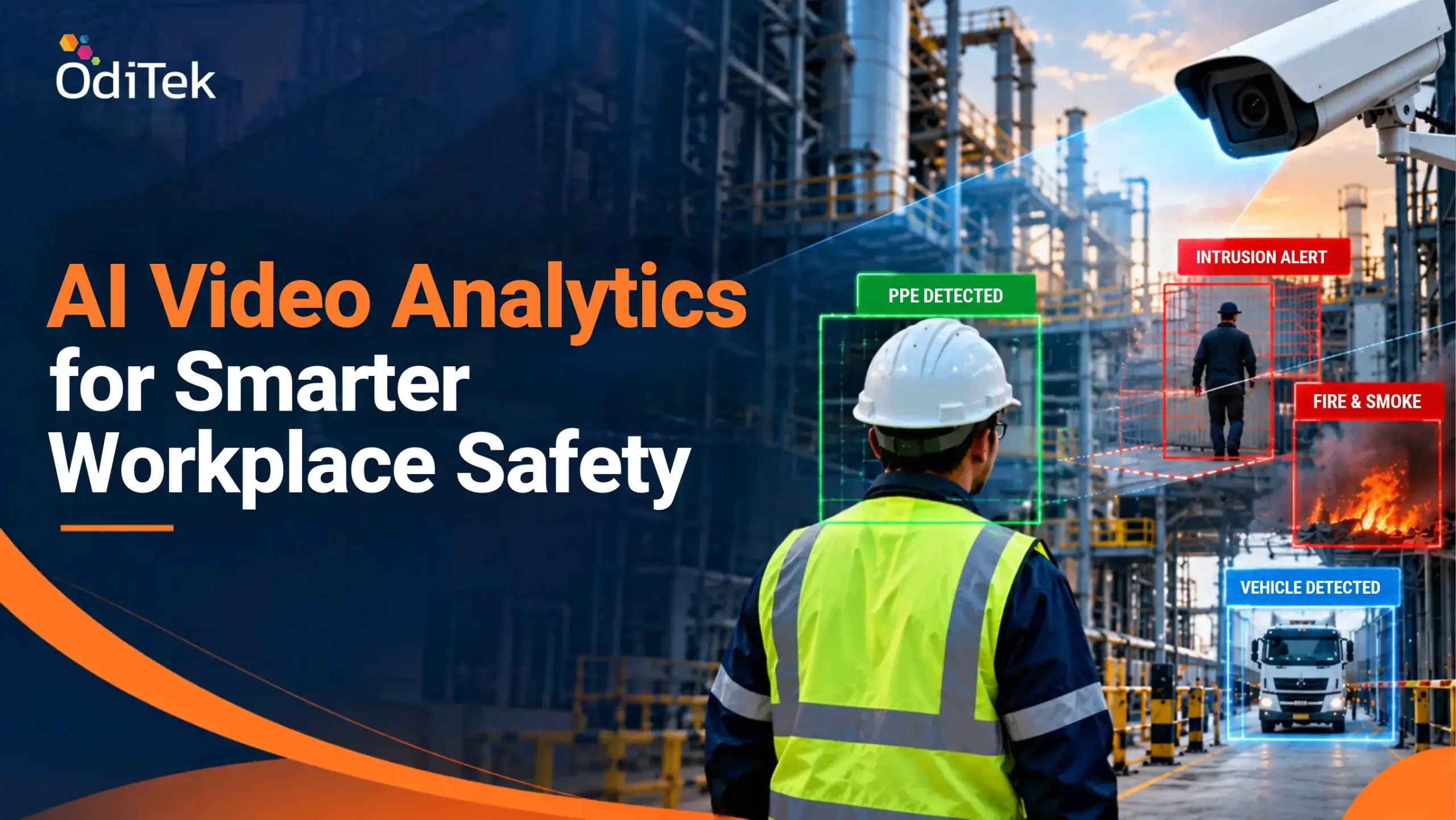
An AI video analyzer can be configured to identify specific events, such as unauthorized entry, missing personal protective equipment (PPE), people entering restricted zones, or smoke appearing in monitored areas.
Unlike conventional surveillance systems, AI-powered video analytics can generate alerts when predefined conditions are detected. This allows security teams and facility managers to focus on incidents that require attention rather than reviewing hours of footage.
Common applications include:
•PPE detection: Identifying workers who may be missing helmets, safety vests, or other required protective equipment.
•Intrusion detection: Detecting people entering restricted or hazardous areas.
•Fall detection: Identifying potential worker falls in monitored environments.
•Fire and smoke detection: Flagging visible indicators of potential fire hazards.
•People and vehicle monitoring: Tracking movement and identifying unusual activity in designated areas.
How AI Video Analytics Improves Workplace Safety
Workplace accidents can result from unsafe behavior, environmental hazards, or delayed incident detection. AI Video Analytics helps organizations strengthen their safety monitoring processes by identifying potential risks as they occur.
Automated safety compliance: AI systems can detect missing PPE and alert supervisors when workers appear to violate established safety requirements. This supports consistent monitoring across production floors, construction sites, and industrial facilities.
Real-time hazard detection: Configured analytics can identify events such as restricted-zone entry, falls, and visible fire or smoke indicators. Faster alerts help responsible teams assess situations and take appropriate action.
Reduced dependence on manual monitoring: Security personnel cannot always observe every camera simultaneously. AI-powered monitoring helps prioritize important events and reduces the need to rely exclusively on continuous human observation.
Improved incident investigation: Recorded footage and event timestamps can help safety teams investigate incidents, understand contributing factors, and identify opportunities to improve safety procedures.
These capabilities support proactive safety management. However, AI alerts should complement established safety protocols, human supervision, and emergency response procedures rather than replace them.
AI Video Analytics for Threat Detection and Security
Security threats can develop quickly, particularly in facilities with multiple entry points, restricted areas, and valuable equipment. AI Video Analytics can help organizations detect suspicious or unauthorized activity by applying predefined detection rules to live video streams.
For example, intrusion detection can flag entry into restricted zones, while people and vehicle recognition can help monitor movement around designated locations. Depending on the system’s capabilities, analytics may also identify abandoned objects, unusual movement patterns, or other configured events.
An AI video analyzer can send alerts to designated personnel when a relevant event occurs. This enables security teams to investigate potential threats promptly and determine whether further action is necessary.
For industrial environments, these capabilities can be particularly useful around production areas, warehouses, loading zones, equipment rooms, and facility perimeters.
Organizations should configure detection rules according to their operational needs and validate system performance under actual lighting, camera positioning, and environmental conditions.
Appropriate access controls and data retention policies are also important when video analytics involves employees or visitors.
Which Industries Benefit the Most from AI Video Analytics?
AI Video Analytics can support workplace safety and threat detection across industries where monitoring large spaces, protecting people, and maintaining operational compliance are important.
1.Manufacturing and industrial plants:
Monitor PPE compliance, hazardous zones, machinery areas, and potential fire or smoke incidents.
2.Construction:
Identify potential safety violations, restricted-area entry, and selected high-risk activities across active work sites.
3.Warehousing and logistics:
Monitor loading and unloading areas, vehicle movement, pedestrian zones, and access-controlled locations.
4.Mining and metals:
Support monitoring in hazardous operational areas, vehicle movement zones, and industrial facilities where rapid incident awareness is essential.
5.Retail and commercial buildings:
Analyze footfall, occupancy, crowd movement, and selected security events to support facility management and customer safety.
6.Transportation and infrastructure:
Monitor vehicle movement, access points, and designated safety zones across stations, terminals, and transport facilities.
The most suitable applications depend on the organization’s risk profile, camera infrastructure, and the accuracy required for each detection scenario.
Key Features to Look for in AI-Powered Video Analytics
Choosing an appropriate AI-powered video analytics solution requires more than checking whether it supports automated detection. Businesses should evaluate its ability to integrate with existing systems and support practical operational workflows.
Important features include:
•Real-time alerts: Notifications for configured safety violations and security events.
•Multiple detection capabilities: Support for relevant use cases such as PPE detection, intrusion detection, and fire and smoke detection.
•CCTV integration: Compatibility with existing cameras and video management systems, where supported.
•Event recording and reporting: Searchable event history to support investigations and performance reviews.
•Scalability: The ability to extend monitoring across additional cameras, sites, and facilities.
•Flexible deployment: Options suited to the organization’s infrastructure, including edge or cloud-based processing where available.
•System integration: APIs or other integration options for connecting alerts with dashboards, enterprise applications, or incident management workflows.
Businesses researching AI video analysis free tools may find basic demonstrations or limited trial versions useful for initial evaluation. However, production environments often require more comprehensive features, integration capabilities, security controls, technical support, and clearly defined service requirements.
Why Choose Us?
Oditek Solutions offers REG-EYE, an AI-powered video intelligence platform designed to help organizations improve monitoring, strengthen workplace safety, and gain better visibility into operational activities.
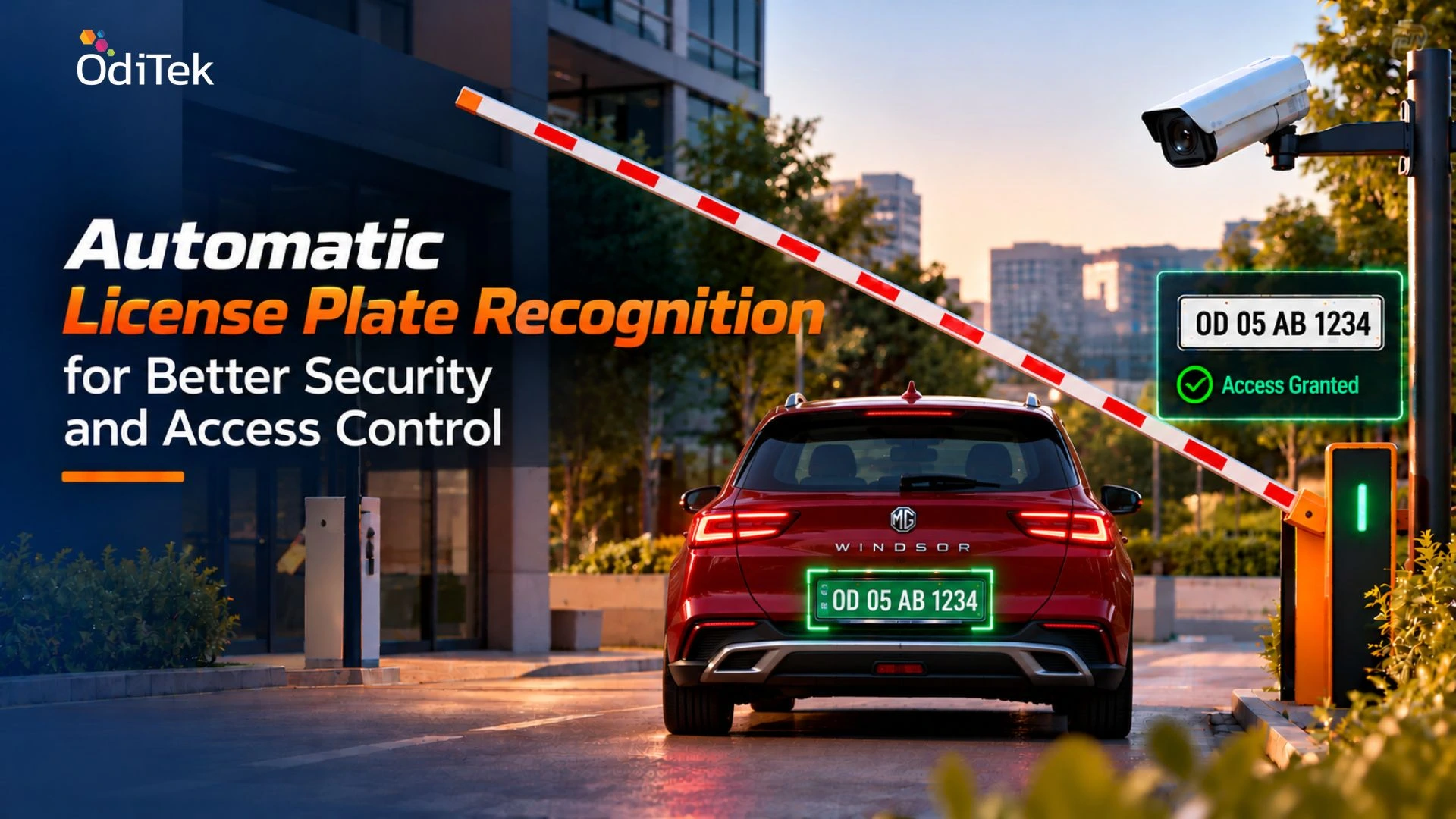
REG-EYE supports a range of video intelligence use cases, including automatic number plate recognition (ANPR/ALPR), PPE detection, zone intrusion detection, fall detection, and fire and smoke detection. These capabilities can help organizations identify important events without relying entirely on manual CCTV observation.
By aligning video analytics with specific business requirements, organizations can explore opportunities to improve incident awareness, support safety compliance, and streamline surveillance operations.
Oditek Solutions can help businesses evaluate relevant use cases, identify integration requirements, and determine how AI-powered video intelligence may fit into their existing operational environment. The right implementation depends on the selected features, available camera infrastructure, and site-specific requirements.
Final Thoughts
AI Video Analytics is helping businesses move from passive video recording toward more intelligent, event-driven monitoring. By identifying potential hazards, flagging suspicious activities, and supporting faster incident investigation, these systems can strengthen workplace safety and security.
From manufacturing plants and warehouses to construction sites and transportation facilities, AI-powered monitoring offers practical opportunities to improve visibility across complex environments.
The key is to select a solution that aligns with real operational risks, integrates with existing infrastructure, and delivers reliable alerts that teams can act upon. With an appropriate implementation strategy, AI Video Analytics can become a valuable part of a broader workplace safety and security program.
Frequently Asked Questions
1. How can AI Video Analytics improve industrial security and safety?
AI Video Analytics can detect configured events such as missing PPE, unauthorized entry, falls, and visible fire or smoke indicators. It alerts designated personnel so they can investigate potential risks and respond according to established safety procedures.
2. Which industries benefit the most from AI Video Analytics?
Manufacturing, construction, mining, warehousing, logistics, retail, and transportation can benefit from AI Video Analytics. Its value is particularly strong in environments where continuous monitoring, hazard detection, and security oversight are important.
3. What is the difference between traditional CCTV and AI-powered video analytics?
Traditional CCTV primarily records video for live viewing or later review. AI-powered video analytics analyzes compatible video streams to identify predefined objects, activities, and events, helping teams prioritize incidents and respond more efficiently.
4. Is AI Video Analysis Free?
Some tools offer free trials, demonstrations, or limited AI video analysis features. However, enterprise-grade solutions may require paid licensing, specialized hardware, integration, and ongoing support. Businesses should evaluate features, privacy requirements, and scalability before selecting a solution.
5. What should businesses consider when choosing an AI Video Analyzer?
Businesses should evaluate detection accuracy, supported use cases, camera compatibility, real-time alerts, integration options, scalability, data security, and deployment requirements. Testing the solution in the intended environment can help determine whether it meets operational expectations.