An online store that once handled every order smoothly can start showing cracks as the business grows. Product catalogs expand, customer expectations rise, integrations become more complicated, and managing multiple sales channels demands more effort. What worked a few years ago may no longer support current business needs.
At this stage, upgrading the storefront alone may not solve the problem. Businesses need an eCommerce foundation that can accommodate operational complexity, support customization, and connect essential systems. The Magento Enterprise Platform is one option worth evaluating when existing technology begins to hold growth back.
Signs Your Online Store Has Outgrown Its Current Technology
Technology limitations often appear through everyday operational challenges:
• Slow performance: Pages take longer to load as traffic and product data increase.
• Limited customization: Existing tools cannot accommodate specific pricing models or workflows.
• Disconnected systems: Inventory, customer data, and orders require manual updates across platforms.
• Difficult expansion: Launching new storefronts or entering new markets becomes complicated.
• Increasing maintenance effort: Teams spend more time resolving technical issues than improving the customer experience.
When these problems affect customer satisfaction or operational efficiency, it may be time to reassess the underlying platform.
How the Magento Enterprise Platform Supports Business Growth
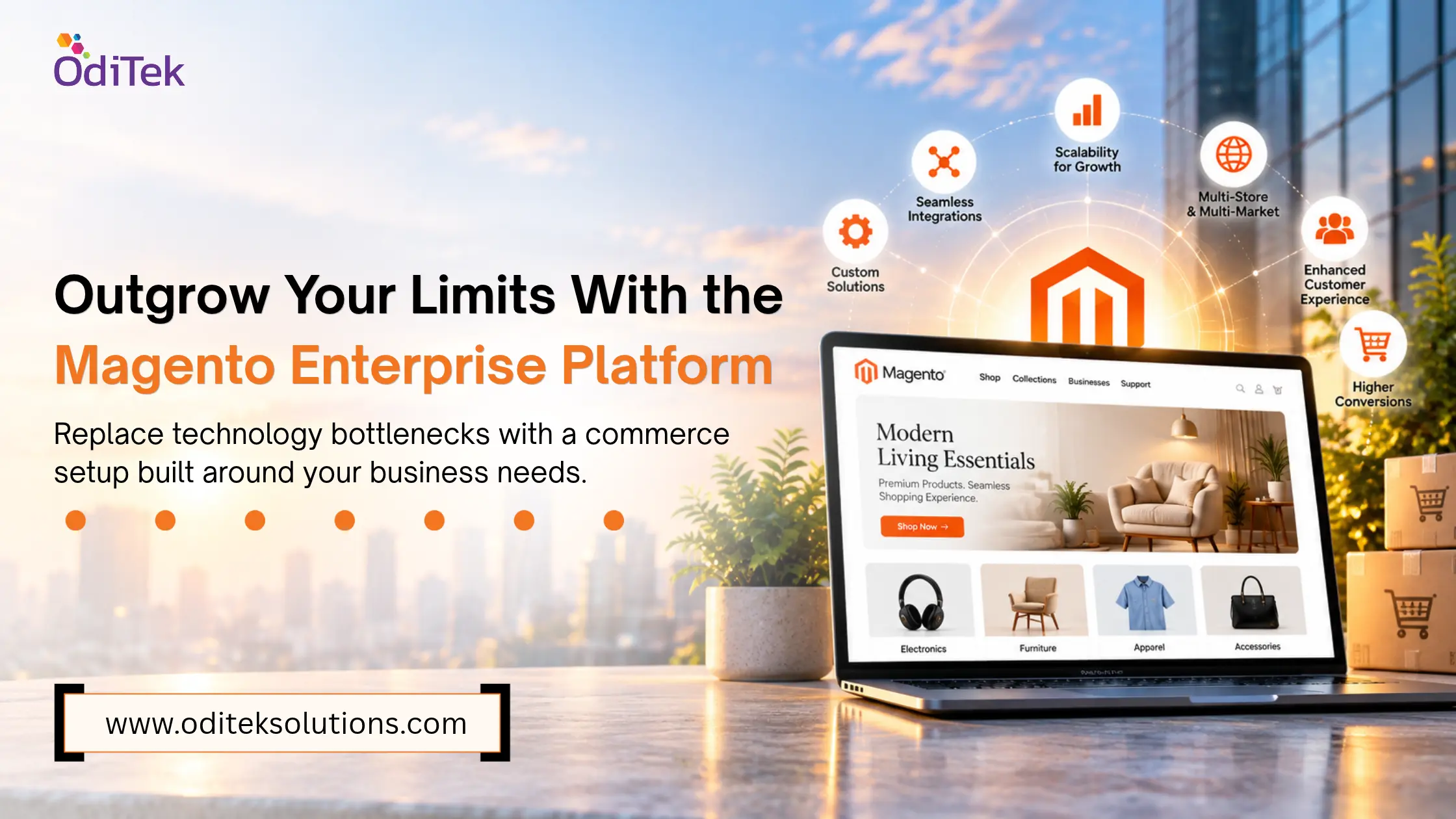
The Magento Enterprise Platform offers a flexible foundation for businesses with demanding digital commerce requirements. Adobe Commerce, built on Magento technology, provides capabilities designed to support complex commerce operations.
Flexible Storefront Customization
Businesses can tailor product pages, navigation, checkout experiences, and promotions to customer needs. This helps brands create shopping journeys that reflect their products and business models.
Complex Catalogs and Pricing
Large catalogs, customer-specific pricing, and different purchasing requirements can make commerce management challenging. Enterprise-focused capabilities can help businesses organize these needs more effectively.
Integration With Business Systems
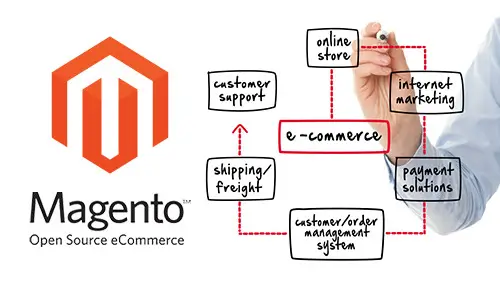
An online store rarely operates independently. Connecting ERP, CRM, inventory, payment, and order management systems can reduce manual work and improve information consistency across departments.
Multi-Store and Multi-Market Management
Businesses operating across regions, brands, or customer segments may need different storefronts, currencies, languages, and product assortments. The right configuration can simplify management while supporting distinct market requirements.
A Foundation for Future Expansion
The Magento Enterprise Platform can support evolving requirements when its architecture, hosting, integrations, and implementation are planned appropriately. Performance and scalability still depend on configuration, infrastructure, and ongoing optimization.
Magento Enterprise Ecommerce: Moving Beyond Basic Store Management
Magento Enterprise Ecommerce is relevant to businesses that need closer coordination between sales, customer experience, and back-office operations. A well-planned Magento Enterprise Ecommerce implementation can help address complex commerce workflows and integration requirements.
For example, a B2B distributor may need customer-specific pricing, negotiated terms, bulk ordering, and ERP integration. A retailer selling across several markets may prioritize localized storefronts, inventory visibility, and consistent product information.
In these situations, the goal is not simply to launch another online store. It is to create an eCommerce environment that supports how the business operates. Magento Enterprise may be worth evaluating when standard store management no longer meets these requirements.
What makes Magento different from other enterprise eCommerce platforms?
The question is not whether one platform is universally better than another. The right choice depends on business complexity, technical resources, budget, and long-term objectives.
Magento stands out for its customization options, extensibility, and ability to accommodate tailored commerce workflows. Businesses can configure functionality around specific requirements rather than relying entirely on standard features.
However, flexibility can introduce complexity. Implementation, maintenance, security, hosting, and upgrades require planning. More managed platforms may suit organizations that prioritize simplicity and lower technical overhead.
Before choosing a platform, evaluate total cost of ownership, integration requirements, internal capabilities, and the roadmap for future growth. This comparison can clarify whether Magento Enterprise Ecommerce is a suitable fit for the organization’s needs.
Why is Magento a leading enterprise eCommerce platform?
Magento has established a strong position in enterprise commerce because of its extensibility and broad ecosystem of developers, integrations, and extensions. Its capabilities can support businesses with demanding product, customer, and operational requirements.
When assessing Magento enterprise solutions, consider:
• Customizable commerce experiences.
• Integration with existing enterprise applications.
• Support for complex product and pricing structures.
• Options for multi-store operations.
• Flexibility to extend functionality as requirements evolve.
Effective Magento enterprise solutions should address actual business requirements rather than introduce unnecessary complexity. The appropriate edition and implementation approach matter. Adobe Commerce offers additional enterprise-oriented capabilities, while Magento Open Source serves different requirements. Businesses should compare these options before deciding whether Magento Enterprise is appropriate for their operations.
Why Choose Oditek?
Choosing a commerce platform is only one part of a successful digital transformation. Businesses also need development, integration, and modernization support to connect technology with operational goals.
Oditek Solutions works across custom software development, enterprise application integration, and product engineering. These capabilities can help businesses address technical requirements around an eCommerce platform.
Oditek can support initiatives such as:
• Custom development: Building functionality around specific business workflows.
• Enterprise integration: Connecting commerce applications with existing business systems.
• Application modernization: Evaluating legacy applications and improving how they work with newer platforms.
• Technical improvements: Identifying opportunities to improve functionality, maintainability, and operational efficiency.
For organizations exploring Magento Enterprise, the focus should be on understanding business requirements first and aligning the technical approach with intended outcomes. This includes evaluating how Magento Enterprise Ecommerce will work with existing applications and identifying where Magento enterprise solutions could simplify operations.
Oditek’s product engineering and integration capabilities can help businesses assess these requirements and plan a practical technical approach.
Frequently Asked Questions
1. When should a business upgrade its eCommerce platform?
Consider an upgrade when performance issues, integration limitations, increasing maintenance costs, or restricted customization begin affecting operations and customer experience.
2. Is a platform migration always necessary for business growth?
No. Optimization, infrastructure improvements, or targeted integrations may resolve existing issues. Migration becomes more relevant when the current platform cannot reasonably meet important requirements.
3. What should businesses evaluate before selecting an enterprise eCommerce solution?
Assess functionality, integration needs, security, scalability, total cost of ownership, implementation effort, and the technical resources required for ongoing maintenance.
4. How can businesses reduce the risks of an eCommerce migration?
Start with a requirements assessment, audit existing data and integrations, establish a migration plan, test critical workflows, and prepare a rollback strategy before launch.
Final Thoughts
Outgrowing an eCommerce platform is often a sign that the business has reached a new stage of complexity. The next step should be based on clear requirements, not simply the promise of more features.
The Magento Enterprise Platform can be a suitable option for businesses that need greater flexibility, deeper integrations, and support for complex commerce operations. By evaluating current limitations and long-term goals together, organizations can make a more informed decision about their next eCommerce investment.
Discover our Magento development expertise and see how we can support your eCommerce goals.
Talk to our team to get started with a Magento solution designed around your business requirements.