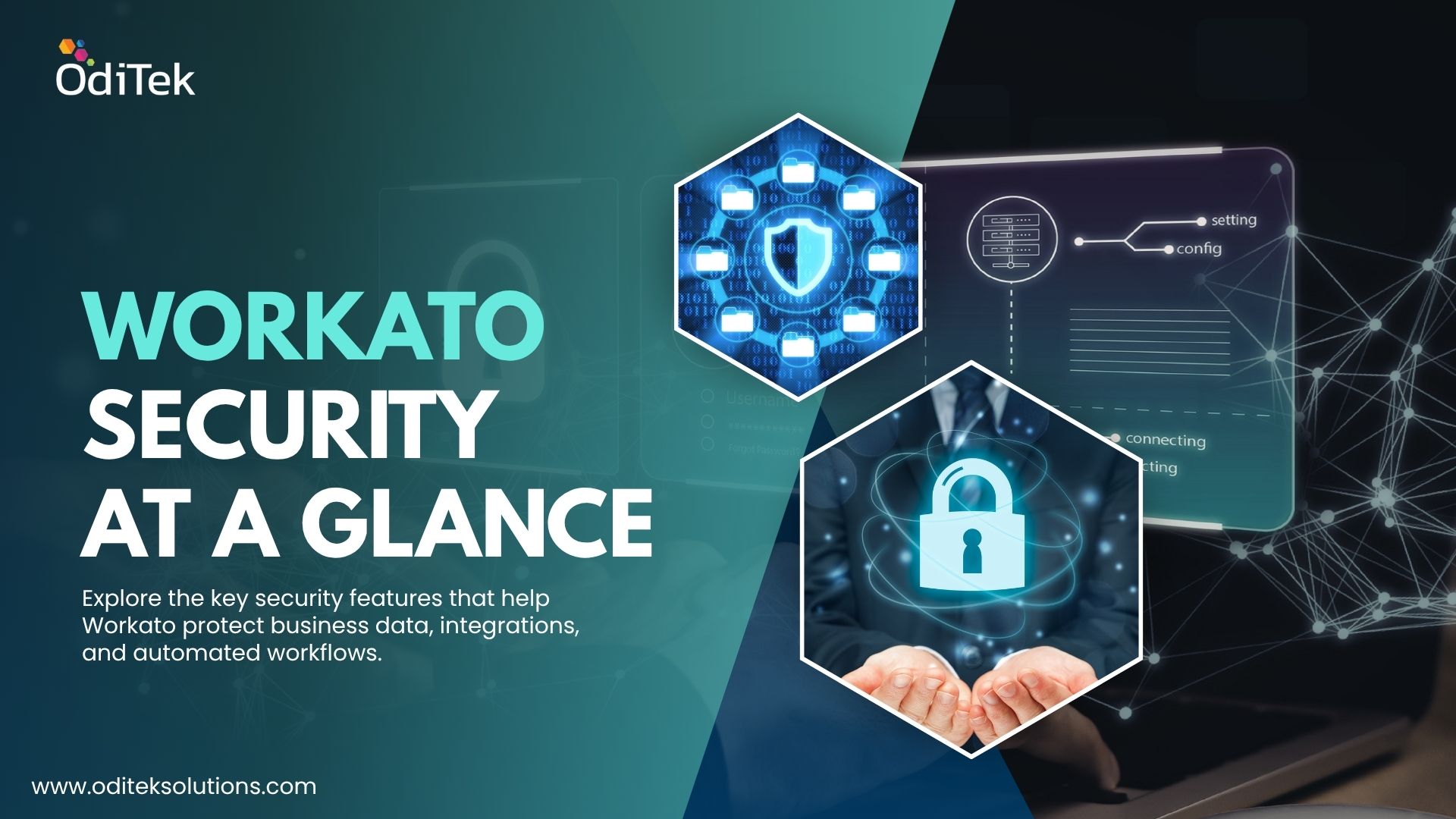
As organizations continue to connect applications, automate workflows, and streamline operations, security has become a top priority. Every integration platform handles sensitive business data, making it essential to choose a solution that offers strong protection against threats and unauthorized access. This is where Workato Security stands out.
Workato is widely used by businesses to automate processes and connect systems across departments. Along with its automation capabilities, the platform provides multiple security features designed to protect data, ensure compliance, and maintain operational integrity. In this blog, we’ll explore how Workato approaches security and why businesses trust it for enterprise integrations.
Why Security Matters in Modern Integrations
Today’s businesses rely on dozens of applications for customer management, finance, HR, marketing, and operations. These systems constantly exchange data to support everyday activities.
However, as data moves between platforms, security risks can increase. Without proper safeguards, organizations may face:
• Unauthorized data access
• Data breaches
• Compliance violations
• Operational disruptions
• Financial and reputational damage
A secure integration platform helps minimize these risks while ensuring smooth business operations.
Understanding Workato’s Security-First Approach
It was designed with security as a core component rather than an afterthought. The platform incorporates multiple layers of protection to secure data throughout its lifecycle.
This includes securing data during transmission, protecting stored information, controlling user access, and maintaining detailed audit records. These capabilities help organizations confidently automate critical workflows while maintaining governance and compliance requirements.
Key Features of Workato Security
Data Encryption and Protection
One of the most important aspects of Workato Security is its approach to data protection. The platform uses encryption methods to secure information both in transit and at rest.
When data moves between applications, encrypted communication channels help prevent unauthorized interception. Similarly, stored information remains protected through security controls designed to reduce exposure risks.
Access Control and User Management
Managing who can access integrations is essential for enterprise security.
Workato provides role-based access controls that allow organizations to define permissions based on job responsibilities. Administrators can determine who can create workflows, modify integrations, access sensitive data, or manage platform settings.
This reduces the likelihood of accidental changes or unauthorized activities.
Audit Logs and Activity Monitoring
It offers detailed audit trails that record user activities and system events. These logs help organizations:
• Track changes made to workflows
• Monitor user actions
• Investigate security incidents
• Support compliance audits
• Improve governance practices
Having a clear record of platform activity helps businesses maintain accountability and transparency.
Secure API Connectivity
Modern integrations depend heavily on APIs.
Workato supports secure authentication methods and communication protocols that help protect API interactions. This ensures that connected systems can exchange information safely while reducing potential vulnerabilities.
Workato Data Security and Compliance
For organizations handling sensitive customer, financial, or operational information, compliance is often a major concern.
Workato Data Security practices are designed to support enterprise security and regulatory requirements. The platform follows industry-recognized standards and security controls that help businesses meet governance expectations.
Compliance support is especially valuable for organizations operating in highly regulated industries such as healthcare, finance, education, and technology.
By maintaining strong security frameworks, businesses can automate processes without compromising compliance obligations.
How Workato Supports Cloud Integration Security
As companies increasingly adopt cloud-based applications, securing connections between systems becomes even more important.
Cloud Integration Security focuses on protecting data as it moves across cloud environments and connected platforms.
It helps organizations achieve this by:
• Securing application connections
• Protecting data transmission
• Managing user permissions
• Monitoring workflow activities
• Supporting secure authentication methods
These measures help reduce security risks while enabling seamless connectivity across cloud ecosystems.
Business Process Automation Security in Action
Automation can significantly improve productivity, but automated workflows often handle sensitive business information, making Business Process Automation Security a critical consideration when selecting an integration platform. For example, an automated employee onboarding workflow may transfer personal information between HR systems, payroll applications, and identity management platforms, while financial workflows may move confidential transaction data between accounting and ERP systems.
Because these processes involve the exchange of sensitive data across multiple applications, strong security measures are essential to prevent unauthorized access and maintain compliance. Workato’s security framework helps ensure that automated workflows remain protected while reducing manual intervention, minimizing human error, and enabling organizations to automate operations with greater confidence.
Real-World Use Cases of Secure Workato Integrations
Customer Data Synchronization
Organizations often integrate CRM platforms with marketing and support systems. Secure integrations help ensure customer information remains protected while enabling teams to access accurate data.
Financial Operations Automation
Finance departments use automation to streamline invoice processing, payment approvals, and reporting. Security controls help safeguard sensitive financial information throughout these workflows.
Human Resources Management
HR teams frequently automate employee onboarding, offboarding, and document management processes. Strong access controls help protect employee records and confidential information.
IT Service Management
IT departments use Workato to connect monitoring tools, ticketing systems, and communication platforms. Security features help maintain system integrity while supporting operational efficiency.
Benefits of Using Workato for Secure Business Integrations
Beyond connectivity and automation, it delivers security advantages that support enterprise growth.
Key benefits include:
• Enhanced protection for sensitive business data
• Reduced risk of unauthorized access
• Improved compliance readiness
• Secure cloud application connectivity
• Better visibility through audit logging
• Strong governance and access management
• Reduced manual security risks through automation
These capabilities help organizations scale integrations confidently while maintaining security standards.
How OdiTek Helps Businesses Build Secure Automation Strategies
Businesses need more than just integration capabilities—they need a platform that supports long-term security and governance objectives.
OdiTek Solutions combine automation, connectivity, and security features to help organizations streamline operations without increasing risk. By providing secure workflow automation, access controls, monitoring capabilities, and compliance support, OdiTek enables businesses to create reliable integration ecosystems.
Organizations looking to modernize operations can benefit from implementing secure automation strategies that balance efficiency with data protection.
Looking to improve operational efficiency with smarter automation? Visit our Workato Services page to explore scalable integration solutions tailored to your business needs.
Conclusion
As organizations continue to embrace digital transformation, integration security remains a critical priority. Workato Security provides multiple layers of protection, including encryption, access management, audit logging, secure API connectivity, and compliance-focused controls.
By combining automation capabilities with strong security practices, Workato helps businesses connect applications, automate workflows, and manage sensitive information with greater confidence. For companies seeking a secure and scalable integration platform, Workato offers a reliable foundation for modern business operations.
FAQs
1. What is Workato Security?
Workato Security refers to the security framework and controls implemented within the Workato platform to protect business data, integrations, and automated workflows.
2. How does Workato protect sensitive business data?
Workato uses encryption, access controls, secure authentication methods, and monitoring capabilities to help protect data throughout its lifecycle.
3. Is Workato suitable for enterprise-level integrations?
Yes. Workato is widely used by enterprises that require secure, scalable, and compliant integration and automation solutions.
4. How does Workato support Cloud Integration Security?
Workato helps secure cloud-based connections through encrypted communication, authentication controls, permission management, and activity monitoring.
5. Why is Business Process Automation Security important?
Business Process Automation Security helps ensure that automated workflows handling sensitive information remain protected from unauthorized access and security threats.
6. How does Workato Security help with compliance requirements?
Workato supports security controls, governance practices, and audit capabilities that help organizations align with various compliance and regulatory requirements.