
Ecommerce is no longer just about having an online storefront. Businesses need platforms that can handle growing product catalogs, changing customer expectations, multiple integrations, increasing traffic, and new digital experiences. This is where the right development expertise becomes important.
Magento ecommerce developers help businesses create flexible and scalable commerce platforms that can evolve alongside their needs. From custom functionality and integrations to performance optimization and ongoing improvements, their role extends across the entire ecommerce lifecycle.
What Makes a Commerce Platform Future-Ready?
A future-ready commerce platform needs to do more than support today’s requirements. It should provide the flexibility to adapt as the business grows and technology changes.
Key characteristics include:
• Scalability: The ability to support increasing traffic, products, customers, and transactions.
• Customization: Flexibility to develop features around specific business requirements.
• Integration: Connectivity with ERP, CRM, payment gateways, marketplaces, and other systems.
• Performance: Fast and reliable experiences across devices and customer touchpoints.
• Security: Protection for customer, business, and transaction data.
• Adaptability: The ability to adopt new technologies and ecommerce strategies over time.
With the right architecture and development approach, Magento can provide a strong foundation for these requirements.
How Magento Ecommerce Developers Build Scalable Solutions
Building a scalable store requires more than installing a platform and configuring basic features. Magento ecommerce developers evaluate business requirements, technical infrastructure, integrations, and future growth before implementing a solution.
They can customize store functionality, optimize databases, configure caching, improve code efficiency, and prepare the platform to handle higher traffic volumes.
This approach allows businesses to expand their product range, customer base, and operations without constantly rebuilding their ecommerce infrastructure.
What Expertise Do Magento Ecommerce Developers Bring to a Project?
The success of an ecommerce project depends heavily on the technical and strategic capabilities of the development team. Magento ecommerce developers can contribute expertise across development, customization, integration, optimization, and troubleshooting.
Their capabilities may include:
• Custom Magento theme and feature development
• Extension development and integration
• Third-party system integration
• Performance optimization
• Database and backend optimization
• Ecommerce migration and upgrades
• Mobile-friendly storefront development
• Security and technical maintenance
Experienced developers can also identify potential technical limitations early, helping businesses make better decisions before they become expensive problems.
The Role of Magento Enterprise Developers in Complex Ecommerce
Large organizations often have more complicated requirements than standard online stores. They may need advanced catalogs, multiple storefronts, B2B functionality, complex workflows, extensive integrations, and high-volume transaction handling.
Magento enterprise developers can design and implement solutions around these requirements while keeping scalability and maintainability in mind.
Their work can include:
• Multi-store and multi-site implementation
• Advanced catalog management
• B2B ecommerce functionality
• ERP and CRM integrations
• Custom business workflows
• Performance optimization for high-traffic stores
For organizations with complex operations, Magento enterprise developers can help align the commerce platform with existing business processes instead of forcing the business to work around platform limitations.
How Magento Commerce Developers Support Connected Experiences
Modern customers may interact with a business through websites, mobile devices, marketplaces, social platforms, and other digital channels. A commerce platform therefore needs to work as part of a broader technology ecosystem.
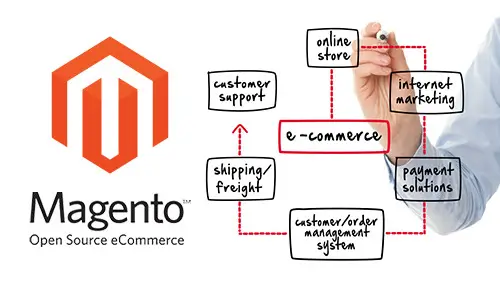
Magento commerce developers can help connect the store with external systems and digital touchpoints. This can include payment services, inventory platforms, customer relationship systems, marketing tools, shipping providers, and enterprise applications.
With properly planned integrations, Magento commerce developers can help businesses create more consistent data flows and reduce manual processes.
From Performance Optimization to Better Customer Experiences
Performance has a direct impact on how customers interact with an ecommerce store. Slow pages, inefficient search, poor navigation, or unreliable checkout processes can affect customer satisfaction.
Developers can analyze technical bottlenecks and optimize areas such as:
• Page loading and caching
• Database queries
• Images and frontend assets
• Search functionality
• Checkout processes
• Mobile performance
• Server configuration
Magento enterprise developers can also optimize large-scale implementations where performance becomes increasingly important as traffic and transaction volumes grow.
The objective is not simply to make a store faster, but to create a smoother experience that supports business and customer requirements.
What Role Do Magento Ecommerce Developers Play After a Store Goes Live?
Launching an ecommerce store is not the end of development. Magento ecommerce developers continue to play an important role through maintenance, monitoring, optimization, security updates, and feature improvements.
Post-launch support may involve:
• Identifying and resolving technical issues
• Applying platform and security updates
• Monitoring website performance
• Updating integrations
• Improving existing functionality
• Optimizing the store as traffic increases
• Supporting new business requirements
This ongoing involvement helps businesses keep their commerce platform reliable and ready to adapt as their needs change.
Why Choose Oditek for Magento Development?
Choosing the right technology partner can make a significant difference to the success of an ecommerce implementation. Oditek focuses on developing solutions around business requirements rather than relying solely on standard configurations.
Our approach can support businesses through:
• Custom development: Solutions designed around specific business processes.
• Integration capabilities: Connecting ecommerce platforms with essential business systems.
• Performance focus: Optimizing platforms for speed, reliability, and scalability.
• Ongoing support: Assistance with maintenance, upgrades, troubleshooting, and enhancements.
• Growth-oriented development: Building solutions that can evolve as business requirements change.
With experienced Magento commerce developers, businesses can establish a commerce environment designed to support both current operations and future expansion.
FAQs
1. Is Magento suitable for large ecommerce businesses?
Yes. Magento can support complex catalogs, multiple storefronts, B2B requirements, integrations, and high-volume ecommerce operations when appropriately implemented and optimized.
2. Can a Magento store be customized?
Yes. Businesses can customize themes, features, workflows, integrations, checkout processes, and other components according to their specific requirements.
3. Can Magento integrate with ERP and CRM systems?
Yes. Magento can integrate with ERP, CRM, payment, inventory, shipping, marketing, and other business systems through APIs, extensions, and custom integration solutions.
4. Does Magento support B2B ecommerce?
Yes. Magento supports several B2B capabilities, making it suitable for businesses that manage corporate buyers, negotiated pricing, shared catalogs, purchasing workflows, and account-based commerce.
5. Why is ongoing ecommerce maintenance important?
Regular maintenance helps keep a store secure, compatible, stable, and optimized while allowing businesses to introduce new features and respond to changing customer expectations.
Final Thoughts
Building a future-ready commerce platform requires more than choosing an ecommerce technology. It requires thoughtful architecture, customization, integration, performance optimization, and continued improvement.
With the right development approach, businesses can create Magento solutions that support today’s operations while remaining flexible enough for tomorrow’s opportunities.
Discover our Magento development expertise and see how we can support your eCommerce goals.
Talk to our team to get started with a Magento solution designed around your business requirements.