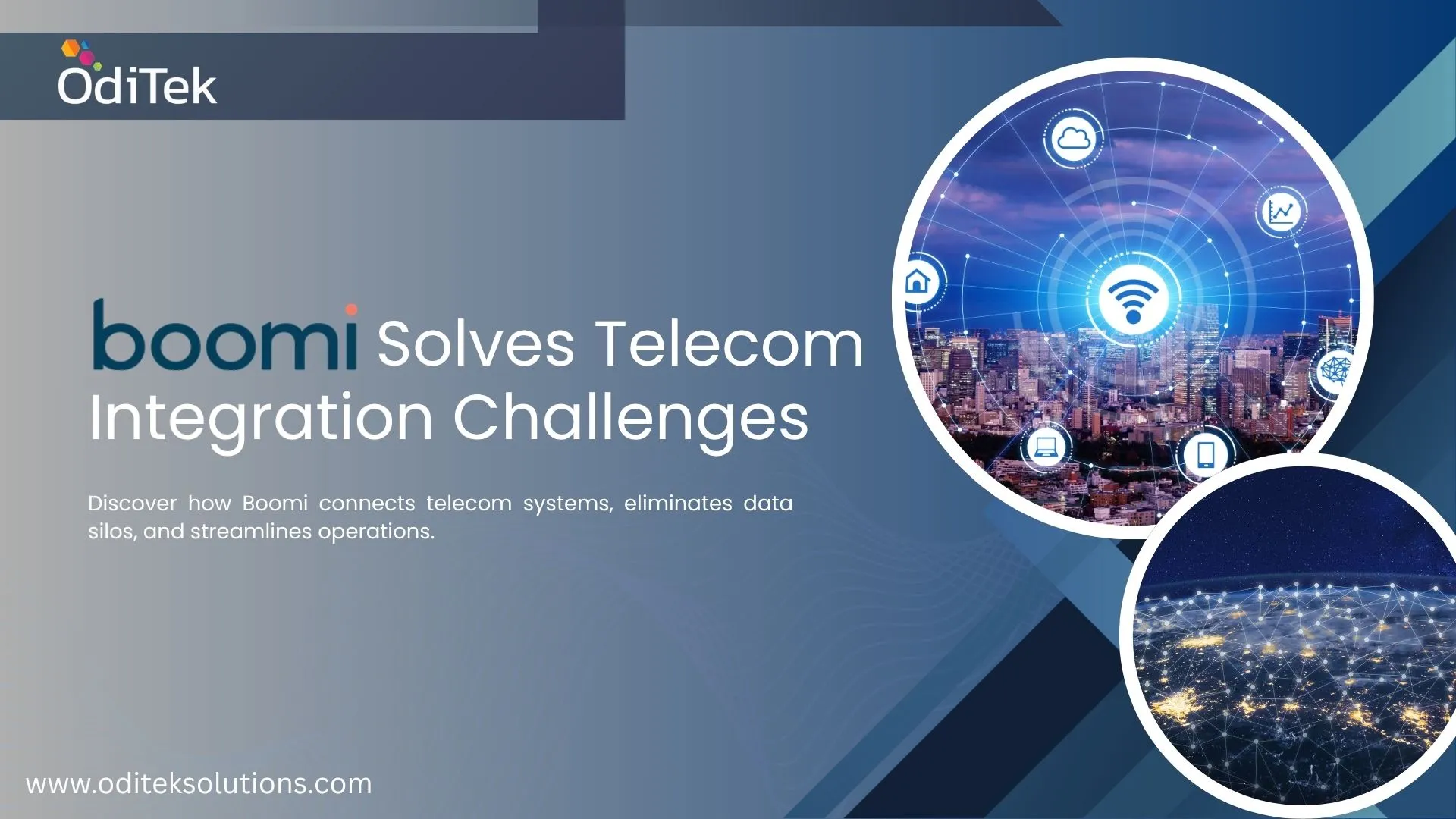
Telecommunications companies operate in one of the most complex technology environments today. From customer management systems and billing platforms to network operations and third-party applications, telecom providers depend on multiple systems working together seamlessly. However, integrating these systems is often easier said than done.
This is where Boomi Telecom Integration helps organizations overcome connectivity challenges and streamline operations. By enabling seamless communication between applications, data sources, and business processes, Boomi helps telecom companies improve efficiency, reduce manual effort, and deliver better customer experiences.
As telecom networks continue to evolve with cloud technologies, 5G, and digital services, having a reliable integration strategy is becoming increasingly important.
Why Telecom Integration Is So Challenging
Telecommunications providers often manage a combination of modern cloud applications and legacy systems. Many of these platforms were developed independently and were never designed to communicate with each other.
As a result, telecom companies frequently face challenges such as:
• Disconnected OSS and BSS systems
• Data silos across departments
• Manual data transfers
• Complex customer onboarding processes
• Delayed service provisioning
• Inconsistent customer information
• Integration difficulties with third-party platforms
Industry discussions continue to highlight OSS/BSS integration as one of the biggest operational bottlenecks in telecommunications due to legacy infrastructure and evolving business requirements.
Without effective integration, these challenges can slow down operations, increase costs, and negatively impact customer satisfaction.
The Growing Need for Telecom Integration Solutions
As telecom providers expand their digital offerings, integration becomes a business necessity rather than a technical project.
Modern Telecom Integration Solutions help organizations connect applications, automate workflows, and ensure data flows smoothly across the business. Instead of relying on custom point-to-point integrations, telecom providers can use centralized integration platforms to simplify connectivity and improve scalability.
An effective integration strategy enables telecom companies to:
• Accelerate service delivery
• Improve customer experiences
• Reduce operational complexity
• Enhance data visibility
• Support digital transformation initiatives
• Simplify cloud adoption
How Boomi Telecom Integration Addresses Common Challenges
Connecting Legacy and Modern Systems
One of the biggest telecom challenges is bridging the gap between legacy infrastructure and modern cloud applications.
The Boomi Integration Platform allows telecom providers to connect cloud applications, on-premise systems, databases, APIs, and external services through a single platform. Its hybrid deployment capabilities help organizations modernize gradually without replacing existing infrastructure.
This approach reduces integration complexity while supporting long-term digital transformation goals.
Eliminating Data Silos
Telecom organizations often store customer, billing, network, and operational data across multiple systems.
Boomi enables real-time data synchronization between these platforms, helping teams access accurate and consistent information whenever needed. By reducing fragmented data, businesses can make better decisions and improve operational visibility.
Accelerating Service Provisioning
Customer expectations continue to rise. Delays in activating services or processing requests can quickly impact customer satisfaction.
With automated workflows and system integrations, Boomi helps telecom providers streamline provisioning processes, reducing the time required to activate new services and process customer requests.
Telecommunications System Integration for Modern Networks
Telecom providers depend on multiple operational and business support systems to manage daily activities.
Effective Telecommunications System Integration ensures these systems work together efficiently while minimizing manual intervention.
Some commonly integrated telecom systems include:
• OSS (Operations Support Systems)
• BSS (Business Support Systems)
• CRM platforms
• Billing applications
• Customer support systems
• Network monitoring tools
• ERP platforms
• Third-party service providers
By integrating these systems, telecom operators can create a more connected environment that supports faster operations and improved customer experiences.
Key Benefits of Using Boomi in Telecom
Telecom companies adopting Boomi often experience improvements in operational efficiency, agility, and scalability.
Key benefits include:
• Faster deployment of integrations
• Reduced reliance on manual processes
• Improved data accuracy
• Better customer experience management
• Real-time information sharing
• Simplified API management
• Enhanced scalability for future growth
• Improved governance and monitoring
Boomi’s extensive library of connectors and low-code development capabilities also help reduce development time while supporting enterprise-grade integrations.
Telecom Data Integration for Better Decision-Making
Data is one of the most valuable assets within a telecommunications organization. However, its value depends on how effectively it can be accessed and utilized.
Telecom Data Integration helps consolidate information from multiple systems into a unified view. This enables organizations to gain deeper insights into customer behavior, service performance, network operations, and business outcomes.
Benefits of integrated telecom data include:
• More accurate reporting
• Better customer analytics
• Improved forecasting
• Faster issue resolution
• Enhanced operational intelligence
• Stronger compliance and governance
With real-time data movement and synchronization, telecom companies can make informed decisions based on reliable information rather than fragmented datasets.
Real-World Telecom Use Cases
Customer Onboarding Automation
When a new customer signs up for a telecom service, multiple systems need to be updated. Boomi can automate this process by connecting CRM, billing, provisioning, and support platforms.
Billing System Integration
Telecom providers often manage complex billing environments. Boomi helps synchronize customer information, usage data, and payment records across systems.
Network Operations Management
Integration between network monitoring tools and operational systems allows telecom teams to respond more quickly to service disruptions and performance issues.
API-Driven Service Delivery
Modern telecom companies increasingly rely on APIs to connect applications and partners. Boomi simplifies API integration and management while supporting secure data exchange.
Digital Service Expansion
Telecom operators launching new digital services can use Boomi to integrate customer-facing applications with backend systems, accelerating time-to-market.
A practical example comes from telecom operator MyRepublic Digital, which leveraged Boomi’s platform to support growth, operational efficiency, and customer-focused innovation while handling millions of transactions through integrated systems.
How OdiTek Supports Telecom Integration Projects
OdiTek helps organizations design, implement, and optimize Boomi-based integration solutions tailored to business requirements.
With expertise in the Boomi Integration Platform, OdiTek supports businesses in connecting applications, automating workflows, and building scalable integration architectures. Whether organizations need cloud connectivity, API integration, or enterprise-wide automation, the focus remains on creating efficient and reliable integration ecosystems.
Services include:
• Boomi implementation and consulting
• Application integration
• API development and management
• Workflow automation
• Cloud and hybrid integration
• Integration monitoring and support
Conclusion
Telecommunications companies face unique integration challenges due to complex infrastructure, legacy systems, and growing customer expectations. Without effective connectivity between systems, operational inefficiencies and data silos can slow business growth.
Boomi Telecom Integration helps address these challenges by connecting applications, automating workflows, and enabling seamless data exchange across the organization. From OSS/BSS integration to customer onboarding and data management, Boomi provides a scalable foundation for modern telecom operations.
As telecom providers continue their digital transformation journey, a strong integration strategy can play a crucial role in improving agility, efficiency, and customer satisfaction.
Looking to simplify telecom operations with smarter integration strategies? Visit OdiTek Boomi Integration Services to explore scalable integration solutions.
FAQs
1. What is Boomi Telecom Integration?
Boomi Telecom Integration refers to using Boomi’s integration platform to connect telecom applications, automate workflows, and enable seamless data sharing across systems.
2. Why is telecommunications system integration important?
Telecommunications System Integration helps connect OSS, BSS, CRM, billing, and network management systems, improving operational efficiency and customer experience.
3. How does Boomi help telecom companies reduce integration complexity?
Boomi provides pre-built connectors, low-code development tools, API management capabilities, and hybrid integration support that simplify connectivity between systems.
4. What are the benefits of Telecom Data Integration?
Telecom Data Integration improves reporting accuracy, customer insights, operational visibility, and decision-making by synchronizing information across multiple systems.
5. Can Boomi integrate legacy telecom infrastructure?
Yes. Boomi supports both modern cloud applications and legacy on-premise systems, allowing telecom providers to modernize without replacing existing infrastructure.
6. Why do telecom companies choose Boomi Telecom Integration?
Telecom companies choose Boomi Telecom Integration because it helps automate processes, reduce manual work, improve data visibility, and support scalable digital transformation initiatives.