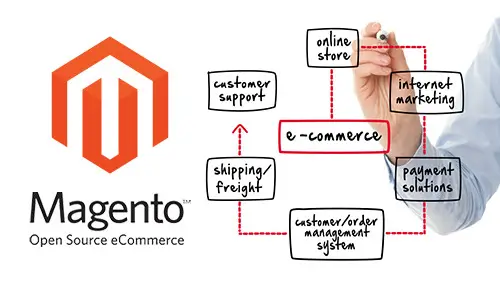

Modern eCommerce businesses rely on multiple systems to manage products, orders, inventory, customers, payments, and fulfilment. Magento powers the online storefront, while ERP platforms and other business applications manage critical backend operations.
When these systems work independently, businesses may have to transfer information manually, which can lead to data inconsistencies, delays, and repetitive work.
Magento integration services connect Magento with ERP platforms, APIs, CRM systems, payment gateways, shipping applications, and other business tools. This creates a connected environment where information can move between systems more efficiently.
Why Magento Integration Matters for Modern eCommerce
As an eCommerce business grows, managing increasing numbers of products, orders, and customers across disconnected platforms becomes more challenging. Integration can help automate repetitive processes while keeping important information synchronized.
Key benefits include:
• Reduced manual data entry
• Faster order processing
• Improved inventory visibility
• Better data accuracy
• Fewer operational errors
• Improved coordination between teams
• More consistent customer information
A connected technology environment allows businesses to spend less time managing data manually and more time focusing on customers and business operations. With the right Magento integration services, businesses can create smoother connections between their storefront and essential business applications.
Magento ERP Integration for Connected Business Operations
Magento ERP integration connects a Magento store with an enterprise resource planning system. ERP platforms commonly manage inventory, procurement, accounting, product information, and order fulfilment.
With Magento integration with ERP, businesses can create automated data flows between the online store and backend operations. For example, an order placed through Magento can be transferred to the ERP for processing, while updated inventory information can be sent back to the storefront.
Depending on business requirements, the integration can support:
• Product and catalog information
• Inventory and stock levels
• Customer records
• Orders and order status
• Pricing information
• Invoices and payments
• Shipment and tracking details
This reduces the need for employees to repeatedly enter the same information across different platforms.
Why is Magento ERP integration important for growing businesses?
Magento ERP integration becomes particularly valuable as order volumes and operational complexity increase. Manual processes that may work for a small business can become inefficient when hundreds or thousands of transactions need to be managed.
Connecting Magento with an ERP can help businesses:
• Maintain more consistent inventory information
• Process orders more efficiently
• Reduce duplicate data entry
• Improve visibility across operations
• Coordinate sales and fulfilment
• Simplify backend workflows
The integration should be designed around the company’s existing systems, processes, and data requirements. A well-planned Magento integration with ERP approach can help businesses maintain better coordination between eCommerce operations and backend processes.
Magento API Integration and Business Automation
APIs allow different applications to communicate and exchange information based on predefined rules. This makes them an important part of connecting Magento with external business applications.
Magento api integration can connect Magento with ERP systems, CRMs, payment gateways, shipping providers, marketplaces, inventory platforms, and custom applications.
For example, when a customer places an order, the order information can automatically be transferred to a connected system. Once the order is processed, shipment and tracking information can be returned to Magento.

How does Magento API integration automate business processes?
Magento api integration enables connected applications to exchange information automatically when specific events occur. This removes many manual steps from everyday workflows.
Common automated processes include:
1. Order synchronization: Transfer new orders to backend systems.
2. Inventory updates: Synchronize stock information between platforms.
3. Customer data exchange: Keep relevant customer records aligned.
4. Product synchronization: Exchange product and pricing information.
5. Shipping updates: Return tracking information to the storefront.
This automation can help reduce administrative work and improve the consistency of information across business systems. Businesses can also use Magento api integration to connect custom applications and third-party platforms based on their specific operational requirements.
Building a Reliable Integration Architecture
Successful integration requires more than connecting two applications. Businesses need to determine what data should be exchanged, how frequently it should move, and how errors will be handled.
Before implementation, businesses should consider:
• Systems that need to communicate
• Data fields that require synchronization
• Real-time or scheduled data exchange
• API and authentication requirements
• Data mapping and transformation
• Error handling and monitoring
• Security requirements
A well-planned architecture creates reliable data flows and makes it easier to add new systems or workflows in the future. Professional Magento integration services can help businesses evaluate these requirements and establish an integration architecture suited to their workflows.
Magento Integration Services: Supporting a Connected eCommerce Ecosystem
Every business has different integration requirements. Some may only need to connect Magento with an ERP, while others may need multiple connections involving payment platforms, marketplaces, shipping providers, or custom applications.
Magento integration services can support the integration lifecycle through:
1. Assessment: Review existing systems, workflows, and integration requirements.
2. Planning: Define data flows, APIs, synchronization rules, and technical requirements.
3. Development: Build or configure the required integrations and data mappings.
4. Testing: Validate data accuracy, workflows, and error handling.
5. Deployment: Launch and monitor the integration to ensure reliable data exchange.
This structured approach helps businesses create integrations that support their actual operational needs.
Why Choose OdiTek for Magento Integration Services
OdiTek Solutions brings experience in application development, API integration, cloud integration, and enterprise technology solutions.
Our approach begins with understanding the existing technology environment and business workflows. This helps determine the appropriate integration architecture, APIs, data flows, and synchronization requirements.
OdiTek can support businesses with:
• Magento and ERP connectivity
• API development and integration
• Data mapping and synchronization
• Custom application integration
• Cloud and enterprise integrations
• Integration testing and deployment
• Monitoring and optimization
The goal is to create reliable connections that simplify eCommerce operations and improve the flow of business information.
Frequently Asked Questions
1. What systems can Magento connect with?
Magento can connect with ERP platforms, CRM systems, payment gateways, shipping providers, marketplaces, accounting applications, inventory systems, and custom applications.
2. Is custom development required for Magento integration?
Not always. Some integrations can use existing connectors, while more complex requirements may need custom APIs, middleware, or development.
3. Can inventory updates be automated?
Yes. Inventory information can be synchronized between Magento and connected systems based on defined business rules.
4. What factors affect integration complexity?
The number of systems involved, data volume, API capabilities, synchronization requirements, customization, security, and error-handling requirements can all affect complexity.
5. Can an existing integration be expanded?
Yes. A well-designed integration architecture can be extended to accommodate additional applications and workflows as business needs change.
Final Thoughts
Connecting Magento with ERP platforms and other business applications can help eCommerce businesses reduce manual work, improve data accuracy, and create more efficient workflows.
With the right integration strategy, businesses can connect their storefront with critical backend systems while creating a smoother experience for both customers and internal teams. Magento integration services provide the technical foundation for building this connected eCommerce environment.
Discover our Magento development expertise and see how we can support your eCommerce goals.
Talk to our team to get started with a Magento solution designed around your business requirements.