Technology is evolving faster than ever, and businesses that continue operating on outdated software systems often struggle to keep pace with growing customer expectations, security demands, and digital innovation. Legacy applications that once powered business operations efficiently can gradually become barriers to scalability, agility, and long-term growth.
For organizations relying on aging enterprise systems, modernization is no longer just a technical upgrade, it has become a strategic business decision. This is where .NET application modernization helps enterprises transform rigid legacy applications into agile, scalable, and cloud-native solutions capable of supporting modern business ecosystems.
By modernizing applications with advanced architectures, cloud technologies, and automation-driven development practices, businesses can improve operational efficiency, accelerate innovation, and create seamless digital experiences while preparing for future growth.
What is .NET Application Modernization?
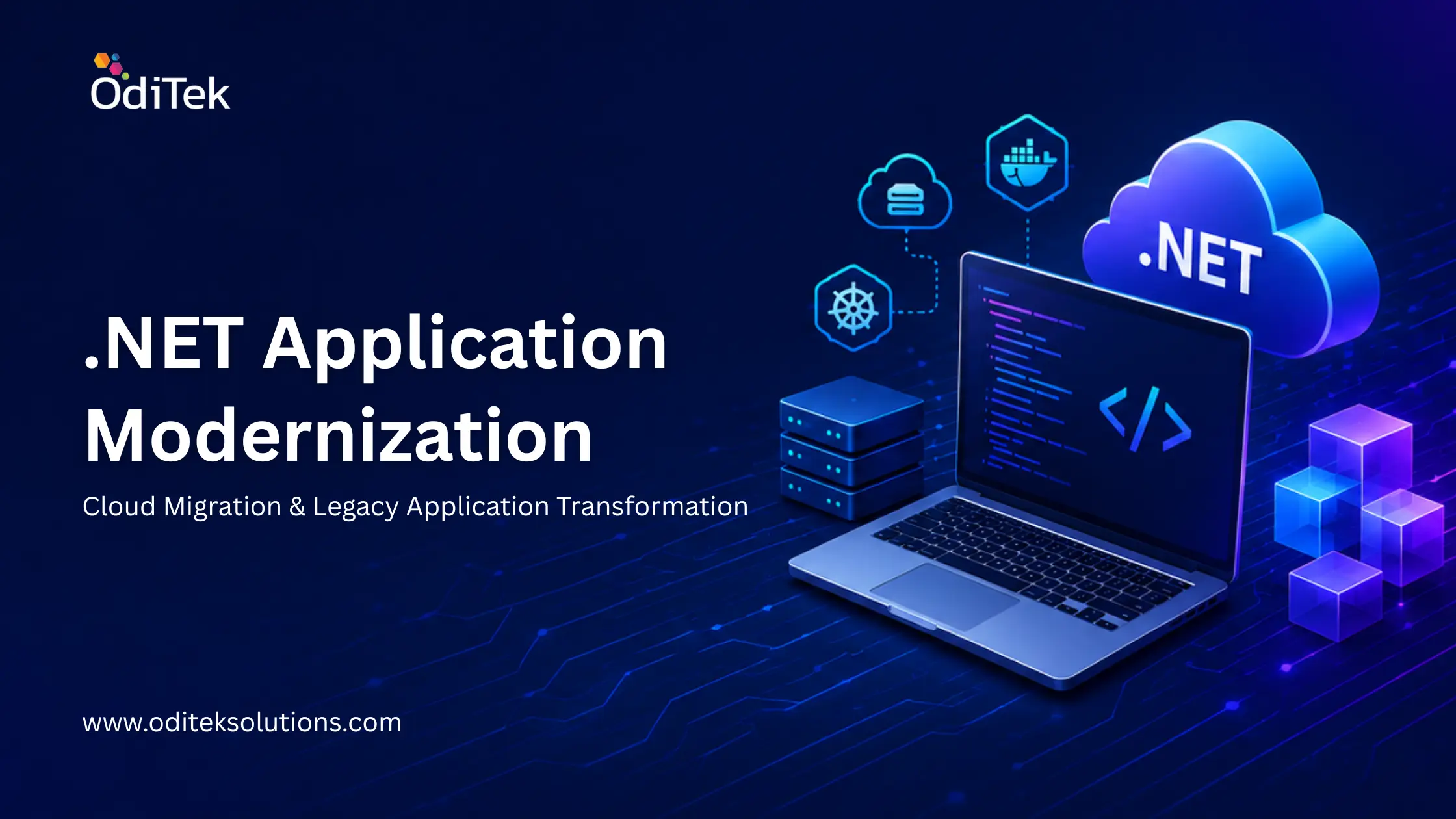
.NET application modernization is the process of upgrading legacy .NET applications using modern frameworks, cloud platforms, and scalable architectures. The objective is to improve application performance, flexibility, security, and maintainability while supporting evolving business requirements.
Modernization may include:
• Upgrading older .NET Framework applications to modern .NET versions
• Migrating applications to cloud environments
• Transforming monolithic applications into microservices
• Improving application security and scalability
• Implementing DevOps and CI/CD automation
• Modernizing APIs and user interfaces
By modernizing applications, businesses can create cloud-native solutions that support long-term digital growth.
Why Modernize Legacy .NET Applications?
Many organizations continue to rely on legacy applications built on older ASP.NET and .NET Framework technologies. Although these systems may still function, they often struggle to meet modern performance, scalability, and security expectations.
High Maintenance Costs
Legacy systems require ongoing maintenance, manual updates, and infrastructure management, increasing operational expenses over time.
Limited Scalability
Traditional monolithic applications often fail to scale efficiently as business demands and user traffic increase.
Security Challenges
Older frameworks may no longer receive regular security updates, making applications more vulnerable to cyber threats and compliance risks.
Slower Development and Deployment
Legacy architectures make it difficult for development teams to introduce new features and updates quickly.
Integration Limitations
Older systems may not integrate efficiently with modern APIs, cloud services, or enterprise platforms.
These challenges are among the primary reasons businesses invest in legacy ASP.NET application modernization initiatives.
Benefits of .NET Modernization
The benefits of .NET modernization extend beyond technology upgrades and directly impact business efficiency and growth.
Improved Application Performance
Modern .NET platforms provide faster processing, better runtime optimization, and improved application responsiveness.
Enhanced Scalability
Cloud-native applications can scale resources dynamically based on workload demands, ensuring consistent performance.
Stronger Security
Modern frameworks support advanced authentication, encryption, and compliance standards that strengthen application security.
Faster Time-to-Market
DevOps automation and CI/CD pipelines streamline development and deployment processes, enabling faster releases.
Reduced Operational Costs
Migrating applications to cloud environments helps reduce infrastructure and maintenance expenses.
Better User Experience
Modern user interfaces and optimized application performance improve customer satisfaction and productivity.
Easier System Integration
API-driven architectures and microservices simplify integration with third-party applications and enterprise systems.
Legacy ASP.NET Application Modernization
Many enterprises still operate applications developed using older ASP.NET technologies. However, maintaining these systems becomes increasingly difficult as business requirements evolve.
Framework Upgrades
Migrating from legacy .NET Framework versions to modern .NET improves application performance, flexibility, and long-term support.
UI and UX Modernization
Modern user interfaces enhance usability, accessibility, and overall customer experience.
API Modernization
Transforming applications into API-driven systems improves interoperability and supports modern application ecosystems.
Cloud Adoption
Cloud migration enables organizations to build scalable, resilient, and highly available applications.
DevOps Enablement
Automation tools and CI/CD pipelines improve deployment speed and operational efficiency.
How to Migrate Legacy .NET Applications to Cloud
Many organizations choose to migrate legacy .NET applications to cloud platforms to improve scalability, agility, and operational efficiency.
Application Assessment
The modernization process begins with analyzing existing applications, infrastructure, and dependencies.
Selecting the Right Migration Strategy
Businesses may adopt different migration approaches such as:
• Rehosting
• Refactoring
• Replatforming
• Rebuilding
The ideal strategy depends on business objectives and application complexity.
Application Refactoring
Legacy applications may require code restructuring to support cloud-native architectures and modern services.
Data Migration
Databases and storage systems must be migrated securely while maintaining performance and data integrity.
Testing and Optimization
Comprehensive testing ensures the application performs efficiently after migration while meeting security and compliance requirements.
Best Practices for Successful .NET Application Modernization
Align Modernization with Business Goals
Modernization efforts should support measurable business outcomes such as improved scalability, reduced costs, or enhanced customer experience.
Prioritize High-Impact Applications
Businesses should begin with applications that deliver the highest operational or business value.
Modernize in Phases
Incremental modernization minimizes risk and reduces disruption during the transition process.
Adopt Cloud-Native Technologies
Using microservices, containers, and Kubernetes improves scalability and deployment flexibility.
Implement Automation
DevOps and CI/CD automation improve development efficiency and deployment speed.
Focus on Security and Compliance
Security should remain a priority throughout the modernization lifecycle.
How OdiTek Can Help
At OdiTek, we help businesses accelerate their digital transformation journey through strategic .NET application modernization services tailored to enterprise needs. Our team specializes in transforming outdated applications into scalable, secure, and cloud-native solutions that support long-term business growth.
From legacy ASP.NET application modernization to helping enterprises migrate legacy .NET applications to cloud platforms, we deliver modernization strategies that improve application performance, operational efficiency, and system scalability.
Our modernization services include:
• Legacy .NET application assessment and modernization planning
• ASP.NET to modern .NET migration
• Cloud migration and cloud-native development
• API modernization and microservices implementation
• DevOps and CI/CD enablement
• Performance optimization and security enhancement
With a strong focus on agility, innovation, and business continuity, OdiTek helps organizations modernize applications with minimal disruption while building future-ready enterprise ecosystems.
Conclusion
Modern enterprises need applications that can evolve alongside changing technologies, customer expectations, and business demands. Relying on outdated systems not only increases operational complexity but also limits an organization’s ability to innovate and scale efficiently.
Through .NET application modernization, businesses can unlock the full potential of their legacy systems by improving performance, strengthening security, and enabling cloud-native capabilities. Whether focusing on legacy ASP.NET application modernization or planning to migrate legacy .NET applications to cloud, modernization creates a strong foundation for long-term digital transformation.
Organizations that invest in modernization today are not simply upgrading applications, they are building resilient, future-ready enterprise ecosystems designed for continuous innovation and sustainable growth.
To learn more about how Jasper reporting solutions can support your business, visit the .net Skill Page.
Contact us today to streamline your reporting processes and build a more insight-driven data environment.
Frequently Asked Questions
What is .NET application modernization?
.NET application modernization is the process of upgrading legacy .NET applications using modern technologies, cloud platforms, and scalable architectures.
Why is .NET application modernization important?
It helps businesses improve scalability, security, performance, and operational efficiency.
What are the benefits of .NET modernization?
The benefits include better performance, cloud scalability, stronger security, and reduced maintenance costs.
What is legacy ASP.NET application modernization?
Legacy ASP.NET application modernization involves upgrading older ASP.NET applications to modern and cloud-ready .NET platforms.
How do businesses migrate legacy .NET applications to cloud?
Businesses migrate applications by assessing existing systems, modernizing architecture, and deploying them on cloud platforms.
What are the common challenges in legacy application modernization?
Common challenges include outdated architecture, integration issues, security risks, and migration complexity.
Which cloud platforms support .NET application modernization?
Microsoft Azure, AWS, and Google Cloud are widely used platforms for .NET modernization.
How long does .NET application modernization take?
The timeline depends on application size, complexity, and modernization strategy.
What is the difference between migration and modernization?
Migration moves applications to a new environment, while modernization upgrades the application architecture and technology stack.
Is .NET application modernization suitable for enterprises?
Yes, it helps enterprises build scalable, secure, and future-ready business applications.