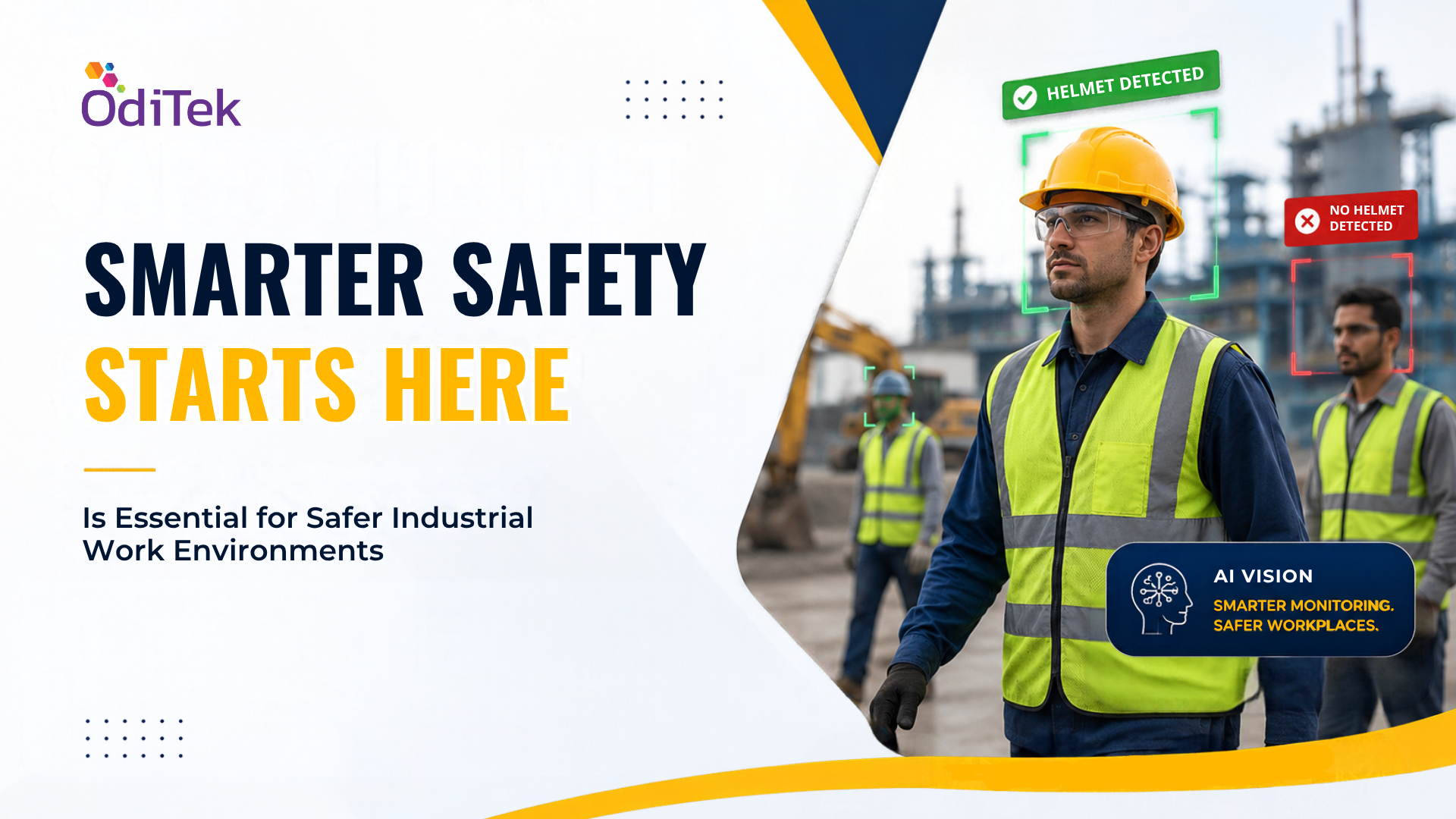
Safety Helmet Detection has become a vital component of modern industrial safety, helping organizations ensure workers consistently wear the required Personal Protective Equipment (PPE) in hazardous environments. Industries such as construction, manufacturing, mining, logistics, and oil & gas expose employees to risks from falling objects, heavy machinery, and elevated work areas, making safety helmets a mandatory protective measure. Traditional safety inspections often rely on manual supervision, which can be time-consuming and may overlook violations across large facilities. AI-powered Safety Helmet Detection addresses this challenge by using intelligent video analytics and computer vision to monitor workers in real time. The system automatically identifies whether employees are wearing safety helmets correctly and instantly alerts supervisors when violations occur. By automating PPE compliance monitoring, businesses can reduce workplace accidents, strengthen safety standards, improve regulatory compliance, and create safer industrial work environments.
What is AI Safety Helmet Detection?
AI Safety Helmet Detection is an intelligent computer vision solution that automatically verifies whether workers are wearing safety helmets while performing their duties.
Using AI-enabled CCTV cameras and advanced video analytics, the system continuously analyses live video streams to detect workers and verify helmet compliance without requiring constant manual supervision.
The technology can detect:
• Safety Helmets
• High-Visibility Vests
• Protective Gloves
• Safety Goggles
• Face Masks
• Safety Shoes
• Reflective Clothing
Whenever a worker is identified without the required safety helmet, the system immediately generates an alert so corrective action can be taken before an incident occurs.
Why Safety Helmet Detection Is Essential?
Industrial workplaces contain numerous hazards that can cause serious head injuries if workers are not properly protected. Falling tools, suspended loads, moving equipment, and accidental impacts make safety helmets one of the most important pieces of PPE.
Manual inspections alone cannot continuously monitor every employee across large worksites.
AI-powered Safety Helmet Detection helps organizations by:
• Monitoring Workers 24/7
• Detecting Missing Helmets Instantly
• Preventing Workplace Accidents
• Improving PPE Compliance
• Supporting Workplace Safety Regulations
• Reducing Manual Inspections
• Enhancing Operational Efficiency
Instead of identifying violations after an incident, AI enables businesses to take immediate preventive action.
How AI Safety Helmet Detection Improves Workplace Safety?
Modern AI surveillance systems combine computer vision, deep learning, and video analytics to monitor PPE compliance automatically.
Step 1: Continuous Video Monitoring
AI-enabled cameras monitor entrances, production floors, warehouses, construction sites, and restricted work areas.
Step 2: Worker Detection
The AI identifies every worker within the camera’s field of view and tracks their movement.
Step 3: Helmet Recognition
The system analyses whether each worker is wearing a safety helmet correctly based on predefined workplace safety rules.
Step 4: Compliance Verification
AI compares detected PPE against company safety policies and identifies any violations.
Step 5: Instant Alerts
If a worker enters a hazardous zone without a safety helmet, supervisors receive immediate notifications through dashboards, mobile devices, or control rooms.
Benefits of AI Safety Helmet Detection
1. Improved Worker Safety
Continuous monitoring ensures workers consistently wear safety helmets, significantly reducing the risk of head injuries.
2. Faster Safety Monitoring
AI automates routine inspections, allowing safety officers to focus on risk management rather than manual observation.
3. Reduced Human Error
Unlike manual inspections, AI provides consistent monitoring without fatigue or oversight.
4. Better Regulatory Compliance
Organizations can automatically document PPE compliance and generate reports that support workplace safety audits.
5. Increased Productivity
Workers spend less time waiting for inspections while supervisors receive verified alerts only when intervention is required.
6. Lower Workplace Risks
Real-time detection prevents employees from entering hazardous areas without proper protective equipment.
Safety Helmet Inspection Best Practices
Regular safety helmet inspection is essential to ensure helmets continue providing adequate protection.
Organizations should inspect helmets for:
• Cracks or Visible Damage
• Loose or Damaged Suspension Systems
• Worn Chin Straps
• Signs of Chemical Exposure
• Heat Damage
• Manufacturing Date and Replacement Schedule
AI Safety Helmet Detection complements these inspections by verifying that workers are wearing approved helmets correctly throughout their shifts.
Safety Helmet Wearing Procedure
Following the proper safety helmet wearing procedure helps maximize worker protection.
The recommended procedure includes:
• Inspect the helmet before use
• Adjust the internal suspension for a secure fit
• Fasten the chin strap properly
• Ensure the helmet sits level on the head
• Avoid wearing hats or bulky objects underneath
• Replace damaged or expired helmets immediately
• Perform a final PPE check before entering hazardous areas
AI-powered monitoring helps ensure these procedures are consistently followed.
Industries That Benefit from AI Safety Helmet Detection
1. Construction
Ensures workers wear helmets while working around heavy machinery, scaffolding, and elevated structures.
2. Manufacturing
Monitors PPE compliance around production lines and industrial equipment.
3. Mining
Protects employees from head injuries in underground and surface mining operations.
4. Warehousing and Logistics
Verifies helmet usage around forklifts, loading docks, and material handling zones.
5.Oil and Gas
Monitors workers in hazardous environments where head protection is mandatory.
6. Infrastructure Projects
Improves safety across bridge construction, road projects, and large civil engineering sites.
Safety Helmet Ratings and Compliance
Choosing helmets with appropriate safety helmet ratings is equally important as ensuring they are worn correctly.
Businesses should select helmets certified according to applicable national or international safety standards and replace them as recommended by the manufacturer.
When combined with AI-powered Safety Helmet Detection, certified helmets and automated compliance monitoring create a stronger workplace safety program.
Best Practices for Implementing AI Safety Helmet Detection
Organizations should follow these best practices:
• Install cameras to eliminate blind spots
• Define mandatory helmet zones
• Integrate AI alerts with safety management systems
• Conduct regular safety helmet inspections
• Train workers on PPE compliance
• Review AI-generated reports to identify recurring safety issues
These measures improve system accuracy and strengthen workplace safety.
The Future of AI in Industrial Safety
Artificial Intelligence is making workplace safety more proactive than ever before.
Future developments may include:
• Predictive Accident Prevention
• Behavioral Safety Analysis
• Smart Wearable Integration
• AI-Powered Access Control
• Cloud-Based Compliance Monitoring
• Automated Safety Reporting
• Digital Safety Dashboards
These technologies will help businesses identify risks earlier, improve decision-making, and create safer industrial environments.
Why Choose Us?
We provide advanced AI-powered workplace safety solutions that help businesses automate PPE compliance through intelligent Safety Helmet Detection. Our AI-driven video analytics platform continuously monitors workers, detects missing helmets in real time, and delivers instant alerts that help prevent accidents before they occur.
Whether you manage construction sites, manufacturing plants, warehouses, mining operations, or oil & gas facilities, REG-EYE integrates seamlessly with your existing CCTV infrastructure to improve safety, reduce manual inspections, and strengthen regulatory compliance.
Choose REG-EYE to build a smarter, safer, and AI-powered industrial workplace.
Frequently Asked Questions (FAQs)
1. How does AI Safety Helmet Detection improve workplace safety?
AI continuously monitors workers, detects missing safety helmets in real time, sends instant alerts, and helps prevent workplace accidents before they occur.
2. How can Safety Helmet Detection help businesses ensure PPE compliance?
AI automatically verifies helmet usage, records safety violations, generates compliance reports, and enables supervisors to take immediate corrective action.
3. What is Safety Helmet Detection?
Safety Helmet Detection is an AI-powered computer vision system that identifies whether workers are wearing safety helmets correctly using live CCTV footage.
4. Why is safety helmet inspection important?
Regular inspections help identify damaged or expired helmets, ensuring workers receive reliable head protection in hazardous environments.
5. Can AI Safety Helmet Detection integrate with existing CCTV systems?
Yes. AI-powered Safety Helmet Detection solutions, including REG-EYE’s platform, integrate with most IP cameras and CCTV systems, enabling intelligent PPE monitoring without replacing existing surveillance infrastructure.