
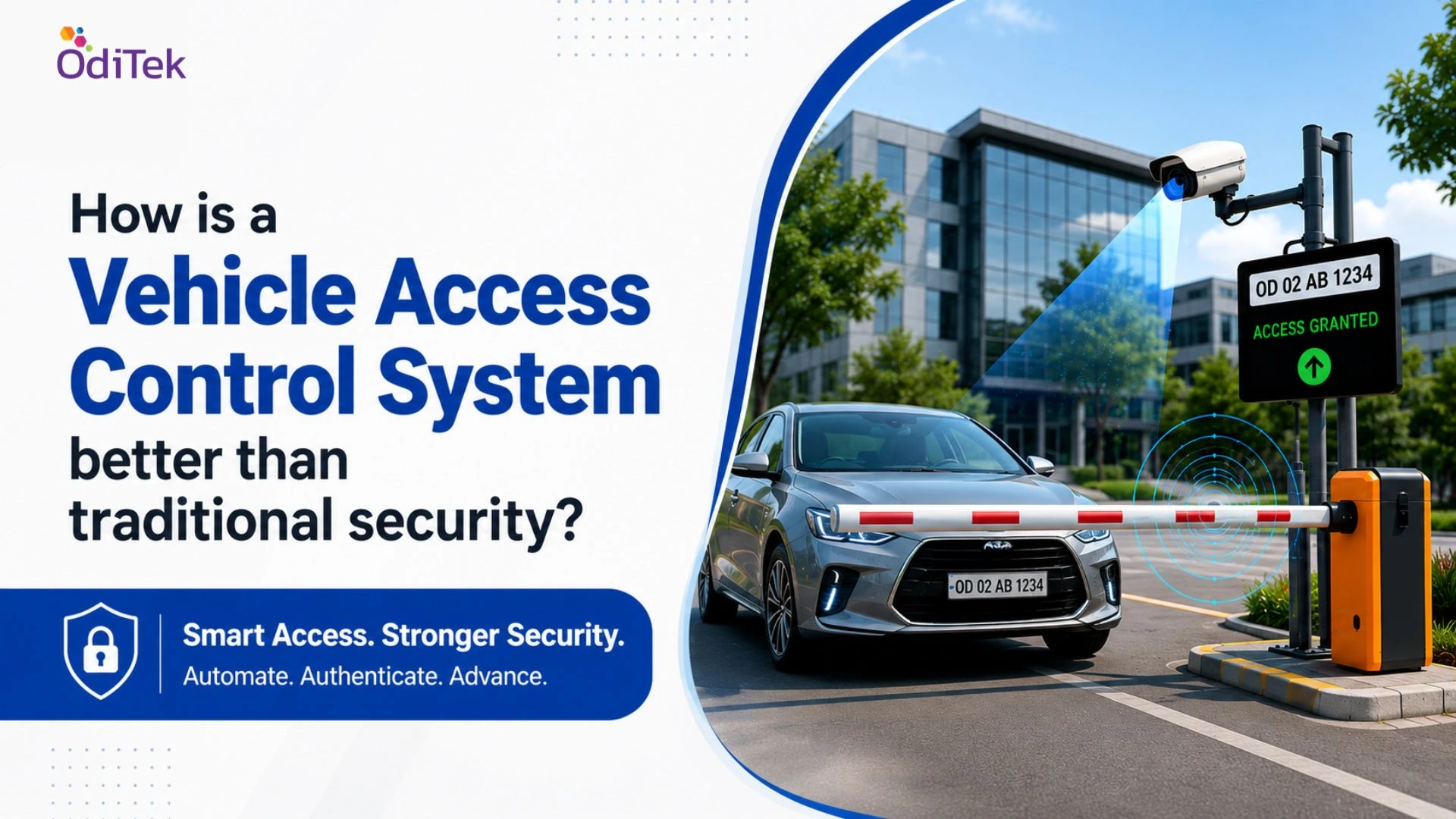
Vehicle Access Control System has emerged as one of the most effective security solutions for managing vehicle entry and exit. By integrating technologies such as Automatic Number Plate Recognition (ANPR), RFID, and Boom Barrier Systems, organizations can strengthen security while improving operational efficiency.
Security management has evolved significantly over the past few years. Traditional security methods that rely heavily on manual guards and physical verification are gradually being replaced by smart technologies. Businesses, residential communities, industrial facilities, and government institutions now prefer automated solutions that offer higher efficiency and better control.
What is a Vehicle Access Control System?
A Vehicle Access Control System is an automated security solution designed to monitor, authenticate, and control vehicle movement at entry and exit points. It uses advanced technologies to identify authorized vehicles and restrict unauthorized access.
The system generally includes:
• ANPR cameras
• RFID readers
• Access management software
• Boom Barrier System
• Visitor management integration
• Real-time monitoring dashboards
These components work together to create a secure and efficient vehicle management process.
Limitations of Traditional Security Methods:
Traditional security primarily depends on security personnel for checking vehicles manually. While this approach has been widely used for decades, it comes with several limitations.
1. Human Errors:
Security guards may unintentionally miss suspicious activities due to fatigue, distractions, or high traffic volume. Manual verification can also lead to incorrect record keeping.
2. Slow Vehicle Processing:
Checking vehicle IDs, visitor information, and maintaining entry registers manually takes time. During peak hours, this often causes long queues and delays.
3. Limited Monitoring Capabilities:
A security guard cannot continuously monitor every vehicle movement or remember details of all authorized vehicles.
4. Higher Operational Costs:
Employing multiple guards for round-the-clock security increases labor costs significantly.
5. Lack of Data and Analytics:
Traditional systems usually maintain physical records, making it difficult to retrieve historical data or generate reports.
Advantages of a Vehicle Access Control System
1. Enhanced Security:
A Vehicle Access Control System provides multiple layers of authentication. Vehicles are verified automatically before access is granted, reducing the risk of unauthorized entry.Real-time alerts can immediately notify administrators about suspicious activities, blacklisted vehicles, or attempted breaches.
2. Faster Vehicle Movement:
Automated identification technologies significantly reduce waiting times. Once a vehicle is recognized, the gate opens automatically through the Boom Barrier System, ensuring seamless traffic flow.
This is especially useful for:
• Residential communities
• Corporate offices
• Manufacturing plants
• Logistics hubs
• Airports and parking facilities
3. Reduced Human Dependency:
Automation minimizes reliance on manual processes. Security personnel can focus on surveillance and emergency response rather than routine verification tasks.
4. Accurate Record Keeping:
Unlike manual registers, automated systems maintain digital records of:
• Vehicle number
• Entry and exit time
• Driver information
• Access history
• Security incidents
These records can be easily accessed whenever required.
5. Better Traffic Management:
By integrating with an Access Control System, organizations can effectively manage high volumes of vehicles and prevent congestion at entry points.
6. Cost Savings:
Although the initial investment may be higher, automated systems reduce long-term operational costs by decreasing the need for extensive manpower and paperwork.
Vehicle Access Control System vs Traditional Security
Security Accuracy
Traditional security relies heavily on human observation and manual verification, which can lead to mistakes and missed threats. A Vehicle Access Control System uses automation and intelligent technologies to ensure accurate vehicle identification and access management.
Speed of Vehicle Entry
Manual security checks often result in delays, especially during peak hours. Automated systems verify vehicle details instantly and trigger the Boom Barrier System to allow seamless entry and exit, reducing congestion.
Record Management
Traditional methods depend on physical registers and manual data entry, making information retrieval difficult. In contrast, an Access Control System stores all vehicle data digitally, enabling quick access to historical records and detailed reporting.
Operational Efficiency
Managing security through manpower alone requires multiple guards working in shifts, increasing operational costs. Automated vehicle access solutions reduce repetitive tasks and improve efficiency while allowing security personnel to focus on critical responsibilities.
Real-Time Monitoring
Traditional security provides limited visibility into vehicle movement. A Vehicle Access Control System offers real-time monitoring, instant alerts, and centralized dashboards for better decision-making and faster response to potential threats.
Scalability
As organizations grow, managing vehicle traffic manually becomes increasingly challenging. Automated systems can easily handle a larger number of vehicles without significantly increasing manpower requirements.
Long-Term Cost Benefits
While implementing a Vehicle Access Control System may require an initial investment, it significantly reduces long-term expenses associated with manual security operations, paperwork, and security breaches.
Role of Boom Barrier Systems in Modern Security
A Boom Barrier System is a crucial component of automated vehicle security. It controls the physical movement of vehicles by allowing or denying entry based on authentication results.
Benefits of Boom Barrier Systems include:
• Automatic gate operation
• Reduced unauthorized access
• Faster vehicle processing
• Integration with ANPR and RFID technologies
• Improved traffic management
When combined with a Vehicle Access Control System, boom barriers create a highly secure and efficient access environment.
Can ANPR Replace Manual Security Guards?
This is one of the most frequently asked questions in modern security management.
The Short Answer: Partially, Yes.
Automatic Number Plate Recognition (ANPR) technology can perform many tasks that were previously handled manually, such as:
• Vehicle identification
• Entry and exit logging
• Blacklist detection
• Automated access approval
ANPR significantly reduces the need for manual verification and improves efficiency. However, completely replacing security guards may not always be practical.
Why Human Security Is Still Important?
Security guards continue to play a crucial role in:
• Handling emergencies
• Managing suspicious behavior
• Conducting physical inspections
• Assisting visitors
• Responding to system failures
Therefore, ANPR should be viewed as a tool that enhances human capabilities rather than entirely replacing security personnel.The most effective approach is a hybrid security model where automation and human expertise work together.
Industries Benefiting from Vehicle Access Control Systems:
Several industries are adopting these systems to strengthen security and improve operational efficiency.
Residential Communities:
Automated vehicle entry ensures residents enjoy a secure and hassle-free experience.
Corporate Offices:
Businesses can maintain better visitor control and reduce traffic congestion.
Manufacturing Facilities:
Factories can monitor employee vehicles, logistics trucks, and vendor entries efficiently.
Logistics and Warehouses:
Automated vehicle tracking improves supply chain operations and security.
Government and Critical Infrastructure:
Sensitive facilities require advanced security measures to prevent unauthorized access.
Future of Vehicle Security
With advancements in artificial intelligence and smart surveillance technologies, Vehicle Access Control Systems are becoming increasingly intelligent.
Future developments may include:
• AI-powered threat detection
• Cloud-based access management
• Predictive analytics
• Integration with smart city infrastructure
• Enhanced biometric verification
Organizations investing in automated security today are positioning themselves for a more secure and efficient future.
Conclusion
Traditional security methods have served organizations for many years, but growing security challenges require smarter and more efficient solutions. A Vehicle Access Control System offers superior security, faster vehicle processing, accurate record keeping, and long-term cost savings.By integrating technologies such as an Access Control System, ANPR, and a Boom Barrier System, organizations can significantly improve vehicle security while reducing dependency on manual processes.
Although ANPR may not completely replace security guards, it can greatly enhance their efficiency and allow them to focus on critical security responsibilities. The combination of automation and human expertise provides the most effective approach to modern vehicle security management.
Ready to upgrade from traditional to automation : visit our REG-EYE ALPR page or contact us to get started today.
FAQs
1. What is a Vehicle Access Control System?
A Vehicle Access Control System is an automated security solution that controls and monitors vehicle entry and exit using technologies such as ANPR, RFID, and boom barriers. It helps prevent unauthorized access and improves overall security management.
2. How does a Vehicle Access Control System improve security?
The system automatically verifies vehicle credentials, maintains digital records, provides real-time alerts, and reduces human errors, making security more efficient than traditional manual methods.
3. What is the role of a Boom Barrier System in vehicle security?
A Boom Barrier System acts as a physical access control mechanism that opens only for authorized vehicles. It helps manage traffic flow and prevents unauthorized vehicle entry.
4. Can ANPR replace manual security guards?
ANPR can automate tasks such as vehicle identification, access logging, and blacklist detection. However, manual security guards are still needed for emergency response, physical inspections, and handling unusual situations. Therefore, ANPR complements rather than completely replaces security personnel.
5. Can a Vehicle Access Control System be integrated with other security solutions?
Yes. A Vehicle Access Control System can be integrated with CCTV surveillance, visitor management systems, biometric authentication, parking management software, and smart city infrastructure for enhanced security and operational efficiency.