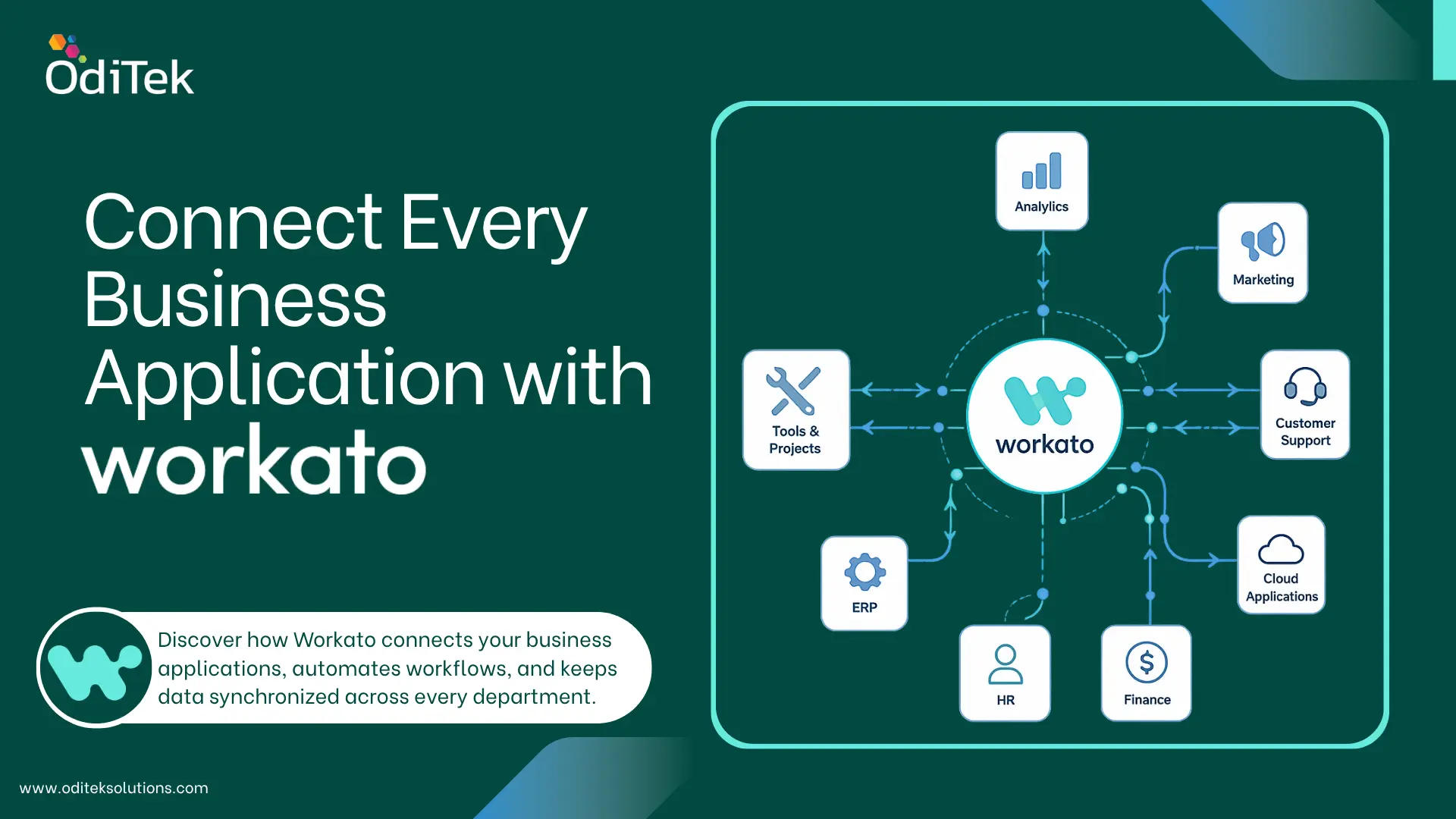
Running a business often means working with multiple applications for sales, finance, marketing, customer support, and operations. While each tool serves a purpose, disconnected systems can create duplicate records, manual work, delayed updates, and inconsistent reporting. Workato Data Integration helps businesses eliminate these challenges by connecting applications and automating data flow across platforms.
In this guide, you’ll learn what is data integration, how data integration works, why it matters for modern businesses, and how Workato enables secure, scalable, and efficient integration across your technology ecosystem.
What Is Data Integration?
Data integration is the process of combining information from multiple systems into a connected environment where data flows automatically between applications. Instead of manually copying information from one platform to another, integrated systems exchange data in real time or on scheduled intervals.
Whether a company uses CRM software, ERP systems, accounting tools, HR platforms, or cloud applications, data integration ensures that every department works with consistent and up-to-date information.
How data integration works
Most modern integration platforms use APIs, pre-built connectors, and automated workflows to move data securely between applications. When an event occurs in one system such as creating a new customer, updating an order, or approving an invoice the integration automatically triggers actions in other connected applications.
This approach reduces manual effort while improving data accuracy across the organization.
Why Businesses Need Cross-Platform Data Integration
Today’s organizations rarely rely on a single software solution. Sales teams use CRMs, finance teams work with accounting software, HR departments manage employee platforms, and marketing teams depend on automation tools.
Without cross-platform data integration, businesses often experience:
• Duplicate customer records
• Manual data entry
• Delayed reporting
• Communication gaps between departments
• Increased operational costs
• Higher risk of human error
Connecting these systems allows information to move automatically, helping employees spend less time updating records and more time delivering value.
As organizations continue adopting cloud applications, enterprise application integration has become an important part of maintaining operational efficiency and supporting business growth.
How Workato Data Integration Simplifies Enterprise Connectivity
Unlike traditional integration methods that require extensive custom coding, Workato provides a low-code platform that enables businesses to build automated workflows using pre-built connectors and reusable recipes.
Its integration capabilities allow organizations to connect cloud and on-premise applications while maintaining security and governance.
1. Pre-built Connectors
Workato supports hundreds of popular business applications, making it easier to connect platforms such as Salesforce, Microsoft Dynamics 365, SAP, NetSuite, Slack, Microsoft Teams, HubSpot, ServiceNow, and many more.
2. Workflow Automation
Beyond simply moving data, Workato enables intelligent workflow automation. Businesses can automate approvals, notifications, customer onboarding, invoice processing, employee provisioning, and many other repetitive processes.
3. Scalable Integrations
As businesses grow, new applications can be added without rebuilding existing workflows. This flexibility allows organizations to expand their technology stack while maintaining connected operations.
4. Enterprise Security
Workato includes enterprise-grade security, governance controls, and monitoring features that help organizations manage integrations safely while maintaining compliance requirements.
Business Benefits of Workato Data Integration
Connecting applications is only part of the value. The real advantage comes from improving how teams work every day.
Businesses implementing Workato often experience measurable operational improvements through automation and connected workflows.
• Reduce manual data entry across departments.
• Improve data consistency between business applications.
• Accelerate customer onboarding and service delivery.
• Enable faster reporting with synchronized information.
• Increase employee productivity by automating repetitive tasks.
• Minimize costly errors caused by duplicate or outdated records.
• Scale integrations without extensive development effort.
• Improve collaboration between sales, finance, HR, operations, and customer support.
• Strengthen decision-making with real-time business data.
• Lower long-term operational costs through automation.
Real-World Business Use Cases
Organizations across industries use Workato to automate processes and improve operational efficiency.
1. Sales and CRM Management
When a new lead enters the CRM, Workato automatically updates marketing platforms, creates customer records, notifies sales representatives, and schedules follow-up activities without manual intervention.
2. Finance Operations
Invoices, payment confirmations, purchase orders, and accounting records can be synchronized automatically between ERP systems and finance applications, reducing reconciliation time.
3. Human Resources
Employee onboarding becomes significantly faster by automatically creating user accounts, assigning software access, notifying managers, and updating HR systems after a new hire is confirmed.
4. Customer Support
Support platforms can automatically receive customer information from CRM systems, allowing agents to resolve issues faster with complete customer history available.
5. Retail and E-commerce
Inventory updates, online orders, shipping notifications, and customer information stay synchronized across multiple platforms, improving order accuracy and customer experience.
How Oditek Solutions Helps Businesses Achieve Seamless Data Integration
Successful integration projects require more than connecting applications, they require thoughtful planning, scalable architecture, and workflows that align with business objectives.
Oditek Solutions helps organizations implement Workato-based integration strategies that simplify business operations while supporting long-term growth. From designing integration workflows to connecting enterprise applications and optimizing existing automations, the focus remains on creating reliable, scalable solutions that deliver measurable business value.
Businesses working with Oditek can benefit from:
• Workato implementation and consulting
• Enterprise application integration across cloud and on-premise systems
• Secure API integrations
• End-to-end workflow automation
• Integration performance optimization
• Ongoing monitoring, maintenance, and support
By adopting Workato Data Integration, organizations can reduce manual work, improve collaboration, and build a connected digital ecosystem that scales with their business.
Looking to streamline your business applications with intelligent automation? Explore Oditek Solutions’ Workato integration services and discover how connected workflows can help your organization improve productivity, data accuracy, and operational efficiency.
Frequently Asked Questions
1. What is Workato Data Integration?
Workato Data Integration is the process of using Workato’s low-code integration platform to connect business applications, automate workflows, and synchronize data across multiple systems with minimal manual effort.
2. What is data integration?
Data integration is the practice of combining information from multiple software applications into a connected environment where data can move automatically and remain consistent across systems.
3. How data integration works in modern businesses?
Modern integration platforms use APIs, connectors, and automation workflows to transfer information between applications whenever predefined events occur, eliminating manual data entry and improving accuracy.
4. Why is cross-platform data integration important?
Cross-platform data integration helps businesses eliminate data silos, reduce duplicate work, improve reporting accuracy, and enable teams to collaborate using real-time information.
5. What is enterprise application integration?
Enterprise application integration connects business-critical software such as CRM, ERP, HR, finance, and customer support systems so they function as one connected ecosystem.
6. Can Workato automate workflows without extensive coding?
Yes. Workato offers a low-code platform with pre-built connectors and automation recipes, allowing businesses to build powerful workflow automation with minimal custom development.