As businesses continue to adopt new applications, cloud platforms, and digital tools, connecting these systems has become a growing challenge. Traditionally, integrations required experienced developers and significant coding effort, often creating bottlenecks for business teams that needed quick solutions.
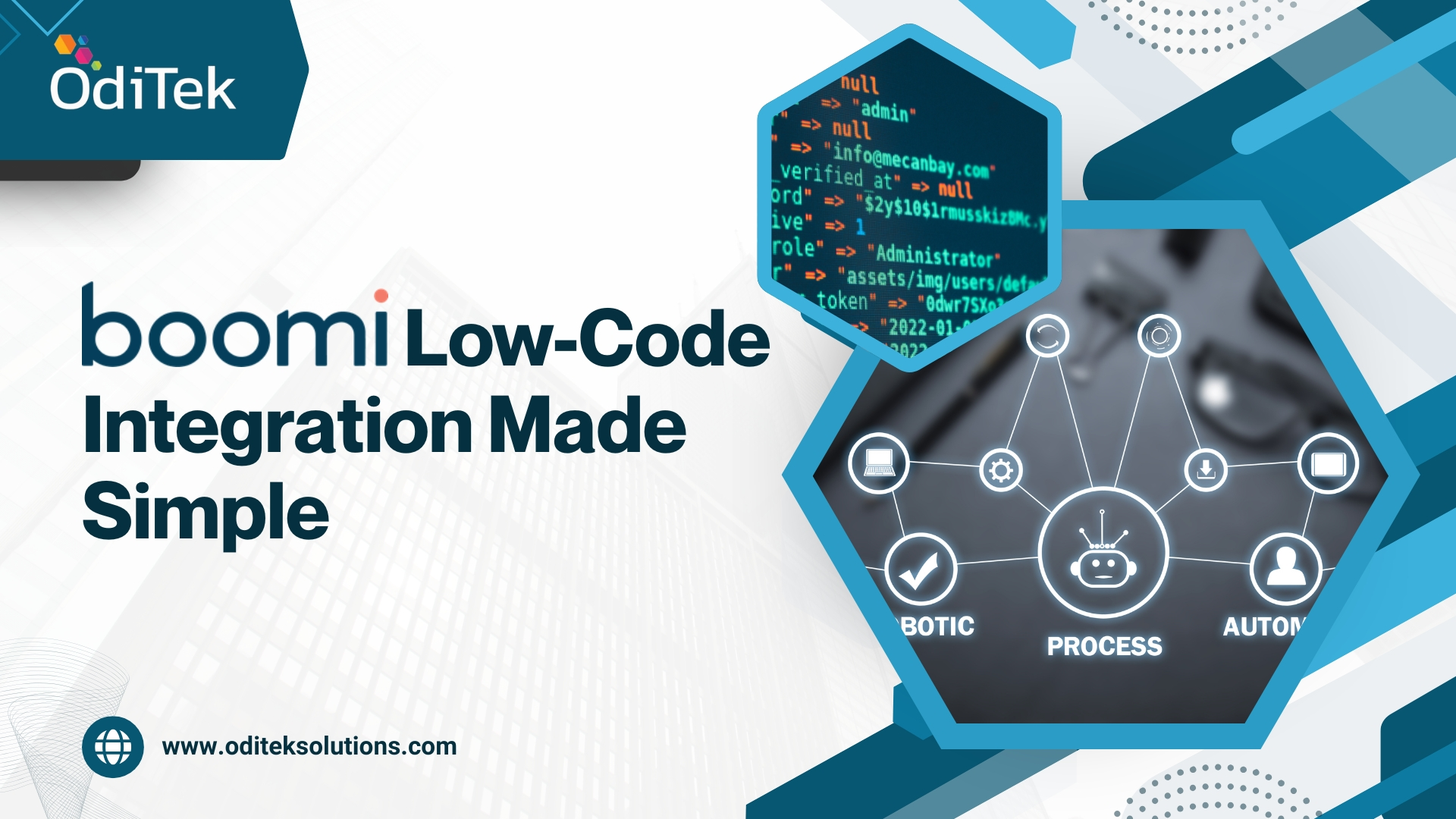
This is where Boomi Low-Code Integration changes the game. By providing an intuitive integration platform with visual development tools, Boomi enables citizen developers and business users to create workflows, automate processes, and connect applications with minimal coding knowledge. As a result, organizations can accelerate innovation, reduce dependency on IT teams, and respond faster to changing business requirements.
Understanding Citizen Development and Low-Code Integration
Citizen developers are business users who create applications, workflows, or integrations without extensive programming expertise. With the rise of modern integration platforms, these users can contribute directly to digital initiatives while IT teams maintain governance and security.
Low-Code Integration platforms simplify development through drag-and-drop interfaces, pre-built connectors, and reusable components. Instead of writing complex code, users can visually design integrations between systems, making technology more accessible across the organization.
At the same time, businesses benefit from faster deployment cycles and reduced development costs while maintaining operational consistency.
Why Businesses Are Embracing Boomi for Integration
Modern organizations often operate across multiple platforms, including CRM systems, ERP applications, cloud services, databases, and third-party tools. Managing data across these environments can become difficult without a centralized integration solution.
Boomi addresses these challenges by offering a cloud-based integration platform that helps businesses connect systems, automate workflows, and manage data from a single environment.
With its user-friendly design, Boomi enables both IT professionals and business users to collaborate on integration projects, helping organizations achieve faster results without sacrificing reliability.
How Boomi Low-Code Integration Empowers Citizen Developers
Visual Development Environment
Boomi provides a drag-and-drop development interface that allows users to build integrations visually. Instead of creating complex scripts, citizen developers can design workflows using predefined components and connectors.
This significantly reduces the learning curve and enables business teams to solve operational challenges more independently.
Pre-Built Connectors
One of Boomi’s greatest advantages is its extensive library of connectors for popular business applications. Users can connect systems without building custom integrations from scratch.
Whether connecting CRM platforms, ERP systems, cloud applications, or databases, the process becomes much faster and simpler.
Workflow Automation
Many repetitive business tasks involve moving data between systems. Boomi allows users to automate these processes through simple workflows, reducing manual effort and minimizing errors.
Examples include:
• Synchronizing customer information between platforms
• Automating order processing
• Updating inventory records
• Managing employee onboarding workflows
• Streamlining approval processes
Governance and Security
While citizen developers gain more flexibility, organizations still require oversight and control. Boomi provides governance features that allow IT teams to monitor integrations, maintain security standards, and ensure compliance across the organization.
This balance between empowerment and control is a key factor behind Boomi’s growing adoption.
The Role of No-Code and Low-Code Development in Digital Transformation
Organizations pursuing modernization initiatives need solutions that can accelerate innovation without increasing technical complexity. This is where No-Code and Low-Code Development plays an important role.
Business teams often understand operational challenges better than anyone else. By giving them tools to build workflows and integrations, organizations can solve problems closer to their source while reducing pressure on development teams.
This approach supports faster decision-making, greater agility, and improved collaboration between business and IT departments.
As a result, enterprises can move forward with Digital Transformation with Boomi while maintaining scalability and governance across their technology ecosystem.
Key Benefits of Boomi for Citizen Developers
Boomi helps organizations bridge the gap between business users and technical teams by simplifying integration development.
Key benefits include:
• Faster integration deployment
• Reduced reliance on specialized developers
• Improved productivity through automation
• Better collaboration between IT and business teams
• Easier access to enterprise data
• Simplified management of cloud and on-premise systems
• Scalable architecture that grows with business needs
• Reliable performance with high availability
These benefits enable organizations to innovate more quickly while maintaining operational efficiency.
Real-World Use Cases of Low-Code Integration with Boomi
Businesses across industries are using Low-Code Integration with Boomi to improve operations and accelerate digital initiatives.
Customer Data Synchronization
A company may use separate systems for sales, marketing, and customer support. Boomi can automatically synchronize customer information across all platforms, ensuring every team works with accurate data.
HR Process Automation
Organizations can automate employee onboarding by connecting HR software, payroll systems, and identity management platforms. This reduces manual work and improves employee experiences.
Finance and ERP Integration
Finance teams often require data from multiple business systems. Boomi enables seamless integration between ERP applications, accounting platforms, and reporting tools, providing real-time visibility into business performance.
Supply Chain Connectivity
Manufacturers and distributors can connect suppliers, partners, and internal systems through automated workflows, improving inventory visibility and operational efficiency.
B2B and EDI Integration
Businesses working with multiple trading partners can streamline communication and transaction processing through enhanced EDI and B2B integration capabilities.
How Oditek Helps Businesses Implement Boomi Solutions
Successful integration projects require more than just technology. It needs the right expertise, planning, and execution.
Oditek supports organizations with certified Boomi professionals who understand complex integration environments and business requirements. The team helps businesses create scalable integration strategies that connect applications, automate workflows, and improve data management across hybrid IT landscapes.
With expertise in API management, data integration, workflow automation, master data management, and B2B integration, Oditek helps organizations maximize the value of their Boomi investment while ensuring quality and timely delivery.
Looking to improve operational efficiency with smarter automation? Visit our Boomi Service Page to explore scalable integration solutions.
Conclusion
As organizations continue to modernize their technology environments, the demand for faster and more accessible integration solutions will only grow. Boomi Low-Code Integration empowers citizen developers to build workflows, automate processes, and connect systems without extensive coding expertise.
By combining ease of use, enterprise-grade capabilities, and strong governance features, Boomi helps businesses accelerate innovation while reducing development bottlenecks. Whether you’re beginning your digital transformation journey or looking to scale existing integrations, Boomi provides a practical path toward greater agility and efficiency.
FAQs
1. What is Boomi Low-Code Integration?
Boomi Low-Code Integration is a visual integration approach that allows users to connect applications, automate workflows, and manage data with minimal coding effort.
2.Who are citizen developers?
Citizen developers are business users who create applications, workflows, or integrations using low-code or no-code platforms without advanced programming skills.
3. How does Boomi support digital transformation?
Boomi helps organizations connect systems, automate processes, manage APIs, and improve data flow, making digital transformation initiatives faster and more efficient.
4. Is Boomi suitable for non-technical users?
Yes. Boomi provides a user-friendly drag-and-drop interface that enables business users to build integrations with limited technical knowledge.
5. What types of systems can Boomi integrate?
Boomi can integrate cloud applications, ERP systems, CRM platforms, databases, APIs, and B2B partner systems.
6. How does Boomi improve workflow automation?
Boomi automates repetitive tasks, synchronizes data between systems, reduces manual effort, and helps organizations improve operational efficiency.