Driver fatigue monitoring system uses AI, computer vision, and real-time video analysis to identify potential signs of driver fatigue and drowsiness while a vehicle is in operation. With long driving hours and demanding routes, maintaining driver alertness can be a significant safety consideration for transportation and fleet operators.
A driver may experience heavy eyelids, frequent blinking, yawning, changes in head position, or reduced attention without immediately realizing that their alertness is declining. By continuously analyzing these visual and behavioral indicators, AI-based monitoring technology can provide timely alerts when potential fatigue is detected.
But what is a driver fatigue monitoring system, and how does it actually detect when a driver is becoming tired? Let’s explore how this technology works, its key features, and where it can be used.
What Is a Driver Fatigue Monitoring System?
A driver fatigue monitoring system is an AI-powered safety solution designed to identify potential signs of driver fatigue, drowsiness, and reduced alertness.
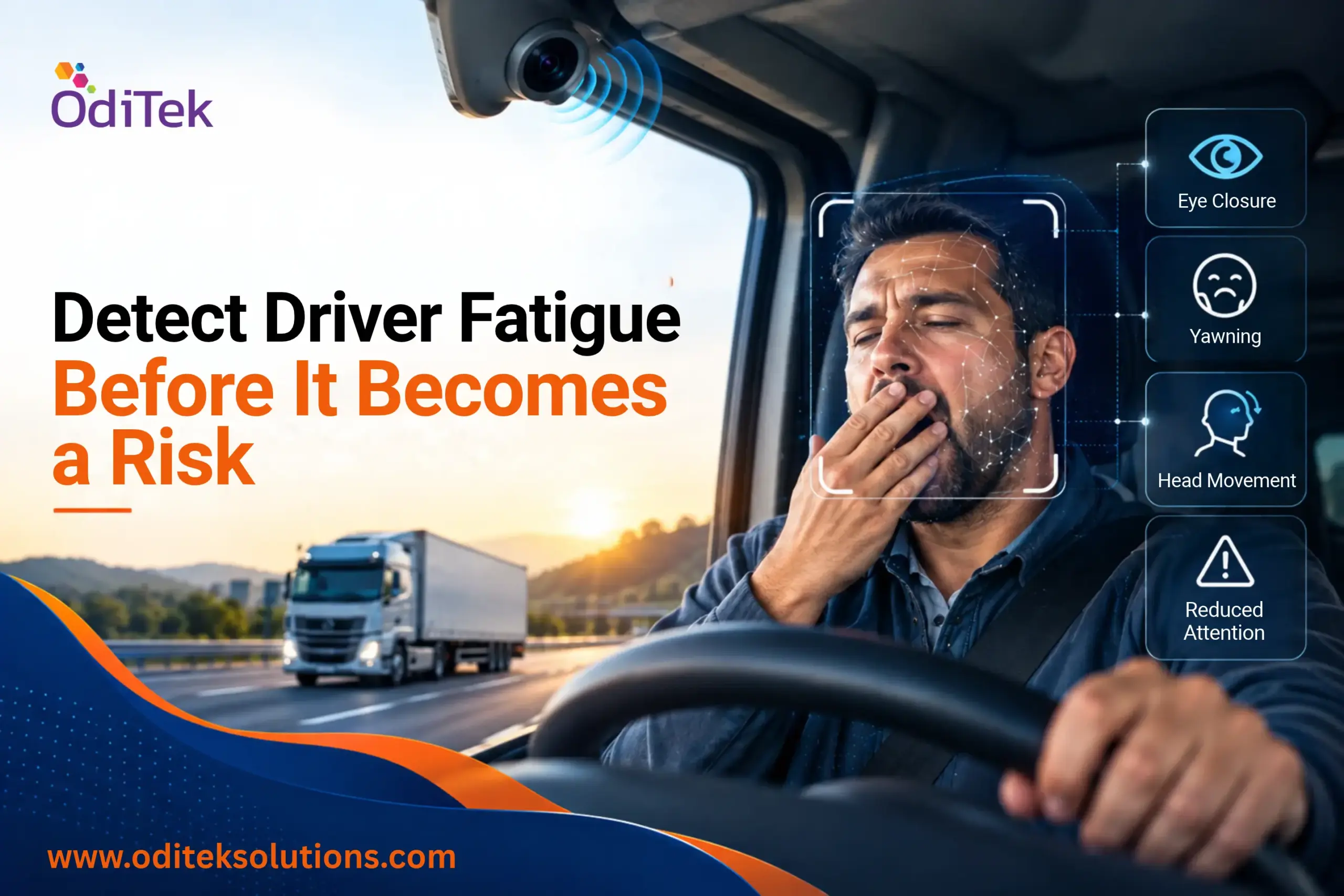
The system typically uses an in-cabin camera to monitor the driver’s face and behavior. AI algorithms analyze visual indicators such as:
• Eye closure and prolonged eye closure
• Frequent or unusual blinking
• Yawning
• Head position and movement
• Changes in facial behavior
• Loss of visual attention
• Signs of distraction or reduced alertness
When the system detects behavior associated with possible fatigue, it can generate an alert to warn the driver or notify a monitoring team.
This technology can be useful for long-distance transportation, logistics, public transportation, mining, industrial vehicles, and fleet operations where driver alertness is an important safety consideration.
How Does Driver Fatigue Detection Work?
So, how does driver fatigue detection work?
The process generally combines cameras, computer vision, AI algorithms, and real-time alerts. A camera installed inside the vehicle continuously captures information about the driver’s face and behavior.
The AI system processes this information to identify patterns that may be associated with fatigue.
1. Driver Monitoring
The in-cabin camera captures the driver’s face and upper-body movements while the vehicle is operating.
The system can monitor features such as the eyes, face, head position, and overall attention level without requiring the driver to manually interact with the technology.
2. Facial and Eye Analysis
Computer vision algorithms analyze facial features to identify potential indicators of fatigue.
For example, prolonged eye closure may indicate that a driver is struggling to remain alert. Frequent yawning or changes in head position can also contribute to the system’s assessment.
3. AI-Based Pattern Detection
Individual actions do not always mean that a driver is fatigued. A person may blink, look away, or yawn occasionally without being drowsy.
That’s why AI driver fatigue detection focuses on patterns rather than relying on a single event. The system can analyze multiple indicators over time to determine whether the driver’s alertness appears to be declining.
4. Real-Time Alerts
When the system identifies a potential fatigue event, it can trigger an immediate warning.
Depending on the implementation, alerts may include:
• Audible warnings
• Visual alerts
• Dashboard notifications
• Operator or control-room notifications
• Event recording for later review
The objective is to provide an additional safety layer and alert the driver before fatigue-related behavior becomes a more serious risk.
What Indicators Can AI Detect?
Modern AI-based monitoring solutions can analyze several visual indicators associated with driver fatigue.
1. Eye Closure
Extended or repeated eye closure can be an important indicator of drowsiness. AI can monitor the duration and frequency of eye closure rather than simply detecting whether the eyes are open or closed.
2. Yawning
Repeated yawning can be another potential indicator of tiredness. AI can identify facial patterns associated with yawning and combine them with other signals.
3. Head Movement
A driver’s head may gradually drop, tilt, or move irregularly when alertness decreases. Monitoring head position can provide another input for fatigue analysis.
4. Reduced Attention
A driver may look away from the road for an extended period. A driver monitoring system can analyze head orientation and other visual indicators to identify potential attention issues.
Combining several indicators can help create a more comprehensive picture of driver alertness.
What Is AI Driver Fatigue Detection?
AI driver fatigue detection refers to the use of artificial intelligence and computer vision to identify visual and behavioral signs associated with driver fatigue.
Traditional safety approaches may depend on driver self-awareness or periodic supervision. AI-based systems can provide continuous monitoring while the vehicle is operating.
The technology can analyze visual information in real time and identify patterns that may be difficult to notice manually.
This can be particularly useful for vehicles that operate for extended periods or in environments where driver alertness is critical.
Driver Fatigue Monitoring System vs. Driver Monitoring System
Although the terms are often used together, there is a difference.
A driver fatigue monitoring system primarily focuses on identifying signs of tiredness and drowsiness.
A broader driver monitoring system can monitor multiple aspects of driver behavior, including:
• Fatigue
• Drowsiness
• Distraction
• Driver attention
• Unsafe behavior
• Head and eye movement
Therefore, fatigue monitoring can be considered one important capability within a broader driver monitoring solution.
Organizations can combine fatigue detection with other driver-monitoring capabilities to create a more comprehensive approach to vehicle and fleet safety.
Where Can Driver Fatigue Monitoring Be Used?
Driver fatigue monitoring technology can support several industries and transportation environments.
Logistics and Fleet Management
Long-haul truck drivers can spend many hours on the road. Fatigue monitoring can provide an additional layer of safety for fleet operators by helping identify potential fatigue-related events.
Public Transportation
Buses and other passenger vehicles can benefit from continuous driver monitoring, particularly during extended routes and long operating shifts.
Mining and Industrial Operations
Heavy vehicles often operate for long shifts in demanding environments. Monitoring driver alertness can support broader workplace safety initiatives.
Commercial Transportation
Transport companies can integrate fatigue detection into their vehicle safety strategies to monitor drivers and identify potentially risky fatigue-related behavior.
Benefits of a Driver Fatigue Monitoring System
Implementing a driver fatigue monitoring system can provide several operational benefits:
• Real-time monitoring: Driver behavior can be analyzed continuously.
• Early warnings: Drivers can receive alerts when potential fatigue indicators are detected.
• Improved fleet visibility: Fleet managers can gain better insight into driver safety events.
• AI-powered analysis: Multiple visual indicators can be analyzed together.
• Event recording: Detected incidents can potentially be stored for review and analysis.
• Scalable safety: Monitoring technology can be deployed across different types of vehicles.
The technology works as an additional safety layer and does not replace responsible driving practices, adequate rest, or established fleet safety procedures.
What Should You Look for in a Driver Fatigue Monitoring System?
When evaluating a solution, organizations should consider factors such as:
• Real-time AI detection
• Accurate eye and facial analysis
• Yawning and head-position detection
• Driver distraction monitoring
• Instant alerts
• Event recording
• Fleet management integration
• Support for different vehicle environments
• Reliable operation in varying lighting conditions
The right combination of features depends on the vehicle type, operating environment, fleet size, and specific safety requirements.
Why Choose Us?
Choosing the right driver fatigue monitoring system is about more than simply detecting when a driver closes their eyes. Organizations need a solution that can analyze multiple driver behaviors, provide timely alerts, and support real-world vehicle operations.
Our AI-powered vision solution helps organizations build smarter driver safety systems by combining computer vision with real-time video analytics.
Key capabilities include:
• AI-powered fatigue detection to identify potential signs of driver drowsiness.
• Eye and facial monitoring to analyze indicators such as prolonged eye closure and blinking patterns.
• Yawning detection to identify another potential sign of fatigue.
• Head-position monitoring to recognize changes that may indicate reduced alertness.
• Driver distraction detection to monitor attention-related behaviors.
• Real-time alerts to help notify drivers when potential fatigue or distraction is detected.
• Video intelligence to support event monitoring and analysis across different vehicle environments.
• Scalable deployent for fleet, transportation, logistics, and industrial applications.
By bringing these capabilities together, organizations can create a more proactive approach to driver safety while gaining better visibility into fatigue-related events.
Final Thoughts
Driver fatigue is not always easy to recognize before it becomes a safety concern. A driver may not realize how much their alertness has declined, especially during long journeys or extended shifts.
A driver fatigue monitoring system adds an intelligent layer of protection by continuously analyzing driver behavior and identifying potential signs of drowsiness or reduced attention.
With AI driver fatigue detection, computer vision, and real-time alerts, organizations can move toward more proactive driver safety management.
As AI-powered driver monitoring systems continue to evolve, fatigue detection can become an increasingly important part of modern fleet and vehicle safety strategies.
To know more about our services, visit OdiTek’s Vision AI page.
FAQs
1. What is a driver fatigue monitoring system?
A driver fatigue monitoring system uses AI and computer vision to detect signs of drowsiness, fatigue, and reduced driver alertness in real time.
2. How does driver fatigue detection work?
Driver fatigue detection analyzes indicators such as eye closure, blinking, yawning, head movement, and attention patterns to identify potential fatigue.
3. What can AI driver fatigue detection identify?
AI driver fatigue detection can identify potential signs such as prolonged eye closure, frequent yawning, unusual head movements, and reduced attention.
4. What is the difference between fatigue monitoring and driver monitoring?
Fatigue monitoring focuses mainly on drowsiness and fatigue, while a broader driver monitoring system can also detect distraction, attention, and other driver behaviors.
5. Where can driver fatigue monitoring systems be used?
They can be used in trucks, buses, logistics fleets, commercial vehicles, mining vehicles, and other transportation or industrial environments.