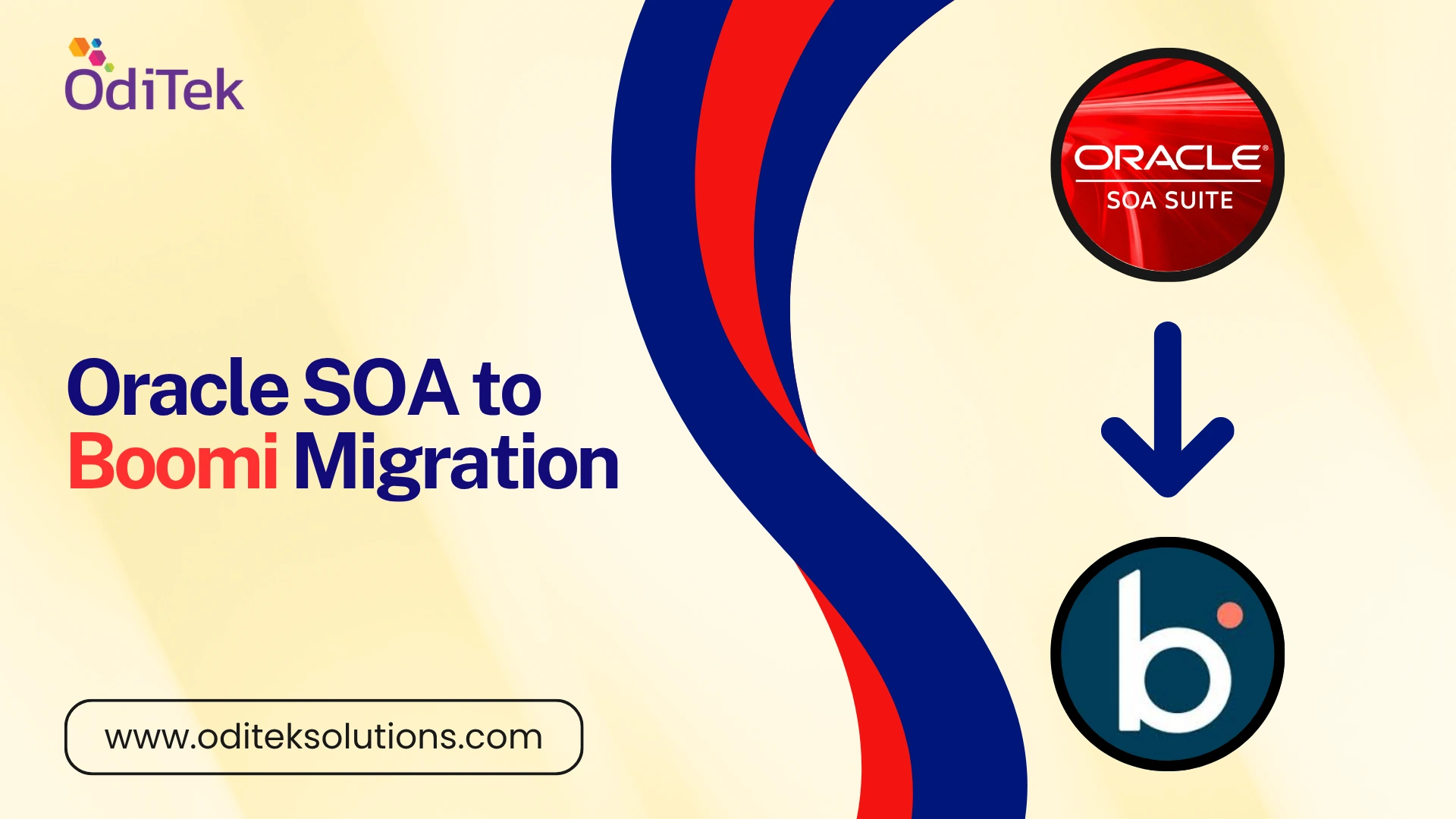
Oracle SOA to Boomi migration becoming a strategic priority for organizations looking to modernize their integration landscape, reduce operational complexity, and accelerate digital transformation initiatives. While Oracle SOA Suite has long been a reliable platform for enterprise application integration and business process orchestration, many organizations are now seeking a more agile, cloud-native, and scalable alternative. As a leading Integration Platform as a Service (iPaaS), Boomi provides a modern approach to application, data, API, and process integration, making it an ideal choice for enterprises planning an Oracle SOA migration.
What are Oracle SOA Migration Services?
Oracle SOA migration services refer to the processes, tools, methodologies, and expert consulting services used to move integrations, workflows, business processes, and middleware components from Oracle SOA Suite to a modern integration platform such as Boomi.
These services are designed to help organizations transition from legacy integration architectures to more flexible and cloud-ready solutions without disrupting business operations.
A comprehensive Oracle SOA migration project typically includes:
1. Assessment and Discovery – The first step involves analyzing the existing Oracle SOA environment, including BPEL processes, adapters, web services, integrations, and dependencies. This assessment helps identify migration complexities and opportunities for optimization.
2. Migration Planning– A well-defined Oracle SOA to Boomi migration strategy is developed to ensure minimal risk and maximum business value. The strategy outlines migration phases, timelines, resource requirements, and testing procedures.
3. Integration Redesign and Optimization – Rather than simply replicating existing integrations, migration experts often redesign processes to leverage Boomi’s low-code capabilities, API-led architecture, and cloud-native features.
4. Data and API Migration – Organizations may need to migrate APIs, data flows, connectors, and service integrations while ensuring data integrity and security throughout the transition.
5. Testing and Validation – Comprehensive testing ensures that all integrations function as expected after migration. This includes performance testing, user acceptance testing, and security validation.
6. Deployment and Support – Once migration is completed, the new Boomi environment is deployed and monitored to ensure smooth operations and long-term success.
How to Migrate Oracle SOA Suite to Boomi?
Many organizations considering an Oracle SOA alternative often ask: How do you migrate Oracle SOA Suite to Boomi successfully? While every migration project is unique, following a structured approach can significantly improve outcomes.
1. Assess the Existing Oracle SOA Environment
Begin by conducting a detailed inventory of all Oracle SOA components, including:
• BPEL processes
• Oracle adapters
• Composite applications
• Web services
• Business rules
• Data mappings
• Integration workflows
2. Define the Oracle SOA to Boomi Migration Strategy
An effective Oracle SOA to Boomi migration strategy should align with business objectives and technical requirements. Key considerations include:
• Migration priorities
• Application dependencies
• Integration complexity
• Security requirements
• Compliance standards
• Performance expectations
3. Map Oracle SOA Components to Boomi Processes
The next step is translating Oracle SOA functionality into Boomi processes.
• BPEL workflows → Boomi Process Flows
• Oracle adapters → Boomi Connectors
• SOAP services → Boomi APIs
• Data transformations → Boomi Mapping Components
4. Rebuild and Optimize Integrations
Rather than performing a direct lift-and-shift migration, organizations should optimize integrations using Boomi’s low-code development framework. This approach improves maintainability, scalability, and performance.
5. Perform Comprehensive Testing
Testing should cover:
• Functional validation
• Data accuracy
• Workflow execution
• API performance
• Security compliance
• End-to-end business scenarios
6. Deploy and Monitor
After successful testing, integrations can be deployed in the Boomi environment. Continuous monitoring helps identify performance issues, optimize workflows, and ensure operational stability.
Benefits of Migrating from Oracle SOA to Boomi
Organizations are increasingly selecting Boomi as an Oracle SOA alternative due to its flexibility, ease of use, and cloud-first architecture. The benefits of migrating from Oracle SOA to Boomi extend beyond technology modernization and can have a significant impact on business agility and operational efficiency.
1. Faster Integration Development – Boomi’s low-code platform enables quicker integration development and deployment, reducing time-to-market.
2. Reduced Infrastructure Costs – Its cloud-native architecture minimizes infrastructure management and lowers operational expenses.
3. Improved Scalability – Boomi scales easily with growing business needs without major infrastructure investments.
4. Enhanced Cloud Connectivity – Pre-built connectors simplify integration across SaaS, on-premises, and hybrid environments.
5. Simplified API Management – Boomi provides centralized tools to design, secure, publish, and monitor APIs.
6. Better Visibility and Monitoring – Real-time monitoring and analytics help teams quickly identify and resolve issues.
7. Increased Business Agility – Organizations can adapt faster to changing business and market requirements.
8. Support for Digital Transformation – Boomi enables seamless integration, automation, and connectivity across enterprise systems.
Why Boomi is Emerging as the Preferred Oracle SOA Alternative
As organizations modernize their technology ecosystems, the demand for agile and scalable integration platforms continues to grow. While Oracle SOA Suite remains a capable enterprise integration solution, many businesses are seeking platforms that offer faster implementation, lower maintenance costs, and stronger cloud capabilities.
Boomi addresses these requirements through its intuitive low-code environment, extensive connector library, API management capabilities, and support for hybrid integration scenarios. These advantages make Boomi a compelling choice for enterprises pursuing long-term integration modernization strategies.
Conclusion
The shift toward Oracle SOA to Boomi migration reflects a broader trend of organizations moving away from traditional middleware platforms in favor of modern, cloud-native integration solutions. Through well-planned Oracle SOA migration services, businesses can successfully modernize their integration landscape, improve operational efficiency, and support future growth initiatives.
Whether your organization is evaluating an Oracle SOA alternative, developing an Oracle SOA to Boomi migration strategy, or seeking guidance on how to migrate Oracle SOA Suite to Boomi, partnering with experienced integration experts can help ensure a smooth and successful transition.
Contact OdiTek Solutions today to discuss your Oracle SOA to Boomi migration requirements and discover the right path forward for your organization. Don’t forget to follow our Boomi expertise hub for regular updates, best practices, and technical tips to get the most out of your migration journey.
Frequently Asked Questions (FAQs)
1. What is Oracle SOA to Boomi migration?
Oracle SOA to Boomi migration is the process of moving integrations, workflows, APIs, and business processes from Oracle SOA Suite to the Boomi integration platform to improve agility, scalability, and cloud readiness.
2. Why are organizations migrating from Oracle SOA to Boomi?
Organizations migrate to Boomi to reduce infrastructure complexity, lower maintenance costs, accelerate integration development, and support cloud-based digital transformation initiatives.
3. What are Oracle SOA migration services?
Oracle SOA migration services include assessment, planning, redesign, migration, testing, deployment, and support to help businesses transition from Oracle SOA Suite to modern integration platforms.
4. How long does an Oracle SOA to Boomi migration take?
The timeline depends on the number and complexity of integrations. Small projects may take a few weeks, while enterprise migrations can take several months.
5. What are the benefits of migrating from Oracle SOA to Boomi?
Key benefits include faster development, lower operational costs, cloud scalability, simplified API management, and improved integration visibility.
6. Is Boomi a good Oracle SOA alternative?
Yes. Boomi offers a cloud-native, low-code integration platform with extensive connectivity, automation, and API management capabilities.