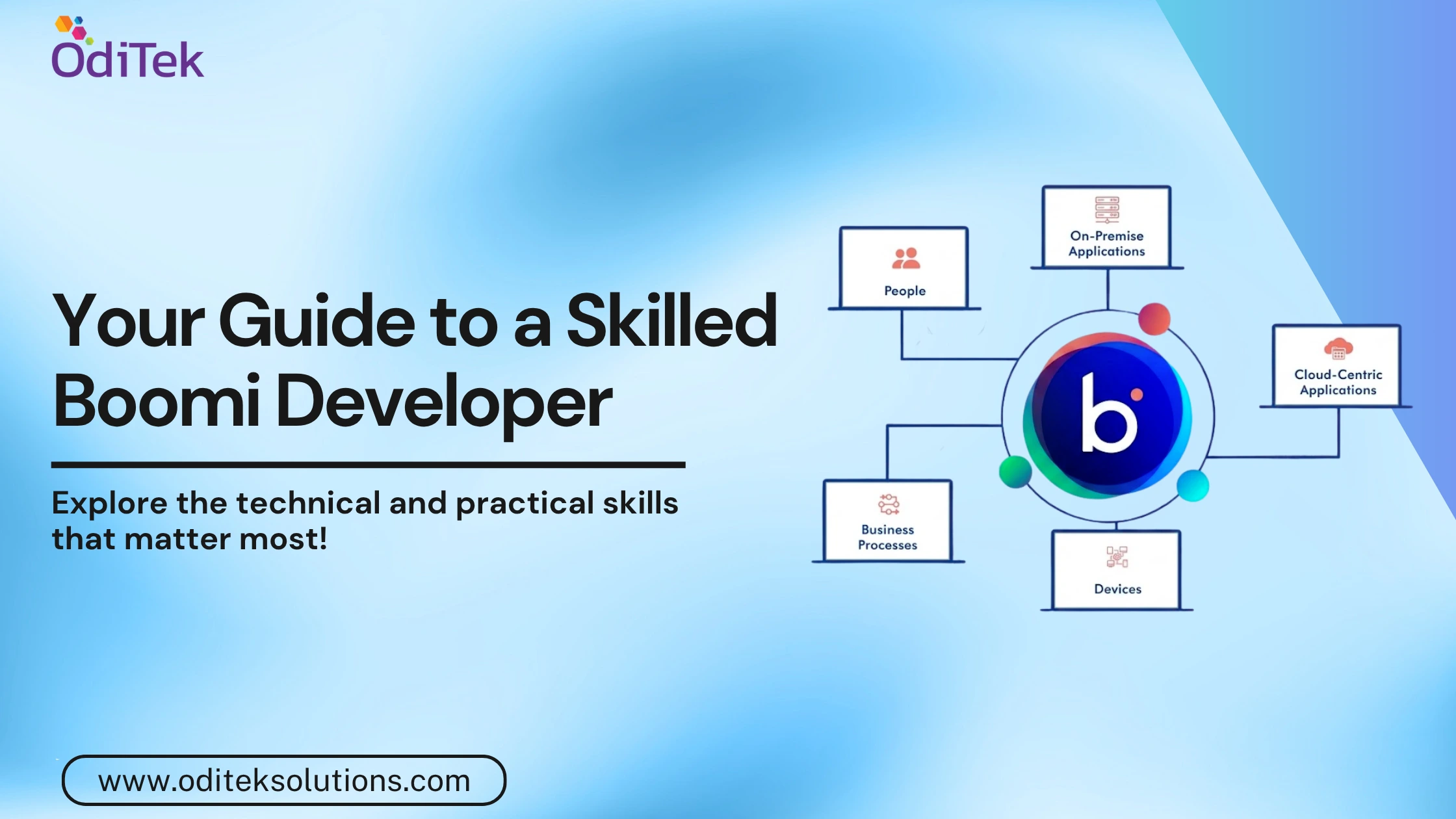
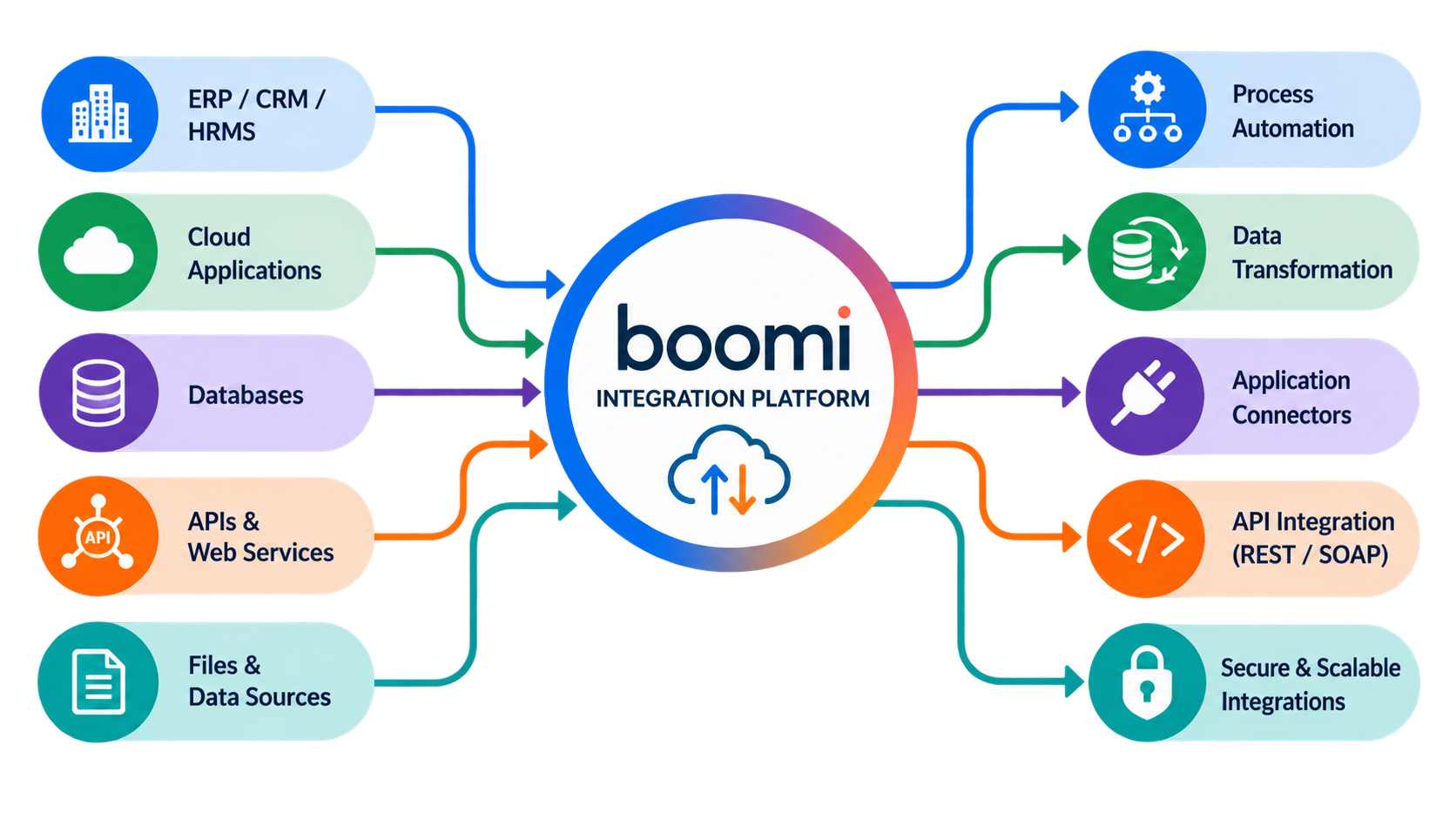
A Boomi developer is an integration professional who designs, develops, deploys, and maintains integrations using the Boomi platform. They connect applications, databases, APIs, cloud services, and enterprise systems to automate data exchange and business processes.
A skilled integration professional understands architecture, integration patterns, data mapping, APIs, connectors, security, and process automation. They work with business and technical teams to build scalable solutions based on specific integration requirements.
Role of a Boomi Developer
Boomi developers typically handle the complete integration lifecycle. They design integration workflows using Boomi, develop and deploy integration processes, and connect ERP, CRM, HRMS, databases, and cloud applications. They also create REST and SOAP API integrations and transform data between XML, JSON, CSV, and other formats.
Their responsibilities also include configuring Boomi connectors and integration components, troubleshooting integration failures and performance issues, and implementing authentication, security, and error-handling mechanisms. They may also support migration, modernization, and integration optimization projects.
The key skills required to hire the right Boomi developers for your business:
1. Boomi Architecture Knowledge:
A developer should understand Boomi Architecture, including processes, atoms, Molecules, Atom Clouds, environments, deployments, APIs, and integration components. This knowledge enables developers to create reliable and scalable integration workflows.
2.API Development and Integration:
Experience with REST and SOAP APIs, web services, authentication, webhooks, JSON, and XML is essential for building effective application and data integrations.
3. Programming and Scripting:
Boomi is a low-code integration platform, programming knowledge is valuable for advanced integration requirements. Experience with Java, Groovy, JavaScript, and custom scripting can help developers implement complex business logic and data transformations.
4. Cloud and Enterprise Integration:
Boomi Middleware supports cloud and hybrid integration environments. Developers should understand cloud platforms such as AWS, Microsoft Azure, and Google Cloud, along with enterprise systems and hybrid deployment models.
5. Integration Connectors:
Knowledge of application, database, SaaS, and technology connectors is important for establishing reliable communication between different systems and data sources.
6. Troubleshooting and Problem-Solving:
Developers should be excellent problem solvers, capable of troubleshooting issues related to integration design, development, and deployment. They should be able to work with other team members to identify and solve complex problems.
7. Boomi Certifications and Architecture Expertise:
Relevant certifications can demonstrate platform knowledge and technical competency. For complex enterprise projects, an experienced architect can define integration standards, patterns, and scalable technical frameworks.
Conclusion
Hiring an experienced Boomi developer can help businesses build secure, scalable, and maintainable integration solutions. At Oditek, our consultants and integration specialists provide technical expertise across application connectivity, API integration, data transformation, migration, and process automation.
Partner with Oditek and take your integration projects to the next level. Visit our sevice page or contact us today to transform your business.
FAQs
1. What does a Boomi developer do?
A Boomi developer designs, develops, deploys, and maintains integrations between applications, APIs, databases, and cloud systems.
2. What does a Boomi development service provider do?
A Boomi development service provider designs and implements integration solutions, configures connectors, develops APIs, manages deployments, and troubleshoots integration issues.
3. What are Boomi development services?
Boomi development services include integration development, API integration, data mapping, workflow automation, migration, testing, deployment, and support.
4. What is Boomi Integration?
It connects applications, APIs, databases, and data sources to automate data exchange across cloud, on-premises, and hybrid environments.
5. What services does a Boomi development company offer?
A Boomi development company typically offers integration development, architecture, migration, API development, data transformation, monitoring, optimization, and ongoing support.
6. What skills should a Boomi Integration Developer have?
Key skills include API integration, connectors, JSON/XML, data mapping, scripting, cloud integration, security, architecture, and troubleshooting.
7. Can Boomi support hybrid integrations?
Yes. It can connect cloud applications with on-premises systems, databases, APIs, and enterprise applications across hybrid IT environments.