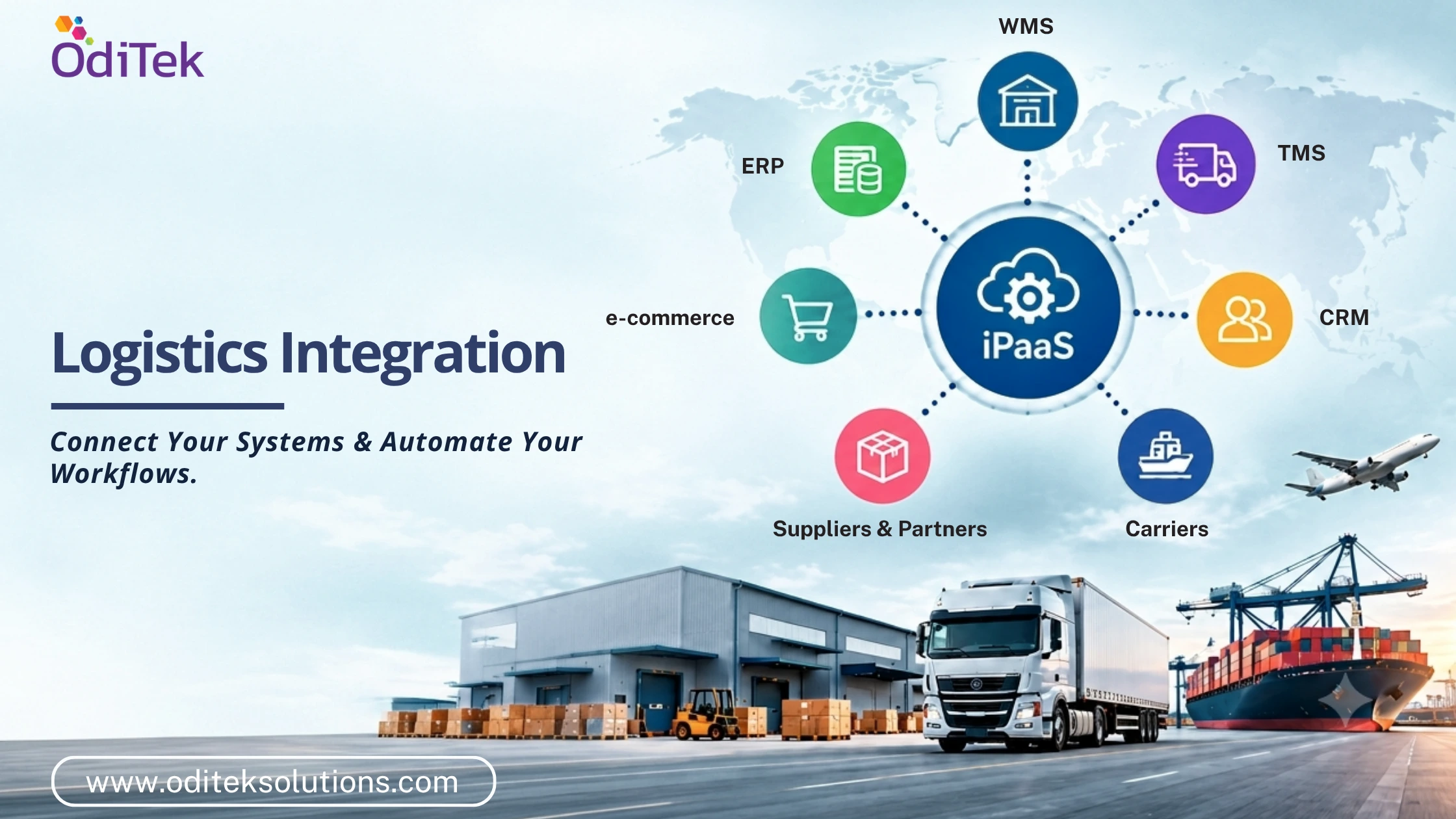
Logistics Integration connects the systems, applications, data, and processes that support the movement of goods from suppliers to customers. By bringing logistics operations together through connected technologies, businesses can improve data visibility, automate workflows, reduce manual effort, and respond more effectively to changing supply chain demands.
Modern supply chains rely on multiple platforms, including transportation management systems, warehouse management systems, enterprise resource planning platforms, order management systems, customer relationship management tools, eCommerce applications, and carrier platforms. When these systems operate in isolation, information can become fragmented, creating delays and making it difficult to maintain accurate, real-time visibility.
A connected integration strategy helps organizations create a more coordinated supply chain where information can move between systems efficiently and securely.
What is logistics integration?
Logistics integration is the process of connecting different logistics applications, business systems, data sources, and external platforms so they can exchange information and work together.
For example, when an order is placed through an eCommerce platform, integration can automatically transfer the order information to an ERP or order management system. The relevant details can then move to the warehouse management system for fulfillment and to the transportation platform for shipment planning. Tracking information can subsequently be returned to customer-facing systems.
Instead of manually transferring information between applications, automated connections allow data to move according to predefined workflows.
Why is logistics integration important for modern supply chains?
Supply chains generate large volumes of data across multiple stages of an order lifecycle. Without connected systems, organizations may rely heavily on spreadsheets, emails, manual data entry, or isolated databases.
1. Duplicate or inconsistent information
2. Delays in order processing
3. Limited shipment visibility
4. Manual reconciliation
5. Inventory inaccuracies
6. Communication gaps between departments
7. Difficulty responding to customer requests
Integrated systems provide a common flow of operational information. When data is available across relevant applications, teams can make decisions using more consistent and timely information.
Integration also provides a foundation for automation. Routine activities such as order updates, shipment notifications, inventory synchronization, and status changes can be handled through automated workflows instead of repetitive manual processes.
What systems can be integrated in logistics?
Organizations can connect a wide range of applications depending on their supply chain architecture and business requirements.
Common examples include:
1. Enterprise Resource Planning(ERP): ERP systems manage core business processes such as purchasing, finance, inventory, and order management.
2. Warehouse Management Systems(WMS): WMS platforms manage warehouse activities including receiving, picking, packing, and inventory movement.
3. Transportation Management Systems(TMS): TMS platforms support transportation planning, carrier management, shipment execution, and freight-related processes.
4. Order Management Systems(OMS): OMS platforms coordinate orders across sales channels and fulfillment locations.
5. eCommerce platforms: Online commerce systems can exchange order, customer, product, payment, and fulfillment information with back-office applications.
6. Customer Relationship Management (CRM): CRM platforms can receive order and delivery information to provide customer-facing teams with better visibility.
7. Carrier and shipping platforms: These systems can exchange shipment information, tracking updates, delivery statuses, and transportation data.
8. Supplier and partner systems: Integration can facilitate the exchange of purchase orders, invoices, inventory information, shipping notices, and other business documents.
How do logistics integration solutions work?
That’s the order-to-delivery flow
Logistics integration solutions typically use APIs, integration platforms, middleware, EDI, webhooks, and other technologies to connect applications and exchange data.
A typical workflow might look like this:

When an order enters the system, integration workflows can transform and route the required information to the appropriate application. As the order progresses, status updates can be returned to other connected systems.
For organizations working with older applications, modern integration platforms can also help connect legacy systems with newer cloud applications without requiring every system to be replaced.
What are the benefits of logistics integration?
A connected logistics environment can provide several operational benefits.
1. Improved Data Visibility – Get real-time visibility into orders, inventory, shipments, and deliveries.
2. Reduced Manual Work – Automate data transfers and eliminate repetitive data entry.
3. Faster Order Processing – Reduce delays with automated information flow between systems.
4. Better Inventory Coordination – Keep inventory data accurate and synchronized across platforms.
5. Improved Customer Experience – Provide faster and more accurate order and shipment updates.
6. Greater Scalability – Easily connect new applications, warehouses, carriers, and sales channels.
7. Better Decision-Making – Use timely data to identify issues and improve supply chain performance.
How can businesses build a connected logistics ecosystem?
Successful integration requires more than connecting applications. Organizations should first identify the processes that need to be connected and determine how data moves between systems.
A practical approach includes:
1. Map Existing Systems: Identify applications, data sources, workflows, and integration gaps.
2. Define Integration Requirements: Determine which systems need to connect and what data should be exchanged.
3. Choose the Right Technology: Select APIs, EDI, middleware, or iPaaS based on your business needs.
4. Ensure Security and Monitoring: Implement secure data exchange, error handling, and integration monitoring.
5. Continuously Optimize: Monitor performance and update integrations as business and supply chain needs evolve.The role of iPaaS in logistics integration
Instead of developing and maintaining every connection independently, organizations can use an iPaaS platform to design, deploy, monitor, and manage integration workflows.
For logistics organizations, this can support use cases such as order synchronization, inventory updates, shipment tracking, carrier connectivity, customer notifications, and data exchange between ERP, WMS, TMS, and other applications.
Choosing the Right iPaaS Platform for Logistics Integration
Boomi, Workato, Celigo, and Jitterbit can help logistics organizations connect applications, automate workflows, and streamline data exchange.
1. Boomi: Connects ERP, WMS, TMS, APIs, and databases.
2. Workato: Combines integration with workflow automation.
3. Celigo: Connects SaaS, eCommerce, ERP, and fulfillment systems.
4. Jitterbit: Supports application, API, and data integration across cloud and on-premises systems.
The right platform depends on integration complexity, existing systems, scalability, security, automation needs, and budget.
Final Thoughts
A smarter supply chain depends on the ability to connect people, processes, applications, and data. By integrating ERP, WMS, TMS, eCommerce, CRM, carrier, and partner systems, organizations can reduce information silos and create more efficient operational workflows.
The right integration architecture can also provide the flexibility needed to support automation, improve visibility, and scale as business requirements change. Whether through APIs, EDI, middleware, or iPaaS, connecting the logistics ecosystem can help organizations build a more responsive and digitally connected supply chain.
Looking to connect your logistics ecosystem? Explore our iPaaS integration expertise and Contact OdiTek to discuss your integration requirements.
Frequently Asked Questions
1. What systems can be integrated in logistics?
Common systems include ERP, WMS, TMS, OMS, CRM, eCommerce platforms, carrier systems, shipping platforms, supplier systems, and customer-facing applications.
2. What are the benefits of logistics integration?
Key benefits include improved data visibility, reduced manual work, faster order processing, better inventory coordination, improved customer experience, scalability, and more informed operational decisions.
3. How does iPaaS support logistics operations?
iPaaS provides a centralized environment for connecting applications, APIs, databases, and external systems. It can help organizations develop, manage, monitor, and scale automated integration workflows.
4. Why is supply chain integration important?
Supply chain integration helps reduce information silos by connecting systems and processes across different stages of the supply chain. This can improve information flow, operational coordination, and visibility.
5. How OdiTek Can Help?
OdiTek Solutions helps businesses connect applications, APIs, and data sources, enabling scalable integrations, workflow automation, and seamless data connectivity.