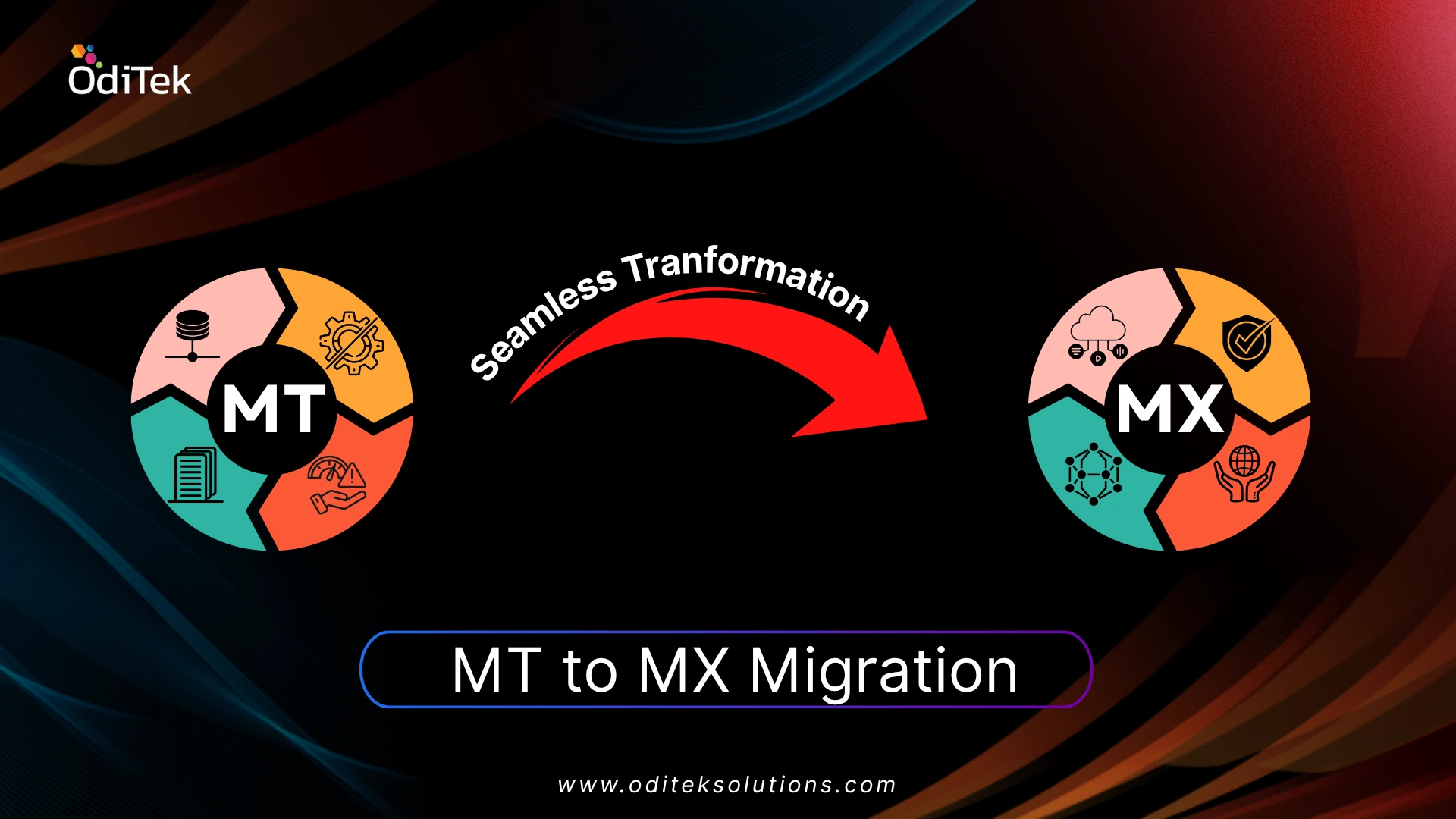
SWIFT MT to MX migration is driving a fundamental shift in the global financial ecosystem as part of the broader ISO 20022 adoption. With SWIFT MT decommissioning well underway and a clear SWIFT MT phaseout roadmap in place, migration is no longer optional – it is a businesscritical and costdriven necessity for banks and financial institutions.
Adding to the urgency, SWIFT MT message charges have significantly increased, with legacy MT messages now incurring additional costs. The ISO 20022 deadline impact is already being felt by late adopters, forcing organizations to act quickly to reduce SWIFT MT costs and avoid SWIFT MT penalties.
Understanding MT to MX Conversion
At its core, MT to MX conversion involves transforming legacy SWIFT MT messages into structured MX messages based on ISO 20022 standards. Unlike MT messages, which are limited in structure and data fields, SWIFT MX messages offer a more detailed, XML-based format that enhances clarity and interoperability.
With SWIFT MT to MX migration, financial institutions can:
1. Improve data accuracy and completeness
2. Enable better compliance and reporting
3. Enhance cross-border payment processing
4. Reduce manual intervention through structured data
During the migration phase, many organizations must also support MX to MT conversion to maintain interoperability with counterparties still operating on legacy MT formats.
Why SWIFT MT to MX Migration Is Urgent?
The push toward ISO 20022 MX messaging is driven by SWIFT’s longterm modernization strategy and the ongoing SWIFT MT phaseout. Legacy MT formats can no longer support modern compliance, transparency, and data requirements.
Key drivers accelerating MT to MX migration include:
1. Rising SWIFT MT message charges
2. Increasing risk of SWIFT MT decommissioning
3. Regulatory pressure linked to ISO 20022 deadlines
4. Need to reduce SWIFT MT costs and operational inefficiencies
5. Risk of service disruption and SWIFT MT penalties for non‑compliance
Organizations delaying migration face higher costs, reduced interoperability, and operational risk as the ecosystem rapidly shifts to MX.
Challenges in MT to MX Migration
While the benefits are significant, MT to MX migration comes with its own set of challenges:
1. Complex Data Mapping – Converting MT formats to MX requires precise mapping of fields, ensuring no data is lost or misinterpreted.
2. Coexistence of Formats – During the transition period, organizations must handle both MT and MX formats, making MX to MT conversion equally important.
3. System Upgrades – Legacy systems need to be upgraded or integrated with modern platforms to support SWIFT MX messages.
4. Compliance Requirements – Financial institutions must meet strict regulatory requirements while implementing SWIFT MT to MX migration.
The Role of MT to MX Converters
1. A robust MT to MX converter is critical for simplifying the migration journey and managing the risks associated with coexistence and transformation.
2. An enterprise‑grade MT to MX conversion solution enables organizations to:
3. Automate MT–MX data mapping
4. Validate messages against ISO 20022 standards
5. Support real‑time and batch processing
6. Reduce manual errors and operational risk
7. Ensure seamless integration with existing systems
Such tools play a vital role in helping banks avoid SWIFT MT penalties while maintaining business continuity.
Optimizing SWIFT MX Messages for Better Outcomes
The adoption of SWIFT MX messages opens the door to advanced capabilities in financial operations. With structured and enriched data, organizations can gain deeper insights into transactions and improve overall efficiency.
By implementing SWIFT MT to MX migration, businesses can:
1. Enhance reporting and analytics
2. Improve reconciliation processes
3. Enable straight-through processing (STP)
4. Strengthen compliance and audit trails
Why Choose OdiTek to Accelerate Your MT/MX Migration?
1. Deep ISO 20022 & SWIFT Expertise: OdiTek brings strong domain expertise in SWIFT MT to MX migration, ensuring accurate, standards‑compliant message transformation.
2. Powerful Integration Capability: OdiTek’s integration capability enables seamless MT to MX conversion, intelligent routing, validation, and orchestration across complex financial messaging environments.
3. End‑to‑End Migration Support: From readiness assessment and data mapping to deployment and post‑go‑live support, we deliver tailored ISO 20022 migration solutions aligned with your business and compliance objectives.
4. Faster Time‑to‑Compliance: Our proven approach helps organizations meet ISO 20022 deadlines, reduce dependence on legacy MT formats, and minimize disruption.
5. Coexistence & Future‑Ready Architecture: We support both MT to MX and MX to MT conversion, enabling smooth coexistence while preparing your systems for complete MT decommissioning.
5. Ongoing Optimization & Support: Beyond migration, OdiTek provides continuous monitoring and optimization to help you reduce SWIFT MT costs and adapt to evolving regulatory requirements.
Final Takeaway
The shift from MT to MX is more than just a technical upgrade—it’s a strategic move toward smarter, faster, and more transparent financial operations. By embracing MT to MX migration and leveraging the power of SWIFT MX messages, organizations can future-proof their systems and stay ahead in the digital payments landscape.
Partnering with experts like OdiTek ensures a seamless transition, enabling you to maximize the benefits of SWIFT MT to MX conversion while maintaining operational continuity and compliance.
To dive deeper, also explore our blog on MT to MX Migration & MX to MT Migration and contact us today to accelerate your transformation journey and turn your messaging infrastructure into a true competitive advantage.
If you’re looking to truly understand how advanced integration capabilities can accelerate your MT to MX migration and drive business value, now is the time to explore deeper. Want to see how a powerful integration platform can simplify complex transformations and future-proof your financial operations? Dive into our Cloud Integration expertise and discover how we help organizations streamline integrations, enhance agility, and achieve faster time-to-value.
The future of financial messaging is already here—structured, intelligent, and insight-driven. The only question is: are you ready to lead the transformation, or will you struggle to keep up?