As reporting requirements grow more complex, many organizations relying on SSRS (SQL Server Reporting Services) are beginning to encounter a familiar challenge, the tool continues to function, but no longer adapts as easily to evolving needs.
Adding new data sources, customizing report layouts, or embedding reports into applications often requires additional effort, workarounds, or compromises. What was once a reliable reporting setup can gradually become difficult to scale and maintain within modern enterprise data ecosystems.
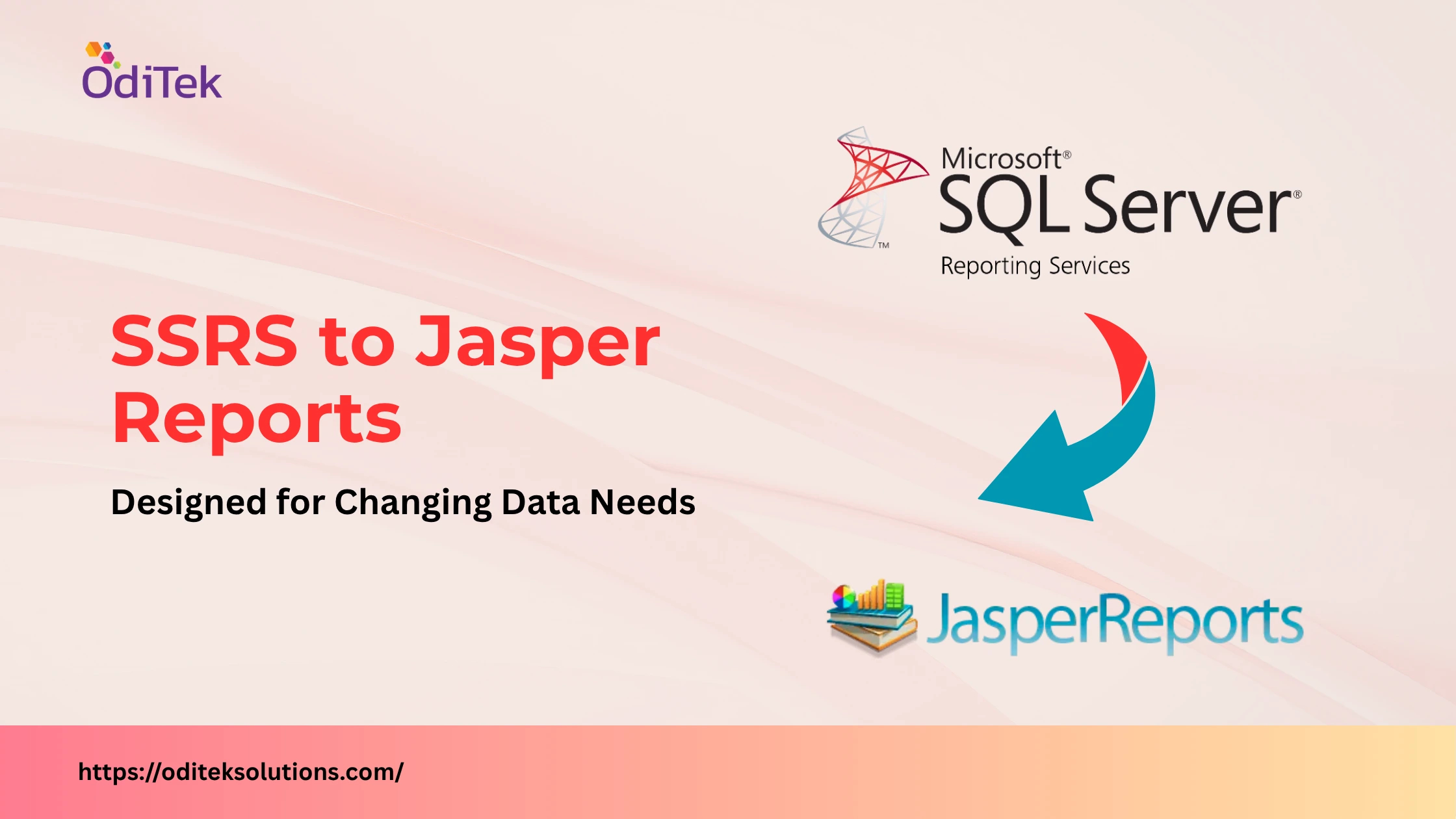
This is where SSRS to Jasper Reports migration comes into focus. It is not simply a shift from one reporting tool to another, but a move toward a more flexible and adaptable reporting approach. With increasing demand for dynamic reporting, cross-platform compatibility, and better control over data visualization and presentation, organizations are re-evaluating how their reporting systems are built.
Understanding the Need for Change
SSRS has long been a dependable reporting solution, particularly within Microsoft-based environments and SQL Server infrastructures. It works well for structured reporting and standardized use cases.
However, reporting today is expected to do more than just generate outputs. It needs to support faster decision-making, integrate seamlessly with web applications, and adapt to changing business requirements without constant redevelopment.
Common challenges include:
1. Limited flexibility in customizing complex reports and report templates
2. Difficulty embedding reports into modern web and enterprise applications
3. Dependency on a specific technology ecosystem
4. Increased effort in maintaining growing report repositories and datasets
As these challenges grow, teams often find themselves spending more time maintaining reports than improving them, which directly impacts productivity and agility.
Why Enterprises Choose to Migrate SSRS Reports to Jasper Reports
Organizations looking to migrate SSRS reports to Jasper Reports are typically aiming to improve flexibility and reduce long-term maintenance effort.
Jasper Reports offers a more adaptable approach, allowing teams to design and manage reports using JRXML templates without being constrained by rigid structures. It supports dynamic reporting needs while providing better control over how reports are built and delivered.
In addition, it allows organizations to standardize reporting across different systems and environments, making it easier to manage reporting at scale within distributed architectures.
Key advantages include:
1. Flexible report design for complex and pixel-perfect layouts
2. Platform independence across environments (Java-based reporting engine)
3. Seamless integration with applications using REST APIs and web services
4. Scalability for increasing data and user demands
This makes it easier for organizations to align reporting with evolving business requirements while maintaining consistency.
Key Considerations in SSRS to Jasper Reports Migration
A successful SSRS to Jasper Reports migration requires a structured approach to ensure consistency and performance.
1. Report assessment: Identify critical reports, understand dependencies, and analyze data models and queries
2. Design conversion: Recreate reports using Jasper Reports while preserving logic and improving usability through JRXML design structures
3. Data mapping: Ensure accurate connectivity and optimize SQL queries and data sources
4. Testing: Validate performance, layout, and data accuracy across different environments and datasets
Taking the time to plan these steps properly helps reduce risks and ensures a smoother transition without disrupting ongoing operations.
SSRS to Jasper Reports Conversion: What Changes?
During SSRS to Jasper Reports conversion, organizations often experience a shift in how reporting is handled.
1. Reports become more dynamic and adaptable with parameterized reporting
2. Developers gain greater control over customization and report scripting
3. Integration with applications becomes more seamless through APIs and embedded reporting
4. Reporting evolves from static outputs to interactive and on-demand reporting delivery
This shift enables teams to move away from one-size-fits-all reporting and create solutions that better match user needs.
Jasper Reports vs SSRS: A Practical Perspective
When comparing Jasper Reports vs SSRS, the differences become clearer as reporting needs grow.
Where SSRS Falls Short
1. Limited flexibility in complex report design and custom report logic
2. Strong dependency on the Microsoft ecosystem
3. Challenges in embedding reports into modern web applications
4. Scalability concerns with growing data volumes and concurrent users
5. Higher maintenance effort over time
These factors can slow down development cycles and make it harder to respond quickly to new requirements.
Where Jasper Reports Stands Out
1. Greater control over report design and logic using JRXML-based templates
2. Easier integration with applications and RESTful APIs
3. Support for multiple data sources including relational databases and cloud data sources
4. Scalable architecture for enterprise reporting environments
5. Reduced dependency on a single platform
Jasper Reports provides a more flexible foundation, enabling organizations to adapt their reporting strategy as their needs evolve.
The Role of Jasper Reports Implementation
A well-planned Jasper Reports implementation ensures that migration delivers long-term value.
This includes setting up the reporting environment, integrating with existing systems, and establishing development standards. It also involves enabling teams to work efficiently within the new system using report servers and scheduling capabilities.
A strong implementation approach ensures that organizations not only migrate successfully but also fully utilize the flexibility and scalability that Jasper Reports offers.
How Oditek Supports Jasper Reports Development
Oditek helps businesses harness the full potential of their data through expert Jasper Reports solutions:
1. Custom Report Development: Create detailed, visually engaging reports tailored to your business needs
2. Seamless Integration: Connect Jasper Reports with multiple data sources and applications for accurate insights
3. Centralized Dashboards: Implement scalable reporting systems with automated report distribution
4. Advanced BI Capabilities: Utilize charts, sub reports, OLAP analysis, and multi-format exports for smarter decision-making
By combining technical expertise with a business-focused approach, OdiTek ensures reporting processes are efficient, insightful, and aligned with organizational goals.
Conclusion
SSRS to Jasper Reports migration is less about switching platforms and more about addressing the growing need for flexibility in reporting.
As reporting becomes more dynamic and integrated across systems, relying on rigid structures can slow teams down. Jasper Reports offers a more adaptable approach, making it easier to handle changing requirements without constant rework.
For organizations facing increasing reporting complexity, this shift is a practical step toward building a system that is easier to manage, scale, and evolve over time.
To learn more about how Jasper reporting solutions can support your business, visit the Jasper Report Skill Page.
Contact us today to streamline your reporting processes and build a more insight-driven data environment.