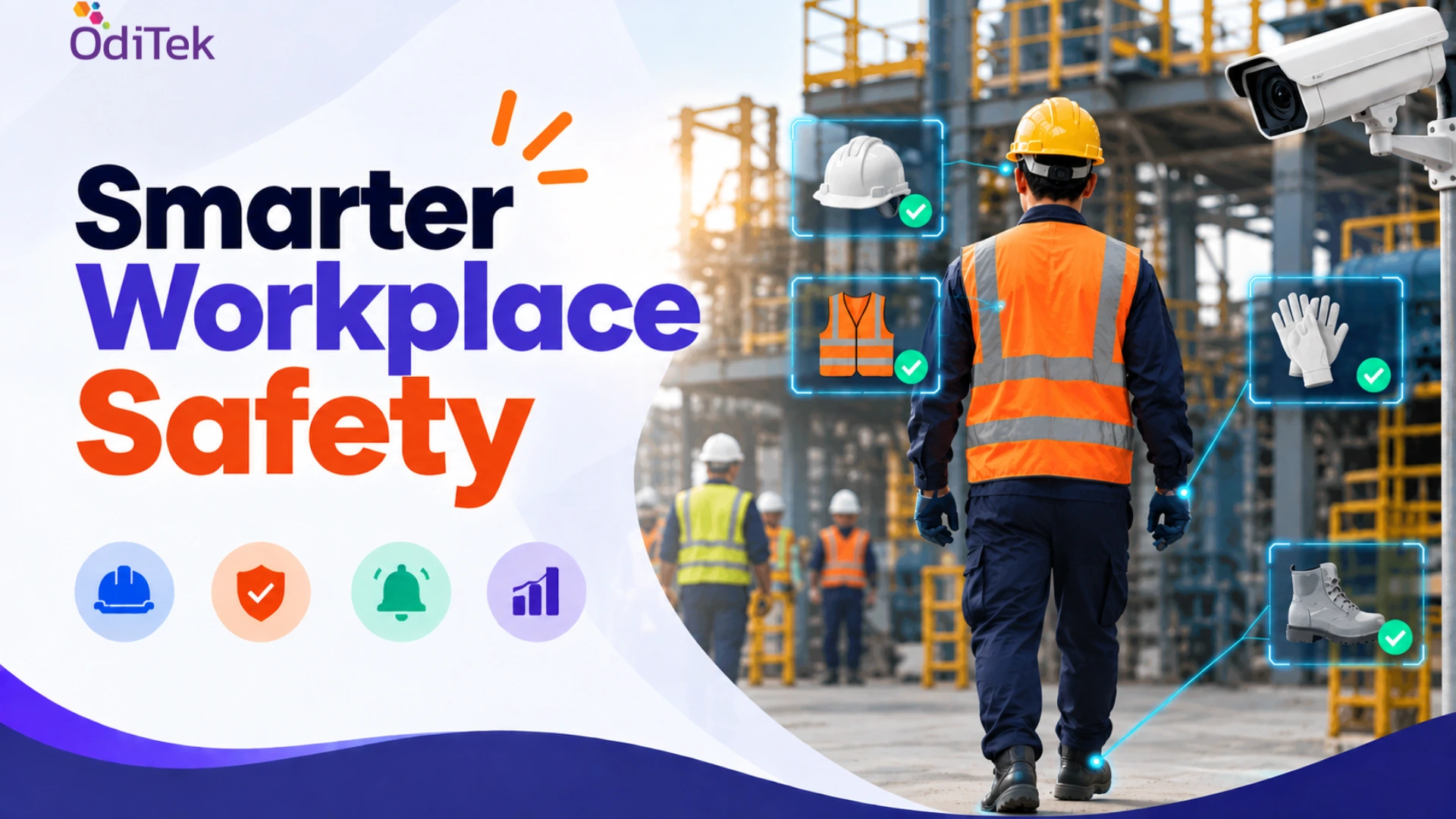
Workplace safety is no longer limited to safety inspections, warning signs, and periodic supervision. As industries adopt Artificial Intelligence (AI), businesses are finding smarter ways to identify hazards, monitor compliance, and respond to safety risks in real time.
Construction sites, manufacturing plants, warehouses, logistics centres, mining operations, and oil & gas facilities face safety challenges every day. With large workforces, moving equipment, restricted areas, and constantly changing operating conditions, manual monitoring alone can make it difficult to identify every violation.
AI-powered PPE detection and intelligent video analytics are changing how organizations approach workplace safety. By analysing live CCTV footage, AI can identify missing Personal Protective Equipment (PPE), detect unsafe activities, monitor restricted areas, and generate real-time alerts when potential safety risks are identified.
What Is AI-Powered PPE Detection?
AI-powered PPE detection is a computer vision-based solution designed to automatically verify whether employees are wearing the required workplace safety gear.
Instead of relying entirely on supervisors or periodic inspections, AI continuously analyses CCTV footage and identifies workers who may not be following established safety requirements.
Depending on the system and deployment, AI can detect:
• Safety helmets
• High-visibility safety vests
• Protective gloves
• Face masks
• Safety goggles
• Safety shoes
• Protective coveralls
• Ear protection
When a PPE violation is detected, the system can generate an alert for supervisors or safety teams, allowing them to take corrective action quickly.
Why Workplace Safety Matters?
Industrial workplaces contain numerous hazards that can result in injuries, equipment damage, operational downtime, or financial losses when safety procedures are not followed.
Traditional safety inspections remain important, but they may not provide continuous visibility across large facilities. This is where AI-powered monitoring can support existing workplace safety practices.
AI-based safety monitoring can help organizations:
• Monitor employees continuously
• Identify PPE violations
• Detect potential hazards
• Improve safety compliance
• Reduce dependence on manual monitoring
• Support faster incident response
• Improve operational visibility
By identifying potential risks as they occur, organizations can take action before a safety issue develops into a larger incident.
How AI-Powered PPE Detection Improves Workplace Safety?
AI combines computer vision, deep learning, and intelligent video analytics to automate several aspects of safety monitoring.
1. Continuous Video Monitoring
AI-enabled CCTV cameras monitor production floors, warehouses, loading areas, construction zones, restricted areas, and other operational environments.
2. Employee Detection
The system identifies workers within monitored areas and analyses their activities in real time.
3. PPE Verification
AI checks whether employees are wearing the required safety equipment according to predefined workplace requirements.
4. Safety Compliance Analysis
The system compares detected PPE with configured safety rules and identifies instances of non-compliance.
5. Instant Alerts
When a violation is detected, notifications can be delivered through dashboards, control rooms, or other configured alert channels, enabling supervisors to respond quickly.
How Real-Time Monitoring Helps Prevent Workplace Accidents?
One of the biggest advantages of AI-based workplace safety monitoring is real-time visibility.
Instead of discovering a safety violation during a later inspection, organizations can identify potential risks when they happen.
AI-based video analytics can monitor:
• PPE compliance
• Restricted area access
• Unsafe worker behaviour
• Slip and fall risks
• Vehicle and pedestrian interactions
• Machine safety
• Emergency exits
• Fire and smoke hazards
When an unsafe event is detected, immediate alerts give safety teams an opportunity to investigate and intervene.
Benefits of AI-Powered Workplace Safety Monitoring
1. Improved Employee Safety
Continuous monitoring can help organizations identify safety violations and reinforce established workplace safety procedures.
2. Faster Hazard Detection
AI can identify configured safety events in real time, helping safety teams respond more quickly.
3. Better Compliance
Automated monitoring can support organizations in maintaining consistent safety practices and generating records of detected incidents.
4. Reduced Manual Monitoring
AI can continuously analyse camera feeds, allowing safety personnel to focus their attention on identified events rather than monitoring every camera manually.
5. Increased Operational Efficiency
Automated detection can reduce the time spent on repetitive monitoring activities while providing safety teams with more targeted information.
6. Lower Workplace Risks
Early identification of safety violations can help organizations address risks before they contribute to injuries, equipment damage, or operational disruptions.
The Importance of Workplace Safety Gear
Proper workplace safety gear plays an important role in protecting employees from hazards associated with machinery, falling objects, electrical equipment, hazardous materials, and other operational risks.
Common safety equipment includes:
• Safety helmets
• Reflective jackets
• Safety gloves
• Protective goggles
• Face shields
• Safety boots
• Respiratory protection
• Hearing protection
AI-powered PPE detection can help organizations verify whether required equipment is being worn in designated areas.
Creating a Safer Work Safety Zone
A clearly defined work safety zone can help organizations control access to areas where specific safety requirements apply.
Vision AI can monitor locations such as:
• Restricted zones
• Heavy machinery areas
• Loading docks
• Chemical storage locations
• Construction work areas
• High-risk manufacturing zones
If an unauthorized person enters a restricted area or a required PPE item is missing, the system can generate an alert for the responsible team.
Applications of AI Workplace Safety Solutions
1. Manufacturing Plants
AI can monitor PPE compliance and worker activity around production equipment and other potentially hazardous areas.
2. Construction Sites
AI video analytics can identify missing PPE and monitor safety conditions across active construction zones.
3. Warehouses
AI can support safety monitoring around forklifts, storage racks, loading areas, and pedestrian movement zones.
4. Oil and Gas Facilities
AI can monitor hazardous operational areas and support PPE compliance across critical facility locations.
5. Mining Operations
AI-powered monitoring can help identify configured safety violations and provide visibility across hazardous working environments.
6. Logistics Centres
AI can support pedestrian safety, vehicle monitoring, PPE compliance, and operational visibility in busy logistics environments.
Best Practices for Implementing AI Workplace Safety Systems
Successful implementation requires more than installing cameras and AI software. Organizations should establish clear safety requirements and configure the system according to their operational environment.
Important practices include:
• Install cameras strategically to minimize blind spots
• Clearly define workplace safety rules and PPE requirements
• Integrate AI analytics with existing CCTV infrastructure where possible
• Regularly review detection performance
• Train employees on workplace safety procedures
• Analyze AI-generated reports to identify recurring safety risks
• Continuously refine safety rules based on operational requirements
These practices can help organizations make their AI monitoring systems more effective over the long term.
The Future of AI in Workplace Safety
AI is continuing to expand the capabilities of workplace safety monitoring.
Future developments may include:
• Predictive accident prevention
• Behavioural safety analytics
• Smart wearable integration
• AI-powered access control
• Automated compliance reporting
• Cloud-based safety dashboards
• Digital twin technology for workplace risk analysis
As these technologies develop, organizations can combine video intelligence, connected devices, analytics, and automation to create increasingly proactive safety environments.
Why Choose us for Workplace Safety?
REG-EYE provides AI-powered video intelligence solutions designed to help organizations strengthen workplace safety through intelligent PPE detection and real-time monitoring.
The platform can continuously analyse video feeds, identify configured safety violations, and generate alerts that help safety teams respond to potential risks.
Whether you operate a manufacturing facility, warehouse, construction site, mining operation, logistics centre, or oil & gas facility, REG-EYE can work with your existing CCTV infrastructure to add intelligent video analytics capabilities.
Want to Strengthen your Workplace Safety with AI-Powered PPE Detection? Then visit our Vision AI solution page or contact us today.
Frequently Asked Questions (FAQs)
1. How can AI-powered PPE detection improve workplace safety?
AI-powered PPE detection continuously monitors workers, identifies missing protective equipment, sends real-time alerts, and helps prevent workplace accidents before they occur.
2. How does real-time monitoring help prevent workplace accidents?
Real-time monitoring detects hazards immediately, allowing supervisors to respond quickly to unsafe conditions, PPE violations, and restricted area breaches.
3. What are workplace safety topics?
Workplace safety topics include PPE compliance, hazard identification, emergency preparedness, machine safety, fire prevention, employee training, and risk management.
4. What is a work safety zone?
A work safety zone is a designated area where specific safety measures, PPE requirements, and access controls are enforced to minimize workplace hazards.
5. Can AI workplace safety solutions integrate with existing CCTV systems?
Yes. AI-powered workplace safety solutions, including REG-EYE’s platform, integrate with most existing IP cameras and CCTV systems, allowing businesses to enhance safety without replacing their current surveillance infrastructure.