Rail safety is essential for manufacturing industries that depend on railway transportation to move raw materials, finished products, and industrial goods. Steel plants, cement factories, mining operations, and power plants handle large volumes of railway wagons every day. Accurate wagon identification, reliable movement records, and effective operational monitoring help these facilities maintain efficient and well-coordinated railway operations.
However, manual wagon identification and recordkeeping can lead to data entry errors, delays, and limited visibility into wagon movements. Railway Wagon OCR Automation offers a practical way to address these challenges. By automatically recognizing wagon numbers from camera images, industries can improve traceability, streamline recordkeeping, and support better railway safety management.
What Is Railway Wagon OCR Automation?
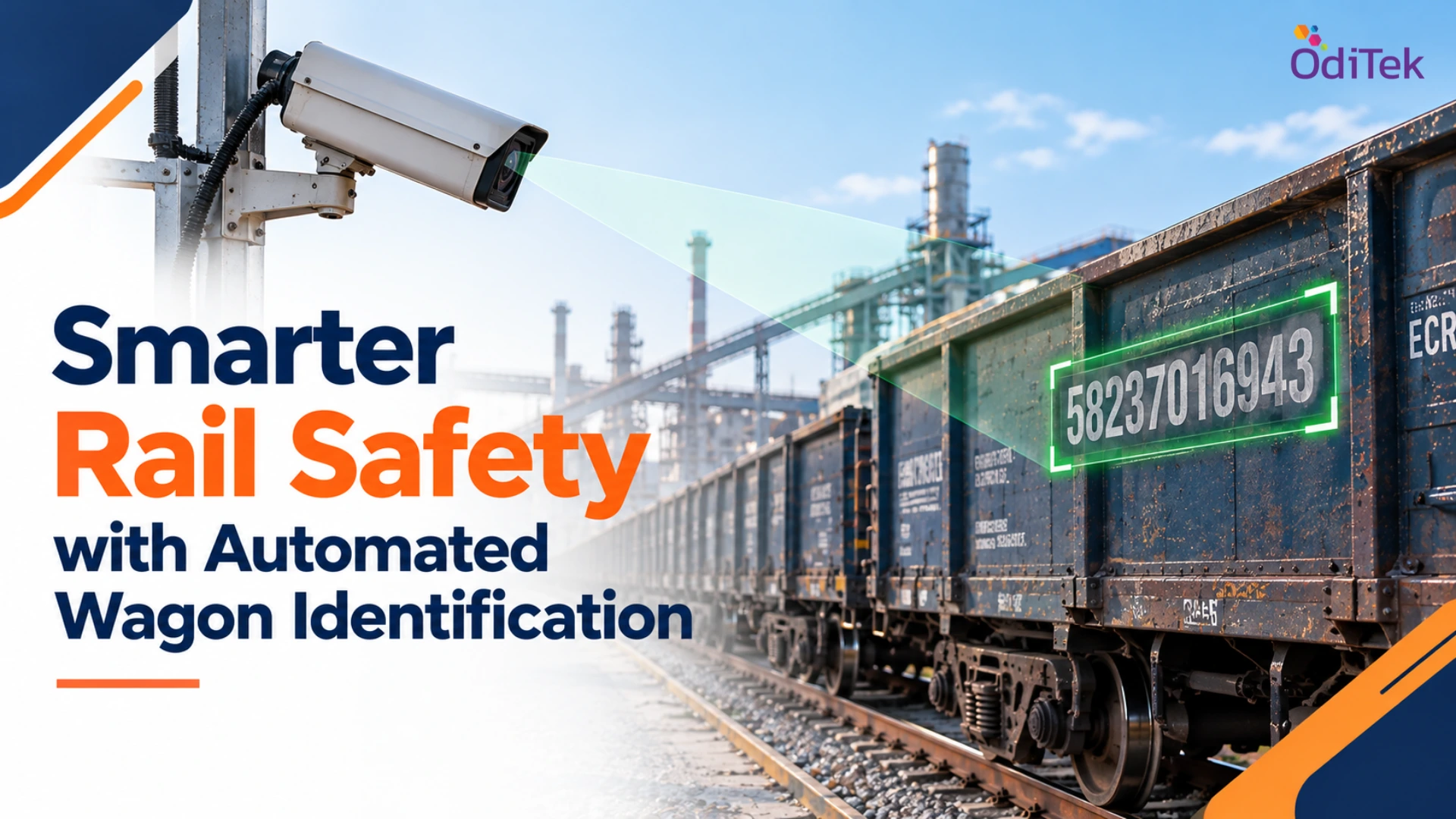
Railway Wagon OCR Automation uses cameras and Optical Character Recognition (OCR) technology to capture and recognize identification numbers displayed on railway wagons. Instead of depending entirely on personnel to read wagon numbers and enter them manually, the system processes images and records the recognized information digitally.
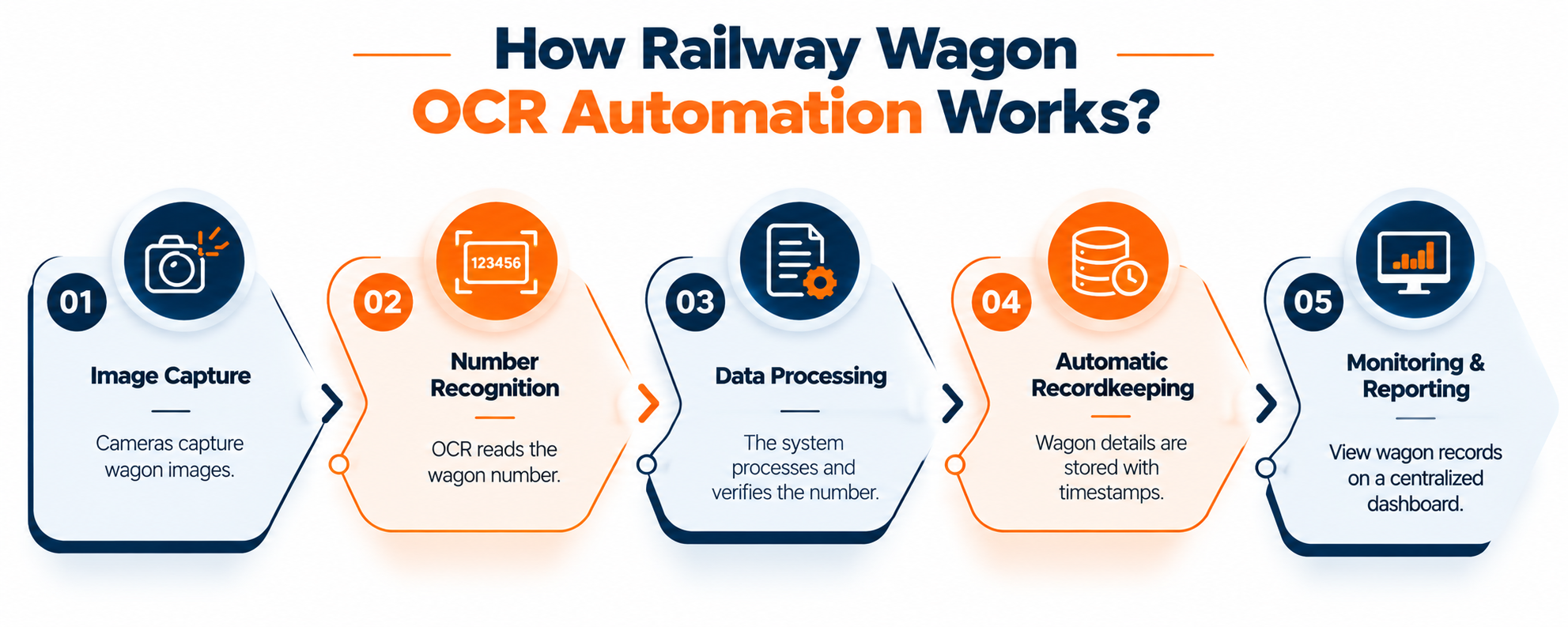
A typical Railway Wagon Identification System follows these steps:
• Image capture: Cameras capture wagon images as they pass a designated monitoring point.
• Number recognition: OCR technology identifies and reads the wagon number.
• Data processing: The system processes the recognized number and checks the result for accuracy.
• Automatic recordkeeping: Wagon details are stored digitally with relevant timestamps and other available information.
• Monitoring and reporting: Authorized personnel can review wagon identification records through a centralized interface.
This automated process reduces repetitive manual work and helps manufacturing facilities maintain more consistent wagon records.
Why Is Wagon Safety Important in Manufacturing Industries?
Manufacturing facilities often manage complex logistics involving railway sidings, loading and unloading areas, heavy machinery, and material handling equipment. In these environments, wagon safety is closely connected to accurate identification, coordinated movements, and dependable operational information.
1. Accurate Wagon Identification:
Each railway wagon has identification details that help distinguish it from other wagons. Incorrect identification can result in mismatched records, material tracking errors, and difficulties verifying wagon movements.
Automated identification helps record wagon numbers consistently and associate them with the appropriate operational information.
2. Efficient Loading and Unloading:
Steel, cement, and mining facilities frequently handle multiple wagons carrying different materials. Accurate identification helps personnel verify wagon details and coordinate loading, unloading, and dispatch activities.
When integrated with relevant systems, wagon records can also be associated with material details, inventory information, and weighbridge data.
3. Better Movement Visibility:
Knowing when a wagon passes a designated monitoring point helps operators review its movement through an industrial facility. Automated records can support coordination between railway operations, logistics teams, and plant management.
4. Reduced Manual Errors:
Manual wagon number reading can be affected by poor lighting, difficult viewing angles, damaged markings, and human error. OCR automation reduces repetitive manual identification, although recognition accuracy depends on image quality and system configuration.
5. Reliable Operational Records:
Time-stamped records make it easier to investigate discrepancies, verify wagon movements, and review operational events. These records can support safety management when combined with established inspection and monitoring procedures.
How a Railway Wagon Identification System Improves Rail Safety?
A Railway Wagon Identification System supports rail safety by improving identification accuracy and providing better visibility into wagon movements. In manufacturing facilities, these capabilities can help strengthen coordination between railway operations and industrial logistics.
Automated Wagon Number Recognition:
Cameras capture wagon images, and OCR software reads the identification numbers automatically. This reduces the need for personnel to record every wagon manually and creates a consistent identification history.
Real-Time Event Recording:
Depending on the system configuration, wagon detection events can be stored with timestamps, images, and location details. This information helps authorized personnel review when and where a wagon was detected.
Weighbridge Integration:
Manufacturing facilities often need to associate wagon identification numbers with weighing records. Integrating OCR with weighbridge software can help match wagon numbers with weight data, reducing record mismatches and simplifying reconciliation.
Centralized Monitoring and Reporting:
A centralized dashboard can provide access to wagon identification records and related operational information. Reports help teams review movements, investigate discrepancies, and coordinate activities across departments.
Support for Incident Investigation:
Stored images and time-stamped records can provide useful evidence when reviewing identification disputes or operational incidents. However, OCR identifies wagons and records events; it does not independently prevent collisions or replace railway signalling, physical inspections, or other mandatory safety controls.
Key Benefits of Automated Wagon Identification:
Automated wagon identification can improve operational efficiency across manufacturing facilities that rely on rail-based transportation.
• Improved identification accuracy: Automated number recognition can reduce transcription errors and incorrect wagon entries.
• Faster processing: Automation reduces the time spent manually recording wagon details.
• Better traceability: Digital records help authorized personnel review wagon movements and historical events.
• Streamlined logistics: Reliable wagon data supports coordination between dispatch, weighing, material handling, and inventory teams.
• Reduced administrative workload: Less manual recordkeeping allows employees to focus on operational supervision and other responsibilities.
• Simplified reporting: Centralized information makes it easier to prepare wagon movement reports and operational summaries.
Actual results depend on camera placement, lighting, wagon number visibility, OCR performance, and integration with existing systems.
Common Challenges in Manual Wagon Identification:
Manual wagon identification can create operational difficulties, particularly in large manufacturing facilities handling frequent railway traffic.
Human error: Similar-looking numbers may be misread or entered incorrectly.
Time-consuming processes: Recording large numbers of wagons manually can slow down operational workflows.
Limited visibility: Paper-based registers and disconnected spreadsheets make it harder to obtain an up-to-date view of wagon movements.
Record discrepancies: Incorrectly associated wagon numbers and weight records can complicate reconciliation.
Difficult historical verification: Finding a particular wagon’s movement history may require reviewing multiple registers or spreadsheets.
Automated wagon identification addresses these challenges by digitizing identification and recordkeeping. Manual verification and exception-handling procedures remain important for unreadable numbers and uncertain recognition results.
Best Practices for Implementing Railway Safety Technology:
Manufacturing facilities should evaluate their operational requirements before implementing railway wagon OCR automation. The following practices can help improve system reliability.
1. Select suitable camera locations: Position cameras to capture clear images of wagon numbers under actual operating conditions.
2. Consider environmental conditions: Account for dust, vibration, rain, and changing lighting conditions that may affect image quality.
3. Validate recognition accuracy: Test the system across different wagon types, number formats, speeds, and image conditions.
4. Integrate existing systems: Connect wagon identification data with weighbridge, logistics, inventory, or enterprise applications where required.
5. Establish exception handling: Define procedures for unreadable numbers, duplicate records, and low-confidence results.
6. Protect operational data: Apply appropriate access controls, data retention policies, and audit trails.
7. Maintain physical safety procedures: Continue required inspections, signalling controls, movement authorization, and established railway safety practices.
These measures help ensure that automation provides dependable information while supporting, rather than replacing, existing safety controls.
The Future of Rail Safety in Manufacturing:
Manufacturing facilities are increasingly adopting digital monitoring and connected operational systems to improve efficiency and visibility. Automated wagon identification can contribute to this transformation by providing reliable identification data for broader railway logistics management.
When integrated with dashboards, analytics, automated alerts, and enterprise applications, OCR can help facilities monitor wagon movements and review associated operational records.
For example, a system can be configured to flag a wagon detected at an unexpected monitoring point or identify discrepancies between wagon identification and weighing records. Such capabilities depend on suitable integrations and predefined operational rules.
Advanced implementations may also combine OCR with other image analytics technologies to monitor selected industrial events. These capabilities require separate configuration and validation and are not automatically included in every wagon identification solution.
The objective is to improve operational coordination, traceability, and decision-making while maintaining established railway safety measures.
Why Choose OdiTek Solutions?
OdiTek Solutions delivers software engineering, automation, and AI-powered video intelligence solutions to help manufacturing industries improve operational efficiency.
Our capabilities include:
• Automated Wagon Identification: OCR-based wagon number recognition.
• System Integration: Connecting wagon identification with weighbridge and logistics systems.
• Centralized Monitoring: Digital records and reporting for better traceability.
• Customized Solutions: Software integration tailored to industrial requirements.
OdiTek Solutions helps industries streamline railway operations, improve wagon traceability, and support their broader rail safety objectives.
Want to explore our other solutions? Visit our Vision AI Solutions page or contact us today.
Frequently Asked Questions
What is railway wagon OCR automation?
Railway wagon OCR automation uses cameras and Optical Character Recognition technology to capture and read wagon identification numbers automatically. The information can be stored digitally and integrated with operational systems.
How does a Railway Wagon Identification System work?
The system captures wagon images, recognizes identification numbers, processes the results, and stores relevant details. Depending on the implementation, it can also integrate with dashboards, weighbridge software, and logistics applications.
Why is wagon safety important in manufacturing industries?
Wagon safety is important because industrial railway operations involve heavy loads, moving wagons, railway sidings, and material handling activities. Accurate identification and reliable records support operational coordination, traceability, and safety management.
Can OCR automation improve rail safety?
OCR automation can support rail safety by improving wagon identification, reducing manual recording errors, and providing traceable movement records. However, it does not replace signalling systems, physical inspections, or established railway safety procedures.
Which industries can benefit from automated wagon identification?
Steel plants, cement manufacturers, mining operations, power plants, ports, and other facilities that handle railway wagons can benefit from automated identification and digital recordkeeping.