As organizations accelerate their digital transformation initiatives, integration platforms have become essential for connecting applications, data, APIs, and business processes across hybrid and multi-cloud environments. Among the leading Integration Platform as a Service (iPaaS) solutions, Boomi has established itself as a preferred choice for enterprises seeking scalable, cloud-native integration capabilities.
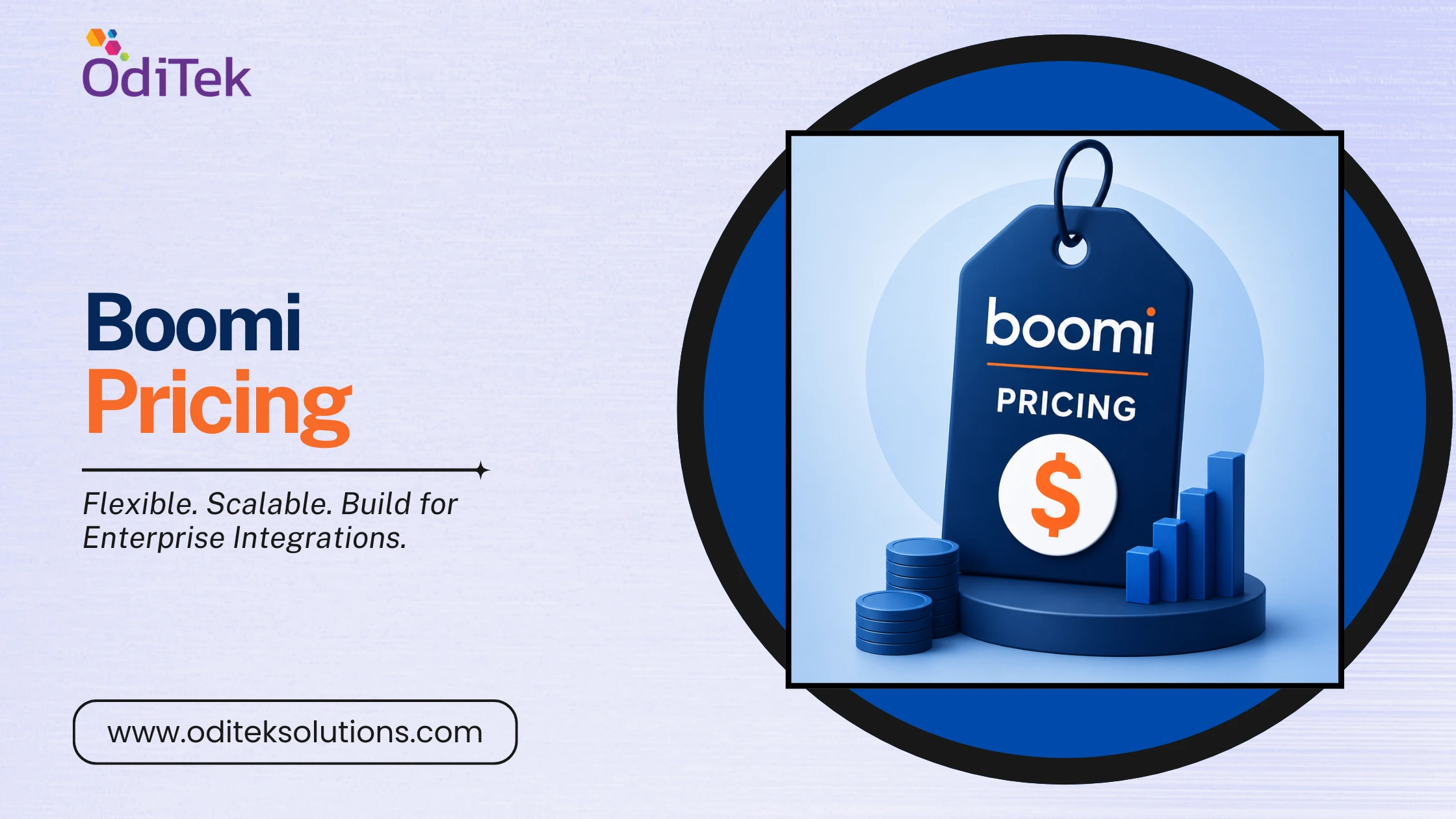
However, one of the most common questions organizations ask before adopting the platform is related to Boomi pricing, Boomi license cost, and the overall Boomi integration pricing structure. Since every organization has unique integration requirements, understanding the Boomi pricing model is critical for making informed investment decisions.
This article explores how Boomi pricing works, the factors that influence costs, and what enterprises should consider when evaluating Boomi enterprise pricing.
What Is Boomi Pricing?
Boomi pricing refers to the subscription-based licensing structure used by Boomi for its cloud integration platform. Unlike traditional middleware solutions that require significant upfront infrastructure investments, Boomi follows a modern SaaS-based model that allows organizations to scale integration capabilities according to business requirements.
The platform offers a comprehensive suite of services, including:
• Application Integration
• API Management
• B2B/EDI Integration
• Data Synchronization
• Master Data Hub
• Workflow Automation
• Event-Driven Integration
• Cloud and Hybrid Connectivity
Rather than a one-size-fits-all approach, Boomi pricing models are typically customized based on factors such as deployment scale, integration volume, required connectors, environments, and additional platform capabilities.
Understanding the Boomi Pricing Model
The Boomi pricing model is designed to provide flexibility for organizations of different sizes and integration maturity levels. The platform generally follows a subscription-based licensing structure where customers pay for access to platform services over a specified period.
Several components can influence Boomi integration pricing, including:
1. Number of Integration Processes – Organizations with a higher number of integration workflows often require additional platform resources. As integration complexity increases, licensing requirements may also expand.
2. Connector Requirements – Boomi provides a wide range of pre-built connectors for leading enterprise applications and platforms, including Salesforce, SAP, Oracle, Microsoft Dynamics, NetSuite, ServiceNow, Workday, and AWS, enabling faster and more efficient integrations.
3. Environment Requirements – Many enterprises require multiple environments for:
• Development
• Testing
• Quality Assurance
• Production
4. API Management Capabilities – Organizations implementing API-led architectures often require Boomi’s API Management features, which can be licensed separately depending on the scope of deployment.
5. Data Processing and Usage – The amount of data being processed, transferred, and synchronized across systems can influence resource consumption and licensing requirements.
6. Boomi Pricing for Enterprise Integrations – When discussing Boomi pricing for enterprise integrations, it is important to understand that enterprise integration requirements differ significantly from those of small businesses.
Large organizations often need to integrate:
• ERP systems
• CRM platforms
• Supply chain applications
• Legacy databases
• Cloud applications
• Third-party partner systems
• Data warehouses
• AI and analytics platforms
Boomi addresses these requirements through:
1. Scalable Architecture – The platform supports high-volume integration workloads while maintaining performance and reliability.
2. Hybrid Integration Support – Many enterprises operate both cloud and on-premises systems. Boomi’s Atom and Molecule runtime architecture enables secure hybrid integration without extensive infrastructure management.
3. API-Led Connectivity – Organizations adopting modern digital ecosystems require reusable APIs that facilitate application connectivity and data exchange. Boomi’s API management capabilities help support this strategy.
4. Enterprise Security – Boomi offers enterprise-grade security with role-based access control, data encryption, audit trails, and compliance support.
What Factors Affect Boomi Pricing?
Several technical and business considerations influence the final Boomi license cost and overall platform investment.
1. Integration Complexity – Simple point-to-point integrations generally require fewer resources than enterprise-grade workflows involving multiple systems, data transformations, and orchestration logic.
2. Number of Connected Systems – Organizations integrating dozens or hundreds of applications may require additional platform capacity and governance capabilities.
Examples include:
• SAP integrations
• Salesforce integrations
• Oracle integrations
• E-commerce platforms
• Financial systems
3. Transaction Volume – High transaction environments process larger quantities of data and API requests. Increased processing requirements can affect platform sizing and associated costs.
4. Deployment Model – The chosen deployment architecture can also influence pricing:
• Cloud-to-cloud integrations
• Cloud-to-on-premises integrations
• Hybrid integrations
• Multi-cloud environments
5. API Consumption – Organizations exposing APIs internally, externally, or to business partners may require enhanced API management capabilities, which can contribute to licensing costs.
6. B2B and EDI Requirements – Many enterprises use Boomi for partner onboarding, EDI transactions, and supply chain integrations. These specialized capabilities may influence overall pricing based on transaction volumes and partner connectivity requirements.
7. Support and Service Levels – Enterprises often require advanced support services, dedicated account management, and enhanced SLAs, which can impact subscription costs.
8. Evaluating Boomi Integration Pricing – When assessing Boomi integration pricing, organizations should look beyond the initial license fee and evaluate the overall value delivered by the platform.
Conclusion
Understanding Boomi pricing, Boomi license cost, and the overall Boomi pricing model is essential for organizations evaluating modern integration platforms. Since every business has unique requirements, Boomi enterprise pricing is typically customized based on integration complexity, transaction volume, deployment architecture, API usage, and connector requirements.
For enterprises seeking a scalable, cloud-native solution that supports application integration, API management, hybrid connectivity, and digital transformation initiatives, Boomi offers a flexible platform capable of adapting to evolving business needs.
Contact OdiTek Solutions today to discuss your Boomi integration and licensing requirements and discover the right pricing approach for your organization. Whether you’re planning a new implementation, expanding your integration landscape, or optimizing existing Boomi deployments, our experts can help you make informed decisions. Don’t forget to follow our Boomi expertise hub for regular updates, best practices, and technical insights to get the most out of your Boomi investment.
Frequently Asked Questions (FAQs)
1. What is Boomi pricing?
Boomi pricing is a subscription-based licensing model for Boomi’s Integration Platform as a Service (iPaaS). Pricing typically depends on factors such as integration volume, deployment requirements, connectors, API usage, and additional platform capabilities.
2. How much does a Boomi license cost?
The Boomi license cost varies based on an organization’s specific requirements. Factors such as the number of integrations, environments, API management needs, and transaction volumes can influence the final pricing structure.
4. Does Boomi offer enterprise pricing?
Yes. Boomi enterprise pricing is typically customized to meet the requirements of large organizations that need advanced integration, API management, governance, security, and scalability features.
5. Is Boomi suitable for enterprise integrations?
Yes. Boomi is designed for enterprise integrations, enabling seamless connectivity between ERP, CRM, cloud applications, legacy systems, and APIs while providing scalability, security, and centralized management.
6. How does the Boomi pricing model work?
The Boomi pricing model is generally subscription-based and may include licensing for integration processes, connectors, environments, API management capabilities, and additional platform services. Pricing is often tailored to business requirements rather than being fixed.
7. How can OdiTek Solutions help with Boomi implementation and licensing?
OdiTek Solutions provides Boomi consulting, implementation, integration development, migration support, API management expertise, and licensing guidance. Our experts help organizations select the right solution architecture and optimize their Boomi investment for maximum business value.