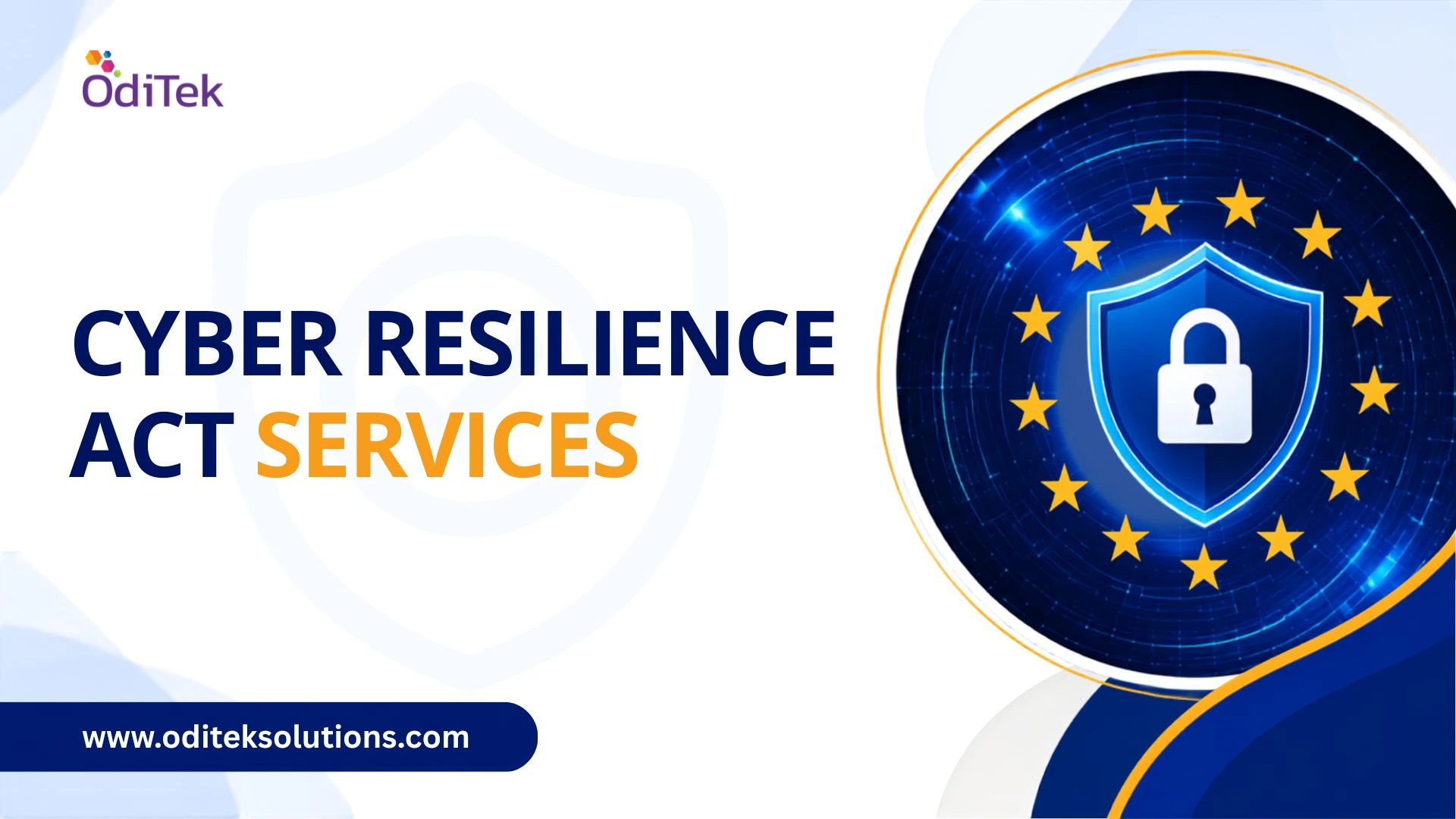
Cyber Resilience Act Services are becoming essential for organizations that develop, manufacture, distribute, or maintain products with digital elements. As cyber threats continue to evolve, regulatory bodies are introducing stricter cybersecurity requirements to protect businesses and consumers alike.
The European Union’s Cyber Resilience Act (CRA) establishes mandatory cybersecurity standards throughout the product lifecycle, making compliance a business necessity rather than an option.
Organizations serving European markets must now adopt a proactive security strategy aligned with CRA requirements. This is where specialized Cyber Resilience Act Services help businesses assess their current security posture, identify compliance gaps, implement security controls, and establish long-term governance practices.
What is Cyber Resilience Act Service?
It refers to a comprehensive set of consulting, assessment, implementation, and compliance support services designed to help organizations comply with the EU Cyber Resilience Act. These services focus on ensuring that connected products, software, IoT devices, and digital systems are secure by design and remain secure throughout their operational lifecycle.
Typical services include:
• Cybersecurity maturity assessments
• Product security reviews and software security verification
• Secure SDLC implementation
• Vulnerability management
• SBOM (Software Bill of Materials) management
Rather than treating compliance as a one-time project, these services help organizations build sustainable cybersecurity programs that continuously meet evolving regulatory expectations.
Why Businesses Need Cyber Resilience Act Services?
As cybersecurity regulations become more stringent, organizations need more than traditional security frameworks to meet compliance requirements. While standards like ISO 27001 and NIST provide a strong cybersecurity foundation, the Cyber Resilience Act introduces product-specific obligations that require organizations to secure software and connected products throughout their lifecycle.
Cyber Resilience Act Services help businesses evaluate their current security posture, identify compliance gaps, and implement the controls needed to meet CRA requirements.
Businesses typically benefit from these services by:
• Identifying security and compliance gaps early in the development lifecycle
• Strengthening secure software development and product security practices
• Improving vulnerability management and incident response capabilities
• Preparing the documentation and evidence required for regulatory audits
• Building greater customer trust through secure and compliant digital products
Core Compliance Services
Meeting the requirements of the Cyber Resilience Act involves more than a single security assessment. Organizations need a structured approach that covers product security, secure development, vulnerability management, and ongoing compliance throughout the product lifecycle.
A comprehensive compliance program typically includes the following services:
1. Compliance Readiness Assessment
The first step is understanding where your organization stands. A readiness assessment compares your existing security practices, product development processes, and documentation against CRA requirements to identify areas that need improvement.
The assessment helps organizations:
• Identify security and compliance gaps
• Prioritize remediation activities
• Build a clear compliance roadmap
2. Product Security Assessment
Every connected product should be designed with security in mind. A product security assessment evaluates the architecture and security controls to uncover weaknesses before they become compliance issues or security incidents.
Common areas reviewed include authentication, encryption, API security, data protection, and secure configurations.
3. Secure Software Development
Security should be integrated throughout the software development lifecycle rather than added at the final stage. Adopting secure development practices reduces vulnerabilities early and improves software quality.
This generally includes:
• Secure coding standards
• Threat modeling and code reviews
• Security testing within CI/CD pipelines
• DevSecOps implementation
4. Software Security Verification
Independent security validation provides confidence that applications meet regulatory expectations. It also helps identify vulnerabilities before products reach customers.
Verification activities often include static and dynamic testing, penetration testing, and software composition analysis to evaluate both proprietary and third-party code.
5. Vulnerability Management
Compliance doesn’t end after deployment. Organizations must continuously monitor, assess, and remediate newly discovered vulnerabilities throughout the product lifecycle.
A mature vulnerability management program focuses on:
• Continuous monitoring
• Risk-based prioritization
• Timely patch management
• Incident reporting and remediation
6. Software Bill of Materials (SBOM)
Modern applications rely heavily on open-source and third-party components. Maintaining an accurate Software Bill of Materials (SBOM) improves software transparency and enables faster responses when vulnerabilities are discovered.
An effective SBOM helps organizations strengthen supply chain security while supporting regulatory documentation requirements.
Why Advisory Services Matter?
Understanding the regulation is often as challenging as implementing the required security controls. Advisory services help organizations interpret the requirements and develop a practical compliance strategy tailored to their products and business goals.
Support typically includes regulatory guidance, documentation planning, governance recommendations, audit preparation, and ongoing compliance assistance. This enables businesses to make informed decisions while reducing implementation risks.
Best Practices for Long-Term Compliance
Compliance should be viewed as an ongoing process rather than a one-time project. Organizations that embed security into their development and operational processes are better prepared for evolving regulations and emerging cyber threats.
To maintain long-term readiness, businesses should:
• Integrate security into product design from the beginning.
• Conduct regular security assessments and penetration testing.
• Maintain up-to-date technical documentation and SBOMs.
• Continuously monitor vulnerabilities and apply security updates.
• Review third-party software and supply chain risks regularly.
Following these practices helps organizations maintain compliance while building secure, resilient products that can adapt to future regulatory and cybersecurity requirements.
Conclusion
As cybersecurity regulations continue to evolve, compliance has become a strategic business priority rather than a technical requirement.
Cyber Resilience Act Services enable organizations to build secure products, reduce regulatory risks, and establish continuous cybersecurity practices that extend across the entire product lifecycle.
From security assessments and software verification to SBOM management and expert advisory, these services provide the expertise needed to meet the EU Cyber Resilience Act with confidence.
Ready to build secure, compliant digital products with OdiTek and stay ahead of evolving CRA requirements? Then, visit our CRA skill page or contact us today.
How OdiTek Helps Businesses with Cyber Resilience Act Services?
1. What are Cyber Resilience Act Services, and how can OdiTek help?
OdiTek provides Cyber Resilience Act Services to help businesses assess security gaps, strengthen product security, implement secure development practices, and prepare for EU CRA compliance. Our experts support organizations throughout the product lifecycle, from security assessment to documentation and continuous monitoring.
2. How does OdiTek help businesses meet Cyber Resilience Act compliance requirements?
OdiTek helps businesses meet CRA compliance by conducting readiness assessments, reviewing product security, identifying vulnerabilities, and building a clear compliance roadmap. We help organizations align their software, IoT, and digital products with required cybersecurity standards.
3. How does OdiTek support secure software development for CRA compliance?
OdiTek integrates security into the software development lifecycle through secure coding standards, threat modelling, code reviews, CI/CD security testing, and DevSecOps practices. This helps reduce vulnerabilities early and ensures products are secure by design.
4. How does OdiTek manage vulnerability assessment and remediation?
OdiTek provides vulnerability management services that include continuous monitoring, risk-based prioritization, patch planning, penetration testing, and remediation support. This helps businesses detect and fix security issues before they create compliance or operational risks.
5. How does OdiTek help with SBOM management?
OdiTek helps businesses create and maintain an accurate Software Bill of Materials to track open-source and third-party components. This improves software supply chain visibility, supports vulnerability response, and helps meet CRA documentation requirements.
6. Why should businesses choose OdiTek for Cyber Resilience Act advisory services?
Businesses can choose OdiTek for CRA advisory because we provide practical guidance, compliance planning, security governance, audit preparation, and long-term support. Our approach helps organizations build secure, compliant, and resilient digital products for European markets.